Cheapest States to Build a House in 2026: A Guide for Eco-Friendly Builders
 Jun, 1 2026
Eco-Friendly Build Cost Estimator
Estimated Total Cost
Base Construction Estimate
Building your own home is the ultimate dream of autonomy. You pick the plot, you choose the materials, and you design the layout to fit your life perfectly. But there is one massive variable that can make or break this dream: location. Specifically, which state allows you to build a house for the least amount of money? The answer isn't just about cheap land; it’s a complex mix of labor rates, material transport costs, local zoning laws, and climate considerations.
If you are looking to build an eco-friendly cottage that minimizes environmental impact while maximizing affordability, the geography matters immensely. Building a passive solar home in North Dakota requires different insulation strategies than building one in Florida, and those differences hit your wallet hard. As we move through 2026, rising interest rates and supply chain shifts have changed the landscape of affordable construction. Some states have become significantly more attractive for budget-conscious builders who want to live sustainably.
The Hidden Costs of Location
When people ask for the cheapest state to build a house, they usually think only of the price per acre. That is a mistake. Land might be dirt cheap in the middle of nowhere, but if you have to truck concrete blocks three hundred miles from the nearest supplier, your savings vanish. The true cost of building is determined by four main pillars: land acquisition, labor wages, material logistics, and regulatory fees.
Labor is often the biggest expense after land. In states with high union density or strict prevailing wage laws, such as New York or California, hourly rates for carpenters and electricians can double compared to the national average. On the other hand, states in the Midwest and South generally offer lower labor costs without sacrificing quality. For eco-friendly builds, which often require specialized skills like installing spray foam insulation or setting up geothermal systems, finding skilled local labor is crucial. If you have to fly in experts, your budget will explode.
Regulatory environments also play a huge role. Some states have streamlined permitting processes, allowing you to start digging sooner. Others have layers of bureaucratic hurdles that add months to your timeline. Every month you delay means more financing costs. Additionally, building codes vary. While most states follow the International Residential Code (IRC), some have stricter energy efficiency mandates. Ironically, these mandates can save you money in the long run by reducing utility bills, but they increase upfront construction costs.
Top Contenders for Affordable Construction
Based on current data from the U.S. Census Bureau, National Association of Home Builders (NAHB), and regional economic reports for 2026, several states consistently rank as the most affordable places to build. These aren't just random picks; they represent areas where the combination of low land prices, moderate labor costs, and favorable climates creates a sweet spot for builders.
| State | Avg. Cost to Build (per sq ft) | Median Land Price (rural) | Key Advantage | Eco-Building Factor |
|---|---|---|---|---|
| Mississippi | $115 - $130 | $1,500 - $3,000/acre | Lowest overall costs | Mild winters reduce heating needs |
| Arkansas | $120 - $135 | $2,000 - $4,000/acre | Abundant timber resources | Great for wood-frame sustainable homes |
| Iowa | $125 - $140 | $2,500 - $5,000/acre | Stable infrastructure | Strong wind energy grid access |
| Oklahoma | $120 - $135 | $1,800 - $3,500/acre | No state income tax | High solar potential |
| Kansas | $125 - $140 | $2,000 - $4,500/acre | Flat terrain simplifies foundation | Ideal for passive solar design |
These figures reflect the base cost of construction, excluding luxury finishes. For an eco-friendly cottage, you might spend slightly more on green materials, but the foundational savings in these states remain significant.
Why Mississippi Leads the Pack
Mississippi has long been known as the most affordable state to build a house, and in 2026, it still holds that title. The average cost to build a home here ranges from $115 to $130 per square foot, significantly below the national average of around $160-$170. This affordability stems from lower labor wages and cheaper land prices. Rural plots can be found for under $2,000 an acre in many counties.
For eco-friendly builders, Mississippi offers a humid subtropical climate. This means you don't need the extreme insulation required in northern states. However, you do need to plan for humidity and heat. A well-designed passive house with proper ventilation and shading can keep cooling costs low. The abundance of local lumber also makes it easier to source sustainable wood for framing without paying high shipping fees.
The downside? Hurricane risk. If you're building along the coast, insurance premiums will skyrocket. To mitigate this, consider building inland, where land is even cheaper and weather risks are lower. Focus on resilient design features like elevated foundations and impact-resistant windows, which add to the initial cost but protect your investment.
Arkansas: The Timber State Advantage
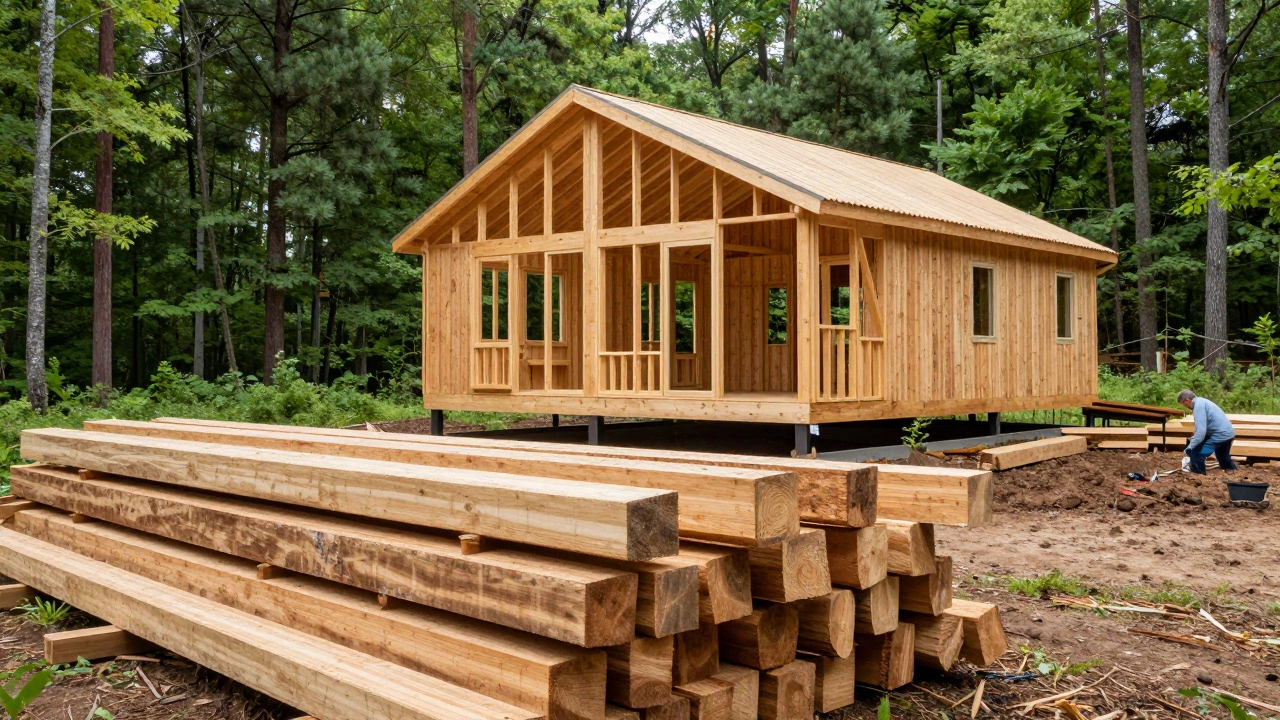
Arkansas is another top contender, particularly for those interested in natural building methods. Known as "The Natural State," Arkansas has vast forests, making timber readily available and inexpensive. If you're planning to use structural insulated panels (SIPs) or heavy timber framing for your eco-cottage, being close to the source cuts down on transportation emissions and costs.
Labor costs in Arkansas are among the lowest in the nation. Skilled tradespeople charge less here than in neighboring Tennessee or Missouri. The terrain is varied, with rolling hills and flat plains, offering plenty of scenic spots for a secluded cottage. Median land prices in rural areas hover between $2,000 and $4,000 per acre, providing ample space for gardens, solar arrays, or rainwater collection systems.
One thing to watch out for is soil quality. Some parts of Arkansas have expansive clay soils that can shift with moisture changes, potentially damaging foundations. Invest in a thorough geotechnical survey before breaking ground. Using pier-and-beam foundations can help manage soil movement while keeping costs reasonable.
The Midwest Option: Iowa and Kansas
If you prefer cooler climates and flat landscapes, look north to Iowa and Kansas. Both states offer moderate construction costs, averaging $125-$140 per square foot. While slightly higher than the Deep South, the trade-off is better infrastructure and access to renewable energy grids.
Iowa is a leader in wind energy. If you're building an off-grid or net-zero home, connecting to a robust wind-powered grid can simplify your energy strategy. You might not need as large a solar array, saving on panel and battery costs. The flat terrain in both Iowa and Kansas makes excavation and foundation work straightforward and cheap. No rocky hills to blast through, no steep slopes requiring retaining walls.
Land prices in these states are stable, rarely seeing the speculative spikes seen in coastal regions. You can find five-acre parcels for under $10,000 in remote corners of western Kansas or southern Iowa. This stability makes it easier to predict your total project cost. Plus, the community culture in the Midwest often supports local craftsmanship, meaning you might find artisans willing to collaborate on custom eco-features like rammed earth walls or straw bale insulation.
Climate Considerations for Eco-Friendly Builds
Building an eco-friendly cottage isn't just about using green materials; it's about designing for your specific climate. The cheapest state to build in might not be the cheapest to *live* in if your energy bills are astronomical. This is where the concept of "whole-house performance" comes in.
In hot, humid states like Mississippi and Arkansas, your primary enemy is moisture. Mold growth can ruin indoor air quality and damage structures. Your eco-design must prioritize vapor barriers, dehumidification, and cross-ventilation. Materials like metal roofing reflect heat and last decades, reducing replacement waste. Green roofs can provide additional insulation but require careful waterproofing.
In contrast, Iowa and Kansas face harsh winters. Here, insulation is king. High R-value materials like cellulose, wool, or aerogel are essential. Passive solar design-orienting your home to capture winter sun and minimize summer heat gain-is critical. Large south-facing windows with low-E coatings can free-heat your home in winter, slashing heating costs. The flat terrain makes it easy to position your home optimally.
Regardless of location, water management is key. Rainwater harvesting systems are relatively inexpensive to install and can drastically reduce municipal water usage. In drought-prone areas like parts of Kansas, this isn't just an eco-choice; it's a survival strategy. Pairing rainwater collection with greywater recycling for irrigation creates a closed-loop system that enhances sustainability.
Navigating Permits and Regulations
Before you buy land, research the local building codes and permit requirements. Some counties in affordable states have minimal oversight, which sounds great until you realize you're responsible for ensuring everything meets safety standards. Other counties have dedicated building departments that review plans efficiently.
In 2026, many states are updating their energy codes to align with the International Energy Conservation Code (IECC). This means new homes must meet higher efficiency standards. While this increases upfront costs, it ensures your eco-cottage performs well over time. Check if your target state offers incentives for exceeding code requirements. Some offer tax credits for solar installations, geothermal heat pumps, or certified green building practices like LEED or Passive House certification.
Zoning laws also matter. Rural areas often have fewer restrictions on accessory dwelling units (ADUs), tiny homes, or alternative building methods like earthships or cob houses. If you're experimenting with non-traditional eco-materials, verify that local officials accept them. It's better to ask questions early than to tear down a wall because it doesn't meet code.
Financing Your Dream Home
How you finance your build affects your total cost. Traditional construction loans require detailed plans and budgets upfront. Interest-only payments during construction can ease cash flow, but rates fluctuate. In 2026, fixed-rate mortgages remain competitive, but adjustable-rate options might appeal if you expect rates to drop.
Consider government-backed loans like FHA 203(k) rehabilitation loans if you're buying an existing structure to convert into an eco-home. These loans cover both purchase and renovation costs. USDA Rural Development loans offer zero-down financing for eligible rural properties, making it possible to build in affordable states without a large down payment.
Don't forget hidden costs. Utility connections (septic, well, electricity) can run thousands of dollars in remote areas. Surveying, engineering reports, and landscaping add up. Create a contingency fund of at least 10-15% of your total budget to handle unexpected expenses. Eco-friendly projects often involve unique materials that may have longer lead times, so factor in storage costs if you need to stage deliveries.
Next Steps for Prospective Builders
Start by identifying your priority: lowest land cost, lowest labor cost, or best climate for eco-living. Then, narrow down to two or three states. Visit these areas personally. Talk to local builders, suppliers, and real estate agents. Get quotes for similar projects in each location. Compare not just the numbers, but the lifestyle. Do you want to be near cities for jobs and amenities, or deep in nature for solitude?
Once you've chosen a state, focus on finding the right lot. Look for south-facing slopes for solar gain, good drainage for water management, and proximity to utilities to reduce connection costs. Work with an architect experienced in sustainable design to create plans that maximize efficiency and minimize waste. Finally, secure financing and permits before ordering materials. With careful planning, building an affordable, eco-friendly cottage in one of these states is entirely achievable.
What is the absolute cheapest state to build a house in 2026?
Mississippi is currently the cheapest state to build a house, with average construction costs ranging from $115 to $130 per square foot. This is due to low labor wages, affordable land prices, and mild weather conditions that reduce heating and cooling demands.
Is it cheaper to build a house or buy an existing one?
In most cases, buying an existing home is cheaper than building new. However, if you want specific eco-friendly features like passive solar design or sustainable materials, building allows you to customize these elements from the start, potentially saving money on renovations later.
Which states have the lowest land prices for rural homesteads?
States like Mississippi, Arkansas, Oklahoma, and Kansas offer some of the lowest rural land prices, often ranging from $1,500 to $4,000 per acre. These areas provide ample space for eco-friendly features like gardens and solar arrays.
How does climate affect the cost of building an eco-friendly home?
Climate dictates insulation needs, HVAC system size, and material choices. Extreme temperatures require more expensive insulation and larger energy systems. Moderate climates like those in the Southeast allow for simpler, cheaper designs focused on ventilation and shading rather than heavy heating or cooling.
Are there tax incentives for building green homes in affordable states?
Yes, many states offer tax credits or rebates for solar installations, energy-efficient appliances, and green building certifications. Federal incentives also apply for renewable energy systems. Check with your state's energy office for specific programs available in 2026.
What are the biggest hidden costs when building a house?
Hidden costs include utility connections (well, septic, electric), site preparation (clearing, grading), permits, inspections, and contingency funds for unexpected issues. Remote locations often incur higher utility connection fees due to distance from infrastructure.
Can I build an off-grid eco-cottage in these affordable states?
Yes, many rural areas in states like Arkansas and Kansas allow off-grid living. However, you'll need to invest in robust solar, wind, or generator systems, as well as water collection and waste management solutions. Ensure local zoning laws permit off-grid setups before purchasing land.
How long does it take to build an eco-friendly house?
On average, building a custom eco-friendly home takes 6 to 12 months, depending on complexity, weather, and material availability. Prefabricated modules or kits can shorten this timeline to 3 to 6 months. Plan for delays due to permit approvals and supply chain issues.