Do Hotels Get Cheaper the Closer You Book?
 Dec, 1 2025
Hotel Price Trend Estimator
Find Your Best Booking Time
Answer a few questions to see if prices will drop or rise for your trip
Ever stared at your phone at 11 p.m. the night before a trip, hoping the hotel you picked will drop in price? You’re not alone. Thousands of people check hotel apps late at night, convinced that waiting until the last minute will save them money. But here’s the truth: hotel deals don’t always get cheaper as the date nears. Sometimes they do. Sometimes they skyrocket. It depends on a lot more than just the calendar.
Why Some Hotels Drop Prices Last Minute
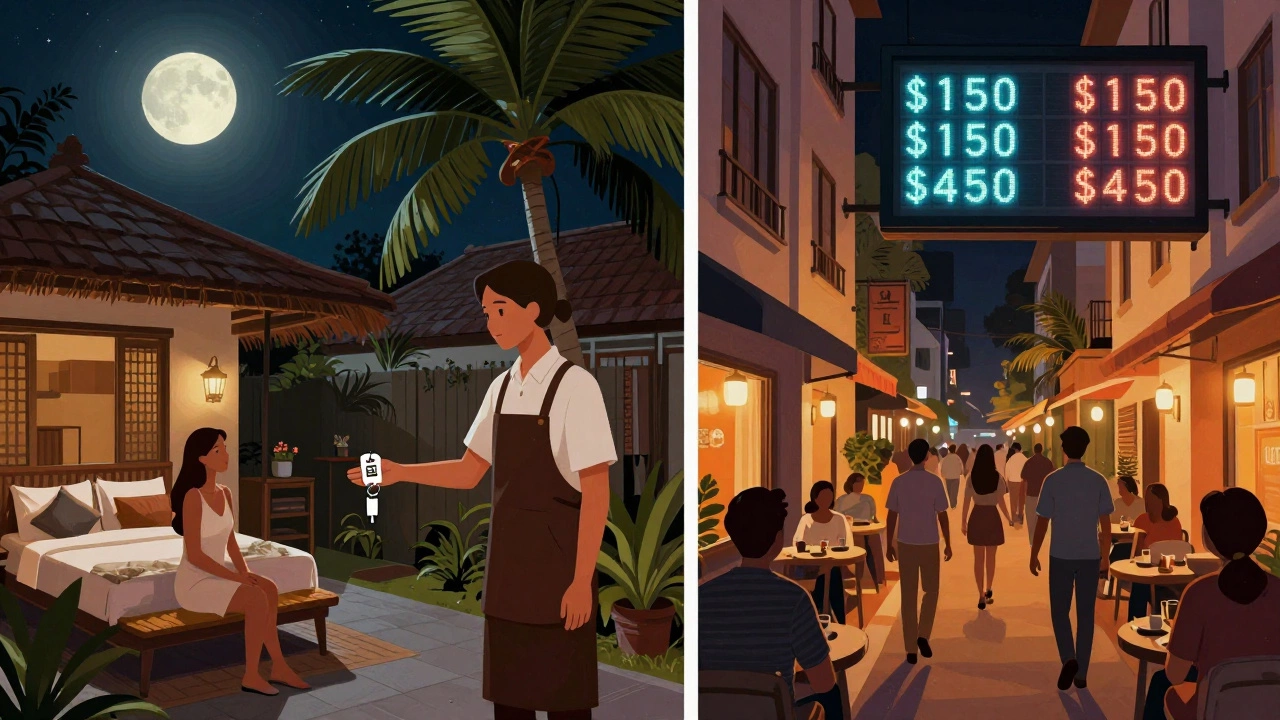
Hotels are like airplanes. They have a fixed number of rooms, and once check-in day hits, unsold rooms are lost revenue. That’s why many hotels, especially in tourist-heavy cities or near big events, start lowering prices 72 to 48 hours before occupancy. If they’ve only sold 40% of their rooms by Wednesday for a Friday stay, they’ll slash rates to fill the rest. This is common in places like Queenstown, Bali, or Miami during off-seasons.Small independent hotels and boutique properties are more likely to do this. They don’t have corporate pricing algorithms locking them in. They’re run by people who need to pay staff and utilities. If a room sits empty, they lose money. So they’ll email you a 30% off code at midnight because they’d rather get $80 than $0.
Why Other Hotels Get More Expensive
But not all hotels play that game. In high-demand locations - think New York City during Thanksgiving, Paris during Fashion Week, or even Wellington during the Wellington Film Festival - prices climb as the date gets closer. Why? Because demand is outpacing supply. There are only so many rooms, and people who waited too long are now desperate. Hotels know this. And they charge accordingly.Corporate hotels and chains like Marriott, Hilton, or Accor often use dynamic pricing powered by AI. These systems track search trends, competitor rates, and even weather forecasts. If your city is expecting a heatwave and people are searching for pools, prices go up. If a major conference books 200 rooms three weeks out, the remaining rooms? They’ll cost 200% more than they did a month ago.
The Sweet Spot: When to Book for the Best Deal
There’s a narrow window where you’re most likely to get a good deal - not too early, not too late. For most destinations, that’s between 14 and 30 days out. Why? Because:- Hotels have started seeing booking trends and adjust rates based on real demand.
- They haven’t yet panicked about unsold rooms.
- Early bird discounts have expired, so you’re not paying extra for being too eager.
In New Zealand, for example, booking a Christchurch hotel 21 days before a weekend getaway often lands you the lowest average rate. Book too early - say, three months ahead - and you might miss out on seasonal promotions. Book too late - under 72 hours - and you risk paying 40% more if the city’s hosting a rugby match or music festival.
How to Spot a Real Price Drop
Not every “last minute deal” is a steal. Some hotels show a fake original price to make the discount look bigger. Here’s how to tell if a price drop is real:- Check Google Hotels or Trivago. Look at the price trend graph over the last 30 days. If the current rate is near the lowest point, it’s likely a real deal.
- Use the same device and browser. Hotels track your searches. If you’ve looked at a room twice, they might show you a higher price to pressure you into booking.
- Compare direct vs. third-party sites. Sometimes the hotel’s own website offers a better rate, free breakfast, or room upgrades - even if Expedia shows a lower number.
Pro tip: Set a price alert on Hopper or Kayak. They’ll notify you if the price drops below your target. Most users who use alerts save 15-25% on average.
What Happens When You Book at the Last Minute
Booking 24 hours before check-in sounds thrilling - until you realize you’re choosing from the last three rooms left. One’s next to the elevator. One’s on the 12th floor with no view. One has a broken AC. You didn’t get a deal. You got leftovers.Hotels don’t just raise prices last minute - they also restrict booking options. Free cancellation? Gone. Breakfast included? Only if you pay extra. Late check-out? Not available. You’re trading flexibility for a lower number, and often, it’s not worth it.
One traveler in Auckland booked a room at 11 p.m. the night before a business meeting. Got a 20% discount. But the hotel was fully booked. The front desk had no idea which room was assigned to her. She waited 40 minutes just to get a key. She missed her 8 a.m. meeting.

When Waiting Actually Saves You Money
There are times when waiting is smart:- You’re flexible on dates - you can shift your trip by a day or two.
- You’re traveling to a city with low occupancy during the season (like Dunedin in May).
- You’re booking a resort with lots of rooms and no events scheduled nearby.
- You’re okay with basic rooms and don’t care about views or upgrades.
In these cases, waiting until 48-72 hours before can net you a 25-40% discount. I’ve seen Wellington hotels drop from $220 to $130 overnight in winter - just because no one booked them.
The Hidden Cost of Last-Minute Booking
It’s not just about the room rate. Last-minute bookings often mean:- No room selection - you get whatever’s left.
- No loyalty points or elite perks.
- Higher chance of being bumped if the hotel overbooks.
- Stress. You’re rushing. You’re tired. You’re not enjoying your trip before it even starts.
One couple in Rotorua booked a spa hotel last minute because they saw a $99 deal. They got a room with a leaking shower, no hot water, and no response from customer service. They ended up spending $150 on a new hotel two blocks away - and still paid for the first night.
Bottom Line: It’s Not About Timing. It’s About Strategy.
Hotels don’t get cheaper just because you wait. They get cheaper when there’s excess supply. They get more expensive when demand spikes. Your job isn’t to wait until the last minute. It’s to understand the market.Here’s your simple rule:
- If it’s a popular destination with limited rooms (city center, beachfront, event season) - book 2-4 weeks out.
- If it’s a low-demand area with lots of options (small town, off-season, rural) - wait until 72 hours before.
- Always check price trends. Don’t trust the “sale” tag.
- Book direct when possible. You’ll get better service and more flexibility.
There’s no magic button that makes hotels cheaper as the date nears. But if you know how the system works, you can beat it - without the stress, the disappointment, or the broken shower.
Do hotel prices drop at midnight?
Some hotels do update prices overnight, especially between 11 p.m. and 2 a.m., when systems refresh and unsold rooms are discounted. But it’s not guaranteed. Many hotels use automated pricing that adjusts based on demand, not time of day. Waiting until midnight won’t help if the hotel is already 80% booked.
Is it better to book directly with the hotel or through a third-party site?
Booking directly is usually better. Hotels often match or beat third-party prices, and you get perks like free breakfast, room upgrades, late check-out, or loyalty points. If something goes wrong - like a wrong reservation or a noisy neighbor - you can call the front desk directly. Third-party sites make you jump through hoops to get help.
Can I get a refund if the price drops after I book?
It depends. Most third-party sites like Booking.com or Expedia don’t offer price matching. Some hotels, like Marriott or Hilton, will refund the difference if you booked directly and the price drops before check-in - but only if you have a flexible rate. Non-refundable bookings almost never qualify. Always read the fine print before hitting “confirm.”
Why do hotel prices change so often?
Hotels use dynamic pricing powered by AI. They track how many people are searching, how many rooms are left, competitor rates, weather, local events, and even flight arrivals. A single rugby match in Christchurch can push prices up 60% in 24 hours. It’s not random - it’s data-driven.
Are last-minute deals worth it for families?
Usually not. Families need specific rooms - two beds, kitchenette, pool access, quiet location. Last-minute bookings rarely offer those choices. You might end up paying the same for a room that doesn’t fit your needs. It’s better to book early and lock in the right setup, even if it costs a little more.