How Many Rooms are in a Cottage? Typical Layouts and Sizes
 Apr, 13 2026
Cottage Layout Planner & Estimator
Select the rooms you want in your ideal cottage to see the estimated category and total room count.
Essential Spaces
Sleeping Quarters
Functional/Rural Additions
Layout Summary
Select rooms to generate your cottage profile
Included Rooms:
Quick Guide to Cottage Sizes
- Tiny/Micro Cottages: 1-2 rooms (often a studio layout).
- Standard Vacation Cottages: 3-5 rooms (1-2 bedrooms, living area, kitchen, bath).
- Traditional Family Cottages: 5-8 rooms (2-3 bedrooms, separate dining, living, and utility rooms).
Defining the Classic Country Cottage
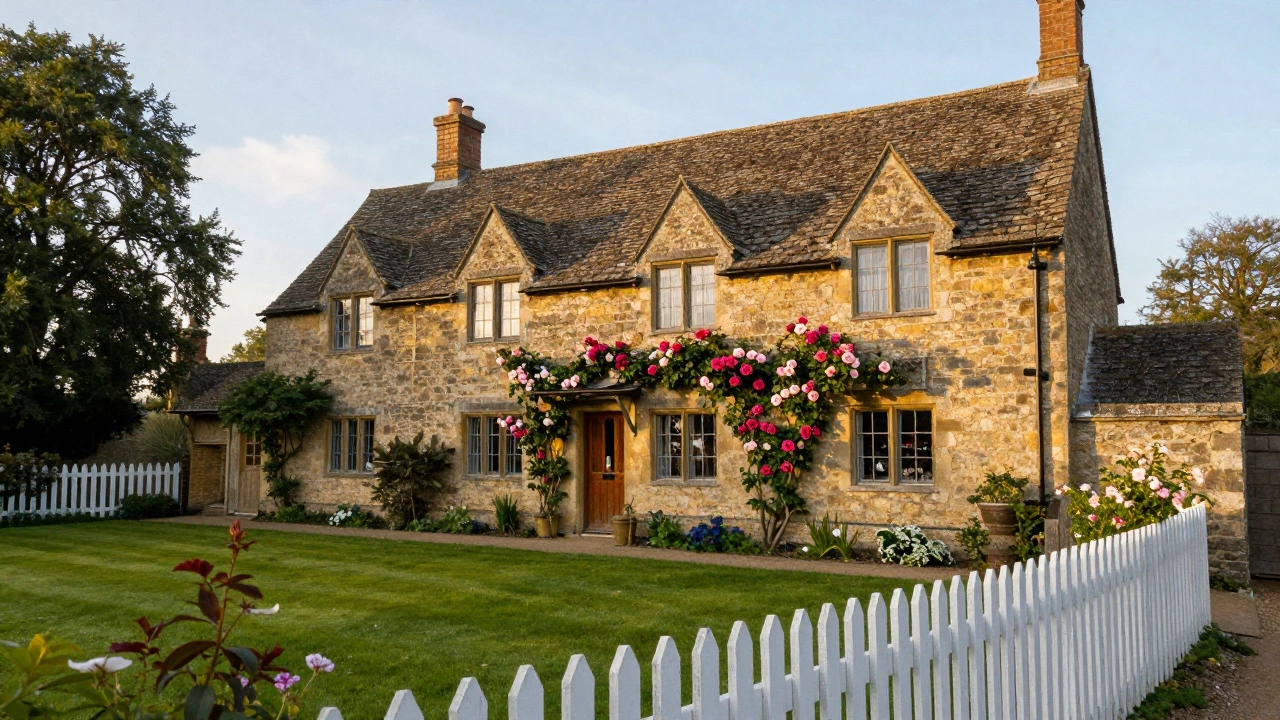
Before counting rooms, we have to define what we're looking at. Country Cottage is a small, cozy dwelling typically located in a rural area, characterized by its modest scale and connection to nature. Unlike a manor or a villa, a cottage is designed for simplicity. The architecture usually prioritizes warmth and efficiency over grand hallways or formal reception rooms.
In a traditional setting, the layout is driven by the hearth. In older versions, the kitchen and living area were often the same room because the fireplace provided the only source of heat. This 'heart of the home' approach is why you'll find that many cottage room count estimates feel lower than a modern suburban house; they simply didn't need separate rooms for every activity.
The Breakdown of a Standard Layout
If you walk into a typical mid-sized cottage, you'll usually find about 4 to 6 distinct functional areas. Here is how those rooms usually break down in a real-world scenario.
First, there's the living room. In a cottage, this isn't just a place for the TV; it's often the primary social hub. You'll likely find a mix of seating and perhaps a wood-burning stove. Then comes the kitchen. In older designs, this was a separate, utilitarian space. In modern renovations, we see the rise of the Open Concept layout, where the kitchen and dining area merge to make a small footprint feel much larger.
Bedrooms are the biggest variable. A 'true' cottage often starts with one or two bedrooms. If it's a romantic getaway, you'll have one large primary suite. If it's a family cottage, you might find a primary bedroom and a smaller second room that doubles as a guest space or a child's room. Finally, there's the bathroom. Traditionally, cottages had one small bathroom, but updated versions often split this into a main bath and a tiny powder room for guests.
| Cottage Type | Avg. Room Count | Primary Focus | Key Rooms |
|---|---|---|---|
| The Cabin/Bungalow | 1-3 | Minimalism | Studio room, Small Bath, Porch |
| Classic English Style | 4-6 | Comfort | Parlor, Kitchen, 2 Bedrooms, Bath |
| Extended Family Cottage | 7-9 | Utility | Living, Dining, Kitchen, 3 Beds, Utility, 2 Baths |
The Hidden Rooms: What People Forget to Count
When people ask how many rooms are in a cottage, they usually think of bedrooms and bathrooms. But a functional country home has 'invisible' spaces that are crucial for rural living. Take the Mudroom, for example. This is a dedicated entry area where you can kick off muddy boots and hang raincoats before entering the main living space. In a rural environment, a mudroom isn't a luxury; it's a necessity to keep the rest of the house clean.
Then there's the pantry or the larder. Because cottages are often located far from city centers, homeowners traditionally stored bulk goods in a cool, dark room. Many modern cottage owners are bringing these back as a way to organize their kitchens. You might also find a 'utility room'-a small space for the washer and dryer so the noise doesn't bleed into the quiet living areas.
Lofts are another classic cottage feature. Many cottages use a Attic Conversion to add an extra bedroom or a cozy reading nook without expanding the footprint of the house. If a cottage is listed as '2 bedrooms' but has a sleeping loft, it technically functions as 3 rooms, even if the loft doesn't have a door.

Factors That Influence Room Count
Why does one cottage have three rooms while another has ten? It usually comes down to three things: the era of construction, the local climate, and the intended use.
Construction Era: Victorian-era cottages often had more segregated rooms. You'd have a separate parlor for guests and a separate kitchen for cooking. Post-war cottages (1940s-60s) shifted toward the 'bungalow' style, emphasizing a flow between the living room and dining area to save on materials and heating.
Climate: In colder regions, rooms are often smaller and more enclosed to trap heat. You'll see more partitions and fewer open-plan spaces. In warmer climates, cottages are more likely to have wide-open layouts and large porches that act as an extension of the living room, effectively adding a 'room' to the outdoors.
Intended Use: A full-time residence needs a home office and more storage. A vacation rental focuses on the 'communal' experience-bigger living areas and shared bedrooms-to accommodate groups of friends or extended family members.
Designing for Small Spaces: The Art of the Cottage
Since cottages are naturally limited in room count, the secret to making them feel spacious is Interior Design strategies that trick the eye. One of the most effective methods is using built-in furniture. Think of window seats with drawers underneath or a wardrobe that spans an entire wall. This removes the need for bulky freestanding furniture that eats up floor space.
Lighting also plays a massive role. Because cottages often have thick walls and fewer windows than modern homes, using light colors on the walls and adding mirrors can make a three-room cottage feel like a five-room home. High ceilings or exposed beams also draw the eye upward, reducing the feeling of confinement.
Another pro tip is the 'multi-purpose room.' In a small cottage, a dining room might double as a home office during the day. A guest bedroom might be designed with a sofa bed so it functions as a cozy den for 90% of the year. This flexibility is what allows people to live comfortably in homes with very low room counts.

Common Pitfalls When Planning a Cottage Layout
If you're designing or renovating a cottage, it's easy to make mistakes that make the space feel cramped. The biggest error is adding too many walls. While it's tempting to create a separate room for every need, too many partitions in a small square footage create a 'maze' effect. It's better to have one large, flexible space than three tiny rooms that you can barely fit a chair into.
Another mistake is neglecting the transition zones. If you jump straight from a muddy garden into a white-carpeted living room, you're going to have a bad time. Ensuring there is a clear entry sequence-even if it's just a small tiled area by the door-is vital for the longevity of the home.
Finally, don't overlook the plumbing. Adding a second bathroom to an old cottage can be an architectural nightmare because of the existing pipes and foundation. If you're planning to increase the 'room count' by adding a bath, check the layout of your Plumbing System first to avoid tearing up your entire floor.
Is a 2-bedroom house considered a cottage?
Yes. While 'cottage' refers more to the style and location than the exact number of rooms, a 2-bedroom layout is very common for traditional cottages. The defining factor is usually the modest size, rural setting, and cozy architectural features rather than a strict room limit.
Do cottages always have a kitchen and living room?
Almost always, but they aren't always separate. In many tiny cottages or cabins, these two areas merge into one 'great room' to maximize space and heat efficiency.
What is the average square footage of a country cottage?
While it varies, a typical cottage often ranges from 500 to 1,500 square feet. Smaller vacation cabins might be under 500, while larger family cottages can reach 2,000 square feet, though at that point they start leaning toward being small houses.
What makes a cottage different from a bungalow?
A bungalow is defined by its single-story layout. A cottage is defined by its style, size, and rural character. You can have a bungalow cottage, but not all bungalows are cottages (some are suburban) and not all cottages are bungalows (many have second-floor lofts).
Can I add more rooms to an existing cottage?
Yes, through additions or attic conversions. However, be careful to maintain the original aesthetic. Adding a modern, boxy extension to a stone cottage can ruin the visual charm and potentially lower the property value.
Next Steps for Your Cottage Project
If you're in the market for a cottage, start by deciding on your priority: is it a quiet retreat or a hosting hub? If you want to host guests, prioritize a layout with a flexible second bedroom or a finished loft. If it's a solo retreat, focus on the quality of the main living area and the connection to the outdoors.
For those renovating, look at your current 'dead space.' Can a wide hallway be turned into a reading nook? Can a large closet be converted into a tiny laundry room? In a cottage, every square inch counts. When in doubt, lean toward openness and light to keep the space feeling fresh and airy.