How Much Does Glamping Cost Per Night? Real Prices for 2026
 Jan, 4 2026
Glamping Cost Calculator
Calculate Your Glamping Price
Get an accurate estimate based on real-world glamping pricing data. Prices reflect 2026 rates.
Amenities
Select what's included
Glamping isn’t just camping with better bedding. It’s waking up to birdsong in a real bed with a proper mattress, sipping coffee on a private deck as the sun rises over a forest or lake, and falling asleep under stars with no bugs crawling on you. But here’s the real question: how much does glamping cost per night? The answer isn’t one number. It depends on where you are, what’s included, and how fancy you want to go.
Glamping Isn’t One Thing - It’s a Spectrum
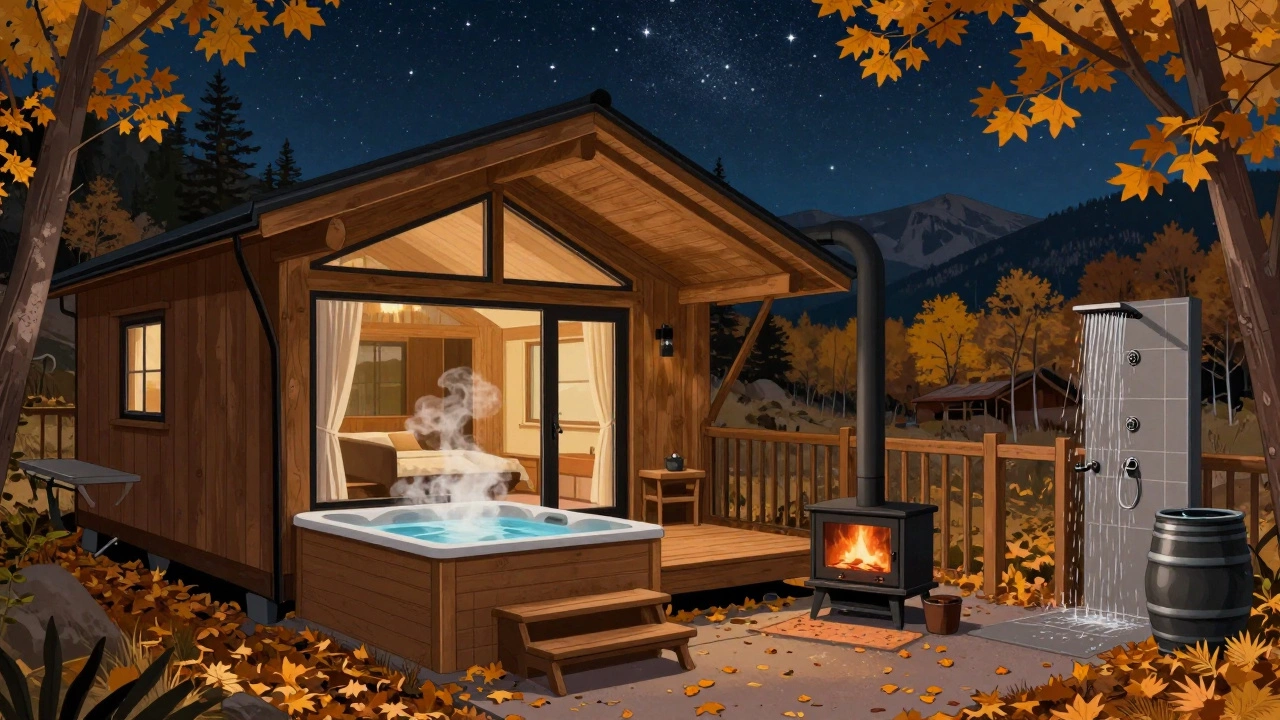
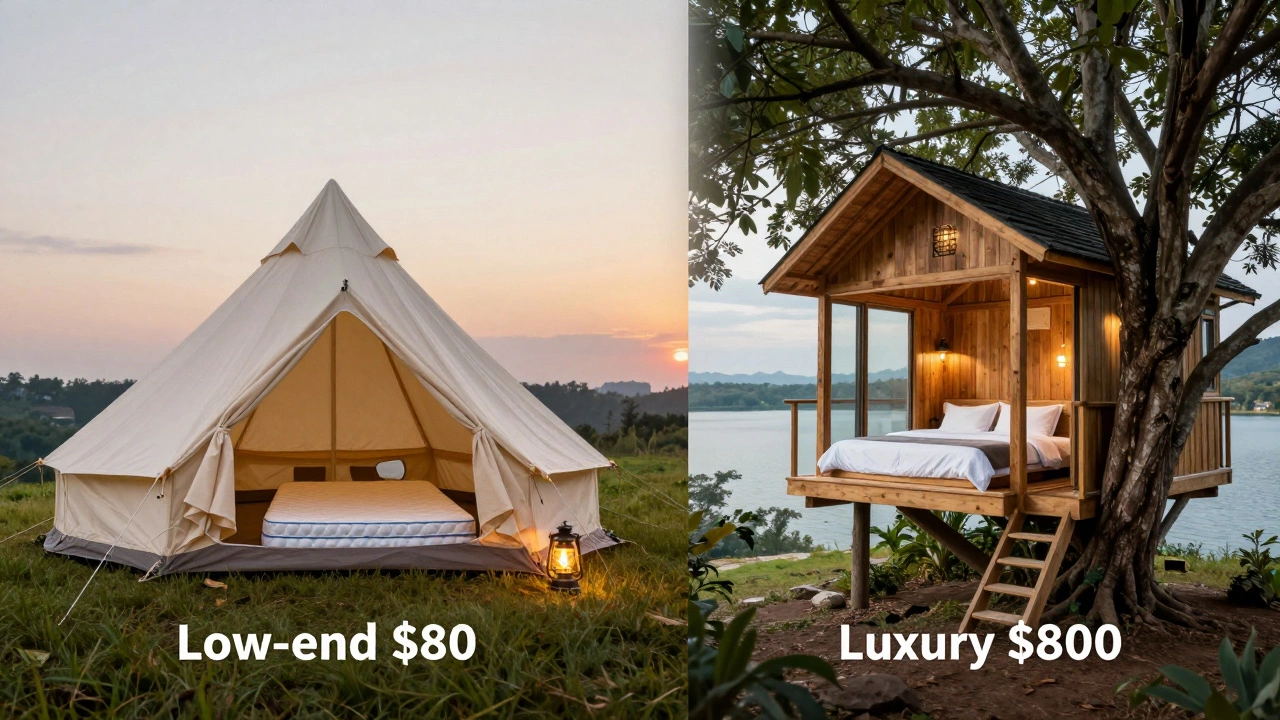
Think of glamping like hotels. You’ve got motels, mid-range inns, and five-star resorts. Glamping works the same way. At the low end, you might pay $80 a night for a basic canvas tent with a foam mattress, a small table, and a lantern. At the high end, you could spend $800 or more for a wooden cabin with a hot tub, a wood-burning stove, a fully equipped kitchen, and a private outdoor shower.
In New Zealand, where I live, a mid-range glamping site on the South Island - think a cozy dome with a queen bed, heating, and a shared bathroom - runs about $150-$200 a night in peak season (December to February). Outside of summer, you can often find the same setup for $90-$120. In the U.S., a similar unit in Colorado or Oregon might cost $120-$180 in summer, dropping to $70-$110 in shoulder seasons. Europe? Prices vary wildly. A basic glamping pod in the UK might start at £60 ($75), but a luxury treehouse in France can hit €300 ($325) or more.
What You Pay For: The Hidden Breakdown
You’re not just paying for a tent. You’re paying for experience, convenience, and comfort. Here’s what typically goes into the price:
- Structure: Canvas tents, yurts, domes, cabins, treehouses - each costs more to build and maintain. A wooden cabin with insulation and windows will always cost more than a simple tent.
- Bedding: Memory foam mattresses, real linens, quilts, and even heated blankets add up. Basic camping gear? $20. Luxury bedding? $50+ per night in value.
- Utilities: Electricity, heating, hot water, and Wi-Fi aren’t free. Sites with solar power and composting toilets keep costs lower. Those with full plumbing and air conditioning? Higher prices.
- Location: A glamping site on a private beach in Bali will cost more than one in a forest 20 miles from town. Proximity to attractions, views, and privacy all drive up the price.
- Extras: Breakfast included? A bottle of wine waiting for you? A private chef? A guided nature walk? These aren’t standard. But they can add $30-$100+ to your nightly rate.
Some places bundle everything. Others charge extra for everything from firewood to towels. Always check what’s included before you book.
Peak Season vs. Off-Season: When to Save
Glamping prices swing like a pendulum. In popular spots like Banff, Lake Tahoe, or the New Zealand Coromandel Peninsula, rates can double during holidays and summer months. Christmas week in a luxury glamping dome? $700 a night. Two weeks before or after? $250.
Here’s a simple rule: if you can go mid-week in spring or fall, you’ll save 30-50%. Most sites have low-season rates from April to June and September to November. Weeknights are cheaper than weekends. Book early for peak times - the best units go fast.
Some operators even offer ‘solo traveler’ discounts or extended stay deals. If you’re staying three nights or more, ask. You might get 15-20% off.
Where to Find Real Deals - No Fluff
Don’t trust the first Google result. Glamping sites don’t always show their best prices on big booking platforms. Here’s where to look:
- Direct booking: Go to the glamping site’s own website. They often have exclusive deals - free breakfast, late checkout, or a free bottle of local wine.
- Local tourism boards: Many regions have official tourism sites with curated lists and seasonal promotions. Try searching ‘[region] glamping deals’ - not just ‘glamping’.
- Facebook groups: Local travel groups are goldmines. People post last-minute cancellations, group discounts, or even swap stays.
- Glamping-specific sites: Platforms like Glamping Hub, Hipcamp, or Love Camping list verified properties with real reviews. Filter by price, amenities, and cancellation policy.
One tip: avoid sites that charge $20-$50 per person on top of the base rate. That’s a red flag. You’re paying for the space, not the number of people.
What You Should Skip - And Why
Not all glamping is worth the price. Here’s what to avoid:
- ‘Glamping’ that’s just a tent with a rug: If there’s no insulation, no proper bed, and no heating - it’s not glamping. It’s camping with a fancy label.
- Hidden fees: Cleaning fees, resort fees, mandatory tips. If it’s not listed upfront, assume it’s a trap.
- Overcrowded sites: If a place has 20 units crammed into 5 acres, you’re paying for ‘glamping’ but getting noise, no privacy, and muddy paths.
- Zero reviews or fake reviews: Look for photos from guests, not just professional shots. If there are no recent reviews, walk away.
I once booked a ‘luxury glamping’ site in Tasmania that looked stunning online. Turned out, the ‘bed’ was a futon on the floor. The ‘bathroom’ was a porta-potty 50 meters away. I paid $220. I left at noon the next day.
Is Glamping Worth It?
If you want to sleep under the stars without sleeping on the ground - yes. If you want to escape the city, unplug, and feel like you’re in nature without giving up comfort - absolutely.
Compare it to a hotel. A decent boutique hotel in a scenic area might cost $250-$350 a night. Glamping gives you the same level of comfort, but with a view of the trees, the sound of wind, and the feeling that you’re truly away from it all. For many, that’s priceless.
And if you’re eco-conscious? Many glamping sites use solar power, rainwater collection, and composting toilets. Some even partner with local conservation groups. You’re not just paying for a night - you’re supporting sustainable travel.
Final Tip: Budget for the Whole Experience
Don’t just look at the nightly rate. Add in:
- Transportation - are you driving? Flying? Renting a car?
- Food - do you need groceries? Will you eat out?
- Activities - guided hikes, kayaking, hot springs? Those cost extra.
- Travel insurance - especially if you’re going somewhere remote.
One couple I know budgeted $400 for a two-night glamping trip in New Zealand. They spent $120 on the site, $80 on groceries, $70 on a local tour, and $60 on gas. Total: $330. They called it the best weekend they’d had in years.
Glamping doesn’t have to break the bank. But you need to know what you’re paying for - and what you’re getting.
Is glamping cheaper than a hotel?
Sometimes, yes - sometimes, no. A basic glamping unit can be cheaper than a mid-range hotel, especially if you’re in a remote area. But luxury glamping with hot tubs, private chefs, and premium locations often costs more than a standard hotel room. The value isn’t in the price - it’s in the experience. You’re paying for nature, privacy, and comfort you can’t get in a city hotel.
What’s the cheapest glamping option?
The cheapest glamping options are usually basic canvas tents or dome shelters with a mattress, basic lighting, and shared facilities. In off-season, you can find these for as low as $60-$80 per night in places like the Pacific Northwest, parts of Eastern Europe, or rural New Zealand. Just make sure there’s heating and insulation - otherwise, it’s just camping with a fancy name.
Are glamping sites worth it for families?
Yes, if you pick the right one. Many glamping sites offer larger units that sleep 4-6 people, with kitchens, multiple beds, and outdoor play areas. It’s safer and more comfortable than tent camping with kids. Plus, kids love the novelty. Just check if the site allows children, has child-safe amenities, and if there are nearby activities like trails or lakes.
Do glamping sites have Wi-Fi and electricity?
Most do - but not all. Basic glamping units might have solar-powered lights and USB charging ports. Luxury units have full electricity, Wi-Fi, and even smart thermostats. If you need Wi-Fi for work or streaming, always confirm before booking. Some sites offer it only in common areas, not in the unit.
Can you bring your own tent to a glamping site?
Almost never. Glamping sites charge for the structure, setup, and maintenance of the unit you’re renting. Bringing your own tent defeats the purpose - and most sites don’t allow it. If you want to camp with your own gear, look for traditional campgrounds instead.
Is glamping eco-friendly?
It can be - but not always. Many glamping sites use sustainable materials, solar power, and low-impact designs. Some even donate to land conservation. But others are just luxury tents with high energy use and single-use amenities. Look for certifications like Green Key or EcoCert, or check if the site mentions renewable energy, composting, or local sourcing.