How to Make Your House Look Like a Country Cottage
 Dec, 8 2025
Country Cottage Color Palette Generator
Create your authentic country cottage color scheme using the soft, layered hues described in the article. Choose 3-4 complementary colors that embrace imperfection and warmth.
Your Country Cottage Palette
Why these colors work: Like the article says, country cottages don't scream for attention—they whisper. These soft, layered hues create warmth without being clinical. Try them on walls, textiles, and fixtures for that authentic lived-in feel.
There’s something quiet and comforting about a country cottage. Not the kind you find on a postcard in the Cotswolds, but the real one-the one with mismatched china, sun-faded curtains, and a kitchen table that’s seen three generations of breakfasts. You don’t need a thatched roof or a hundred-year-old stone wall to bring that feeling home. You just need to slow down, embrace imperfection, and let warmth take over. This isn’t about buying a whole new set of furniture. It’s about changing how you live in your space.
Start with color-soft, muted, and layered
Country cottages don’t scream for attention. They whisper. Think chalky whites, dusty blues, sage greens, and warm greys. These aren’t paint chips from a big-box store labeled "modern farmhouse." These are colors that have been worn by sunlight over years. If you’re painting walls, skip the pure white. Go for Benjamin Moore’s "Chantilly Lace" or Sherwin-Williams’ "Agreeable Gray." They’re soft enough to feel cozy, not clinical.
Layer those colors with textiles. A faded linen curtain. A wool throw with a little pilling. A quilt stitched by hand or bought secondhand. The key is texture, not perfection. A single bright floral cushion? Fine. But if every surface is matchy-matchy, you’ve lost the cottage soul.
Use what you already have-then add slowly
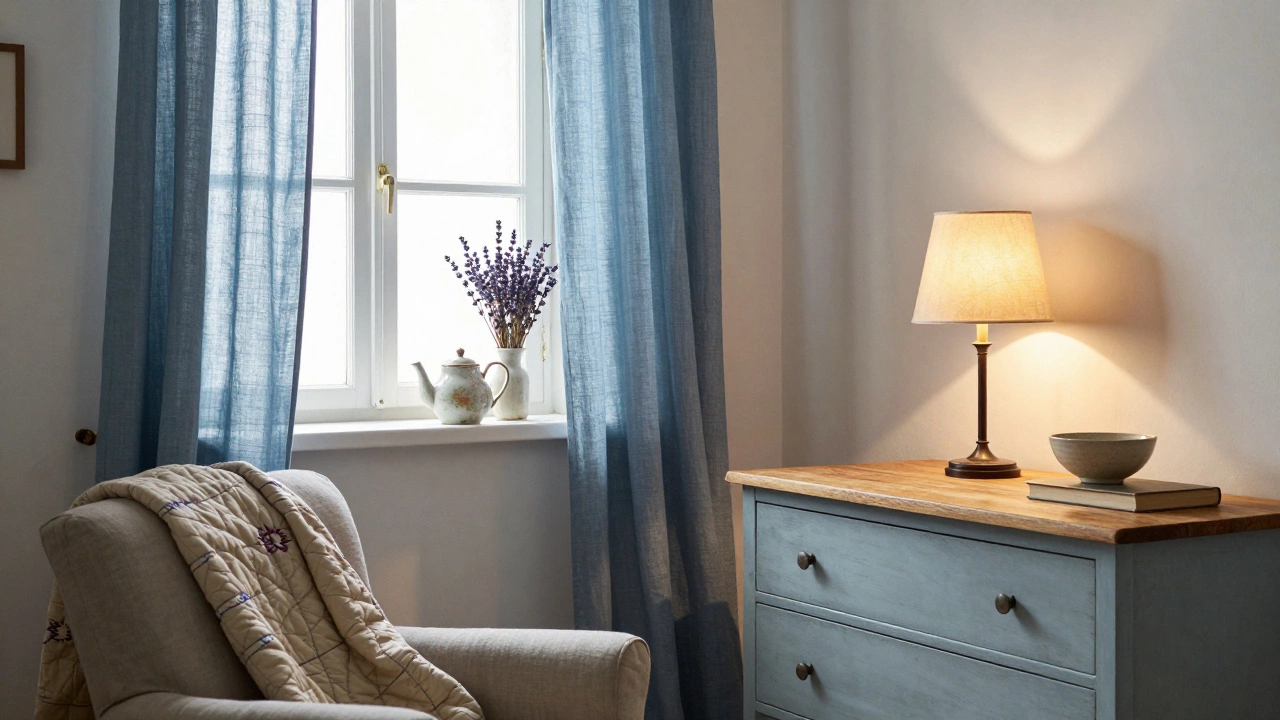
You don’t need to strip your house down to the studs. Start with what’s already there. That old wooden dresser? Sand it lightly, paint the legs a pale blue, and leave the top natural. That chipped teapot? Put it on the windowsill with a sprig of dried lavender. Country cottages thrive on stories, not newness.
Visit thrift stores, flea markets, and yard sales. Look for pieces with character: a wooden chair with a missing slat, a ceramic pitcher with a hairline crack, a brass candlestick that’s lost its shine. These aren’t flaws-they’re proof of life. A country cottage isn’t a showroom. It’s a lived-in place where things have been loved, used, and kept.
Bring the outside in-naturally
Country cottages don’t fight nature. They invite it in. Open the windows in spring and let the breeze carry the scent of grass. Keep a basket of firewood by the hearth, even if you don’t use the fireplace. Put fresh flowers in mason jars every week. Dried lavender, eucalyptus, or even wild grasses in a tin can work just as well.
Wood is your friend. Not polished, glossy wood. Rough-hewn, reclaimed, or even painted wood. A wooden ladder leaning against the wall holds blankets. A wooden crate under the window becomes a side table. A wooden bench at the back door holds boots and gardening gloves. It’s not about matching furniture. It’s about letting wood breathe and age.
Lighting should feel gentle, not bright
Harsh overhead lights kill the cottage vibe. Replace them with lamps. Table lamps with fabric shades. Wall sconces with dimmers. Candles-real ones, not the fake LED kind. Place them on shelves, mantels, and windowsills. The glow should be soft enough that you don’t need to squint.
Use warm bulbs-2700K or lower. Anything brighter feels like an office. A single pendant light over the kitchen table? Perfect. But don’t light every corner. Leave some shadows. Country cottages aren’t lit for photos. They’re lit for reading, talking, and quiet evenings.
Clutter? No. Character? Yes.
Don’t confuse clutter with charm. A country cottage isn’t messy. It’s full of things that matter. That means a shelf with a few well-loved books, a stack of old magazines by the armchair, a collection of vintage spoons in a ceramic bowl. But if your countertops are buried under random gadgets, it’s not cottage-it’s chaos.
Keep surfaces clear. Let one or two meaningful items take center stage. A ceramic bowl for keys. A small vase with one stem. A framed photo of a grandmother in a sunhat. Less is more when it’s chosen with care.
Fixtures and hardware tell the story
Those cabinet handles? Swap out shiny modern ones for aged brass, pewter, or even ceramic knobs. Look for ones with patina-dull, uneven, slightly worn. The same goes for door handles, light switches, and faucets. A clawfoot tub in the bathroom? Even better. If you can’t replace them, paint them. A matte black finish on old brass knobs can look like it’s been there since 1920.
Don’t forget the little things: a cast iron kettle on the stove, a wooden rolling pin in the drawer, a woven basket for bread. These aren’t decor. They’re tools that have earned their place.
Make the kitchen the heart
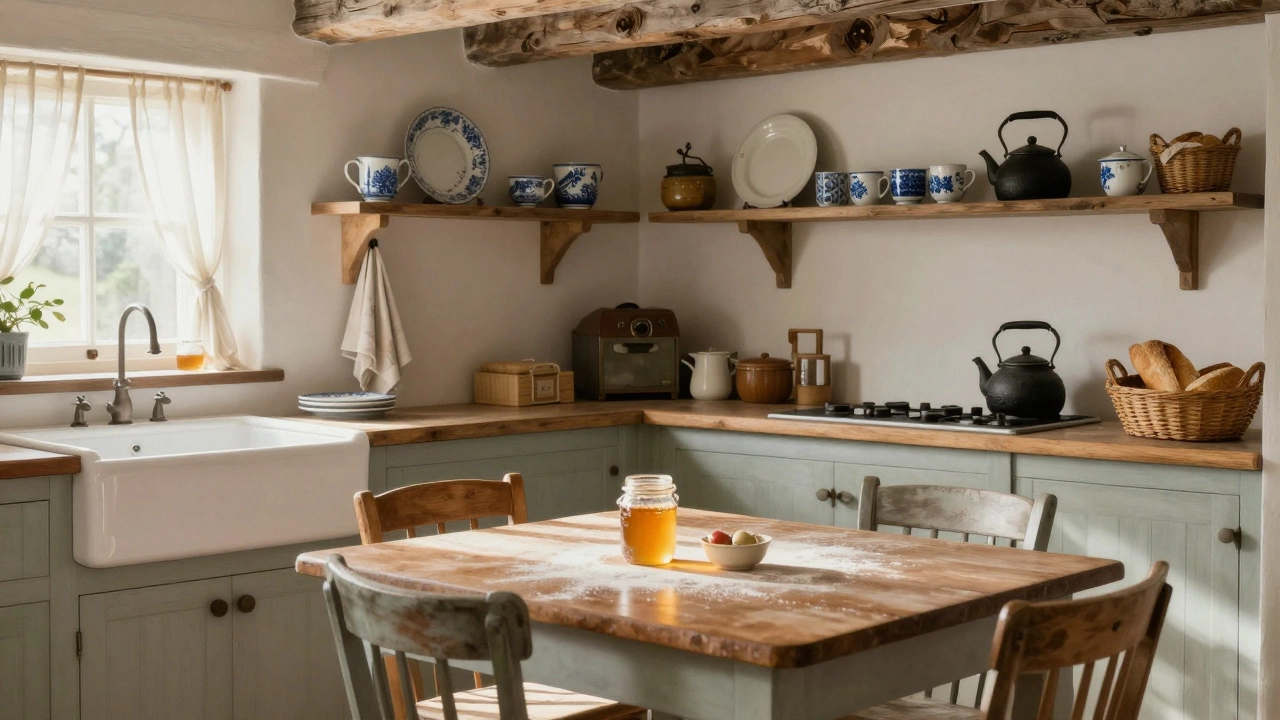
The kitchen is where the cottage breathes. It doesn’t need stainless steel or quartz countertops. A painted wooden table with mismatched chairs? Ideal. A farmhouse sink? If you can afford it, great. If not, a deep porcelain sink works fine. Keep dish towels hanging on hooks, not tucked away. Let the counter show signs of use-flour dust, a half-used jar of honey, a teapot always on the boil.
Open shelves are your ally. Display your favorite plates, mugs, and jars. Don’t worry if they’re not from the same set. A blue-and-white transferware mug next to a chipped white one? That’s the point. The kitchen should feel like someone cooks here-not just looks like they should.
Bedrooms are for rest, not display
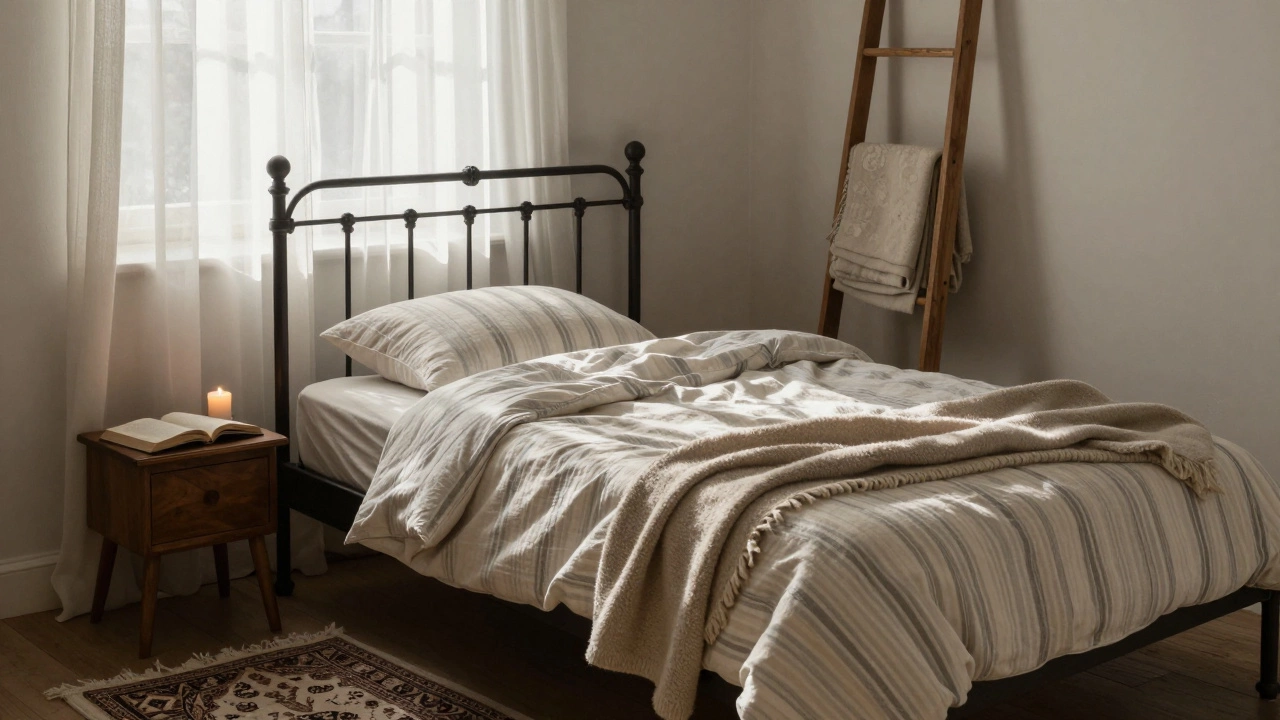
Keep bedrooms simple. A wrought iron bed frame. A cotton duvet cover in a soft stripe or floral. A wool blanket folded at the foot. No headboards covered in velvet. No mirrored nightstands. Just quiet, warm, and uncluttered. A small rug by the bed-maybe an old Persian one with frayed edges-is enough.
Let the light in. Sheer curtains. No blackout shades. Wake up with the sun, not an alarm. A single book on the nightstand. A candle. That’s all you need.
It’s not about perfection. It’s about peace.
Country cottage style isn’t a trend. It’s a way of slowing down. It’s choosing comfort over trends, warmth over polish, and meaning over matching. You won’t find this look on Pinterest boards with 100-step guides. You’ll find it in the quiet corners of homes where people have lived, loved, and let things age naturally.
Start small. Paint one wall. Move one piece of furniture. Add one thrifted vase. Let it breathe. Over time, your house won’t just look like a country cottage. It’ll feel like one.
Can I make my modern house look like a country cottage?
Yes. Country cottage style isn’t about architecture-it’s about feeling. Even a sleek, contemporary home can feel cozy with the right colors, lighting, and textures. Swap out harsh lighting for warm lamps, add layered textiles, use reclaimed wood, and display personal, imperfect objects. The structure stays the same; the soul changes.
Do I need to buy all new furniture?
No. In fact, buying new furniture often works against the style. Country cottages thrive on secondhand finds-old dressers, mismatched chairs, worn rugs. Sand, paint, or reupholster what you already have. A wooden table from a garage sale, painted white with a few brushstrokes, looks more authentic than a new "farmhouse" table from a big retailer.
What’s the biggest mistake people make?
Trying to make everything match. Country cottages aren’t curated. They’re collected. If your curtains, pillows, and tablecloth are all from the same floral pattern, it looks staged. Mix patterns, textures, and eras. A striped pillow next to a floral quilt. A ceramic bowl beside a metal tray. Imperfection is the point.
How do I make a small space feel like a cottage?
Use light colors on walls and ceilings to open up space. Add mirrors to reflect natural light. Choose smaller, scaled furniture-think side tables instead of bulky consoles. Use vertical space: open shelves, hanging baskets, wall hooks. Keep clutter to a minimum. A small cottage feels cozy, not cramped, when every item has purpose and care.
Is country cottage style the same as farmhouse style?
They’re cousins, not twins. Farmhouse style often leans into modern clean lines, white shiplap walls, and industrial hardware. Country cottage is softer, warmer, and more lived-in. It uses faded colors, mismatched patterns, and weathered wood. Farmhouse is polished; cottage is patient. One is designed, the other is grown.