Is Oceanfront or Oceanview Better? The Real Difference for Beachfront Hotels
 Dec, 1 2025
Oceanfront vs Oceanview Cost Calculator
Your Travel Details
Key Considerations
Source: "What About Oceanfront?" section
Results
Enter your details above to see if oceanfront is worth the premium.
When you’re booking a beachfront hotel, you’ve probably seen both oceanfront and oceanview listed as room types. They sound almost the same-until you get there. One gives you direct access to the sand and waves. The other gives you a distant glimpse over rooftops or palm trees. And the price difference? Sometimes it’s hundreds of dollars a night.
So which one’s actually worth it? Let’s cut through the marketing fluff and look at what you’re really paying for.
What Does Oceanfront Really Mean?
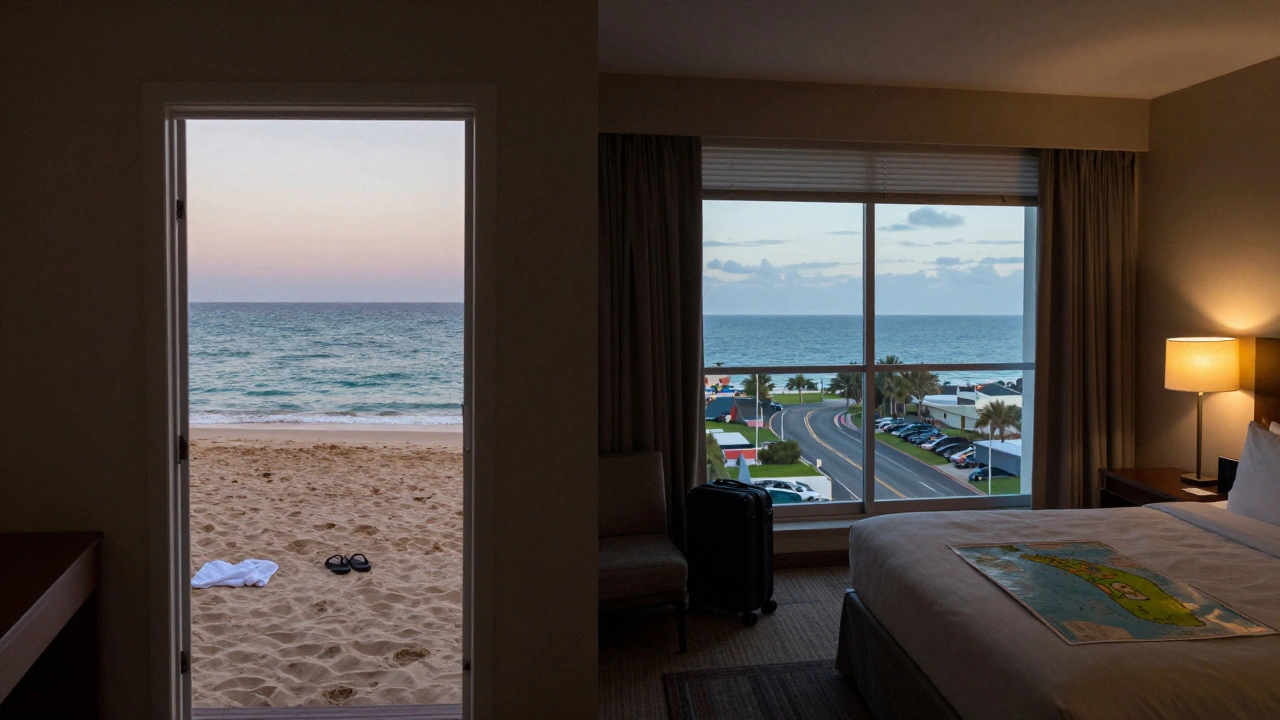
An oceanfront room sits right on the beach. No buildings, no roads, no parking lots between you and the water. You step out your door, and within 10 to 30 seconds, your feet are in the sand. The sound of waves isn’t background noise-it’s your morning alarm clock. At night, you can open the window and hear the tide roll in.
These rooms are usually on the first or second floor, sometimes with private balconies that extend right over the sand. Some even have direct beach access paths from the lobby. You won’t find oceanfront rooms on upper floors unless the building is set back from the dunes-which is rare. In places like Miami, Maui, or the Gold Coast, oceanfront units are often the most expensive because they’re limited. There’s only so much beach to build on.
Real-world example: At a hotel in Cancún, an oceanfront room costs $420 a night. The oceanview room next door? $280. The difference isn’t just the view. The oceanfront room has a private patio with lounge chairs, direct access to the beach, and no trees blocking the sunrise. You’re not watching the ocean-you’re part of it.
What About Oceanview?
Oceanview means you can see the ocean from your window. That’s it. No promises about how much, how clear, or how close. Some oceanview rooms have a perfect, unobstructed panorama from the 12th floor. Others? You’re looking through a gap between two palm trees, or across a pool deck and a row of bungalows. The ocean might be visible, but it’s not the main focus.
These rooms are often higher up in the building. Sometimes they’re on the side or back of the property, angled just enough to catch a sliver of blue. In crowded resorts like Myrtle Beach or Bali, oceanview can mean you’re looking at the neighboring hotel’s rooftop bar. You’ll need binoculars to spot a seagull.
But here’s the catch: oceanview doesn’t always mean worse. At a cliffside resort in Big Sur, the oceanview rooms have floor-to-ceiling windows that frame the Pacific like a living painting. The view is better than the oceanfront rooms below, which are blocked by a rocky ledge. Context matters.
It’s Not Just About the View-It’s About the Experience
Think about what you actually do on vacation. Do you want to walk barefoot to the water at 6 a.m. for a quiet swim? Do you want to fall asleep with the sound of waves, not the hum of a pool pump? Do you want to watch the sunset without having to walk 10 minutes down a paved path?
Oceanfront rooms win on immersion. You don’t need to plan your beach time. It’s always there. Kids can run out the door. Couples can sit on the sand with a bottle of wine after dinner. You’re not visiting the beach-you’re living on it.
Oceanview rooms are more about observation. You’re a guest in a hotel that happens to have a view. You still need to walk to the beach. You still need to pack towels, sunscreen, and a cooler. The ocean is a photo op, not a daily ritual.
One traveler in Puerto Rico told me she paid extra for oceanfront because she has chronic back pain. Walking to the beach every time was too much. With oceanfront, she could sit on her balcony and let the salt air soothe her joints. That’s not luxury-that’s practical comfort.

Price Difference: Is It Worth It?
On average, oceanfront rooms cost 30% to 70% more than oceanview. In peak season, that gap can widen to 100%. But here’s what most people don’t realize: the price isn’t just for the view. It’s for the location, the noise level, the privacy, and the exclusivity.
Take a hotel in Santa Monica. Oceanfront rooms are $650/night. Oceanview? $400. The oceanfront has direct beach access, no shared walkways, and a private towel service. The oceanview has a shared pool, a noisy street below, and a view that’s blocked by a lifeguard tower half the day.
But if you’re only staying two nights and plan to spend most of your time at the theme park or downtown, the oceanview saves you $500. You still get the sunset photos. You still get the ocean breeze. You just don’t get the convenience.
Pro tip: Book oceanfront only if you’re planning to be at the beach more than twice during your stay. Otherwise, save your money.
What About Privacy and Noise?
Oceanfront rooms aren’t always quiet. If you’re on the ground floor, you might hear people walking by, kids playing, or late-night bonfires. Some hotels have loud beach bars or volleyball nets right outside your window.
Oceanview rooms, especially on higher floors, can be surprisingly peaceful. No foot traffic. No beach towels drying on railings. Just you, the window, and the distant crash of waves.
One couple in Hawaii booked an oceanview room on the 8th floor because they wanted to sleep without hearing drunk tourists shouting at 2 a.m. They got a perfect view, zero noise, and a quiet balcony with a hammock. They said it was better than oceanfront.
Ask the hotel: Is there a beachside walkway? Are there any bars or events near the oceanfront units? Is the room facing the water or the parking lot?
Who Should Choose Oceanfront?
- You want to walk to the beach in your pajamas
- You’re traveling with young kids or elderly family members
- You plan to spend at least half your days by the water
- You value privacy and direct access over a higher floor view
- You’re celebrating a special occasion and want the full experience
Who Should Choose Oceanview?
- You’re on a budget and want to save money
- You plan to spend most of your time exploring the island or town
- You prefer quiet, higher-floor rooms with fewer distractions
- You’re okay with a 5- to 10-minute walk to the beach
- You care more about the room’s design than its location
How to Spot a Fake Oceanview
Not all oceanview rooms are created equal. Some hotels label any room with a sliver of blue as "oceanview." Here’s how to avoid the trick:
- Check Google Street View or drone photos of the hotel. See what’s between the building and the water.
- Look at guest photos on TripAdvisor. Search "oceanview room [hotel name]." If every photo shows a tree or a pool, you’re not getting the real thing.
- Call the hotel and ask: "Is the ocean visible from the room without looking over any other buildings?" If they hesitate, walk away.
- Ask if the room faces true ocean, or if it’s ocean-angled (meaning it faces the side of the building, not the water).
Final Decision: It’s About Your Priorities
Oceanfront isn’t better. Oceanview isn’t worse. They’re different experiences.
If you want to wake up and feel like you’re living on the coast, oceanfront is the move. You’ll remember the sound of the tide, the feel of salt on your skin, and the ease of stepping outside with nothing but a towel.
If you want a beautiful view without the premium price, oceanview can be just as satisfying-especially if you pick a high floor with a wide, unblocked angle. You’ll still get the sunsets. You’ll still get the breeze. You’ll just need to put on shoes to reach the sand.
Don’t let the words "oceanfront" trick you into spending more than you need to. Ask the right questions. Check the photos. Know your own travel style. Then choose what fits your trip-not your Instagram feed.
Is oceanfront always more expensive than oceanview?
Usually, yes-but not always. Oceanfront rooms cost more because they’re rare and offer direct beach access. But in some cases, like cliffside resorts or hotels with obstructed oceanfront views, a high-floor oceanview room can cost the same or even more. Always compare actual photos and floor plans, not just the label.
Can you get a good oceanview from a lower floor?
Yes, but it’s uncommon. Most lower-floor oceanview rooms have their view blocked by trees, pools, or other buildings. If you’re looking at a lower-floor oceanview room, ask for a photo of the actual view from that specific window. Many hotels will send one if you ask.
Are oceanfront rooms noisier?
They can be. Ground-floor oceanfront rooms often face beach walkways, volleyball games, or late-night parties. But upper-floor oceanfront rooms (if available) can be quieter than mid-level oceanview rooms that overlook a noisy pool or parking lot. Always ask about noise sources when booking.
Is oceanfront better for families?
For families with young kids or limited mobility, yes. Oceanfront means you can walk to the beach without carrying gear across the property. It’s safer, faster, and less stressful. Many oceanfront hotels also offer beach toys, umbrellas, and towels on request-something oceanview rooms rarely do.
Should I book oceanfront if I only stay one night?
Only if you plan to be on the beach that day. If you’re arriving late, heading out early, or spending your time in town, the extra cost won’t matter. You won’t use the access. Save the money and spend it on dinner or an activity instead.