Leftover Food: How to Use It Wisely and Reduce Waste
When you think of leftover food, food that remains after a meal and is often saved for later use. Also known as food scraps, it’s not just what’s left on the plate—it’s a chance to save money, time, and the planet. Most households toss out nearly a third of the food they buy. That’s not just wasteful—it’s expensive and harmful to the environment. But here’s the good news: you don’t need fancy tools or a chef’s skills to turn those leftovers into something great.
Food waste, the disposal of edible food that could have been eaten. Also known as edible food loss, it’s a global problem tied directly to how we shop, cook, and store meals. A single potato peel, a handful of wilted greens, or last night’s roasted chicken can become tomorrow’s soup, stir-fry, or sandwich filling. The trick isn’t magic—it’s knowing how to store things right, recognize what’s still safe, and mix flavors creatively. Keep broth in the freezer. Turn stale bread into croutons. Blend overripe fruit into smoothies. These aren’t hacks—they’re habits that save cash and reduce landfill trips.
Meal planning, preparing a schedule of meals ahead of time to avoid buying too much. Also known as weekly meal prep, it’s the quiet hero behind less waste. When you plan what you’ll eat, you buy only what you need. That means fewer forgotten veggies in the crisper. Fewer half-used jars gathering dust. Fewer takeout orders because you’re out of ideas. Start simple: cook one extra portion on purpose. Label it. Put it front and center in the fridge. Make it the easy choice for lunch or a late snack.
And then there’s food storage, the way you keep food fresh to extend its life. Also known as proper refrigeration and preservation, it’s the most overlooked skill in the kitchen. Did you know lettuce lasts longer wrapped in a dry towel? That herbs stay fresh in a glass of water? That tomatoes should never go in the fridge? These aren’t myths—they’re small fixes that add up. Use clear containers. Write dates on containers. Organize your fridge so nothing hides in the back. Your future self will thank you.
Sustainable cooking doesn’t mean buying expensive organic produce or installing a compost bin—though those help. It starts with seeing leftovers not as failures, but as ingredients. A bit of rice, a splash of soy sauce, some chopped onions, and a fried egg? That’s a meal. Leftover mashed potatoes shaped into patties and fried? That’s dinner. You don’t need a recipe. You just need to stop thinking of scraps as trash.
Below, you’ll find real stories and practical tips from people who’ve turned their kitchen waste into something useful—whether it’s making broth from bones, reviving soggy veggies, or turning last night’s pasta into a breakfast hash. These aren’t grand solutions. They’re simple, doable, and proven. No guilt. No perfection needed. Just smarter ways to use what you already have.
What Happens to Leftover Food in All-Inclusive Hotels?
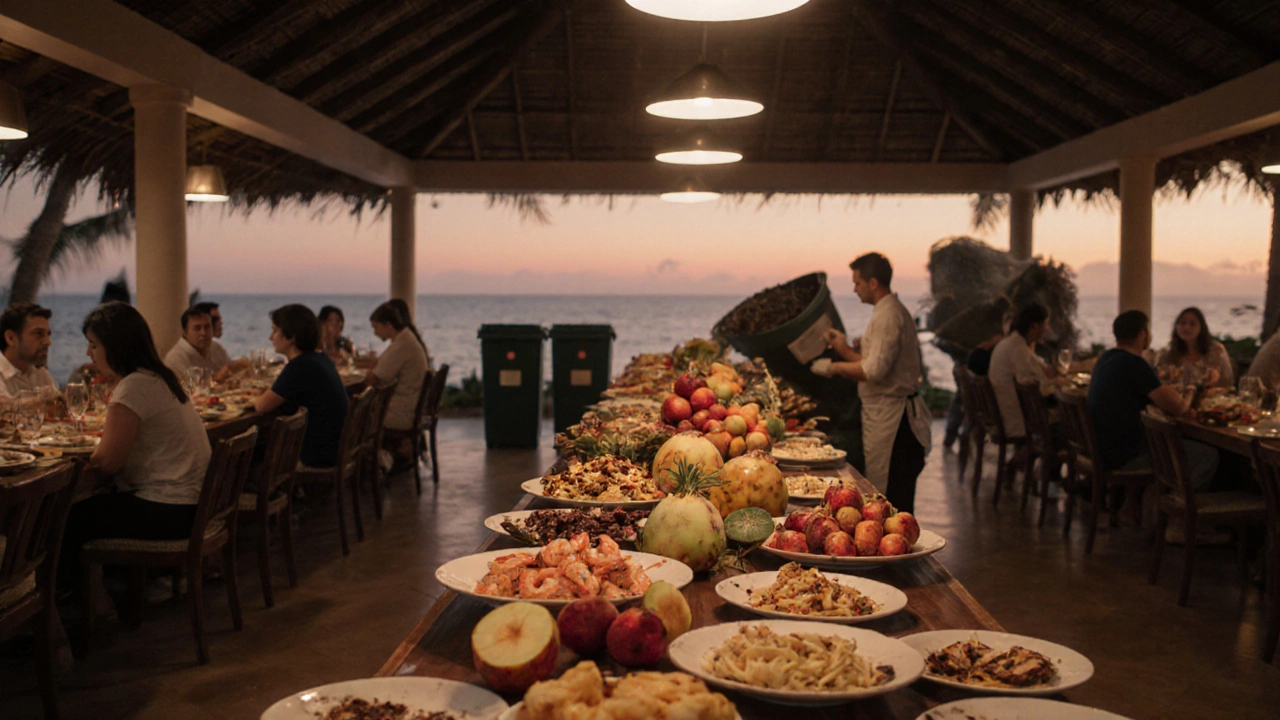
All-inclusive hotels waste tons of food daily-but what really happens to it? From composting to donations, here’s how resorts handle leftovers and what you can do to help.
- Nov, 24 2025
- 0 Comments