What Are Commercial or Business Hotels? A Clear Guide for Traveling Professionals
 Dec, 15 2025
Business Hotel Scorecard Calculator
Evaluate business hotels based on what matters most for your work trips. Each criterion is weighted by importance for business travelers.
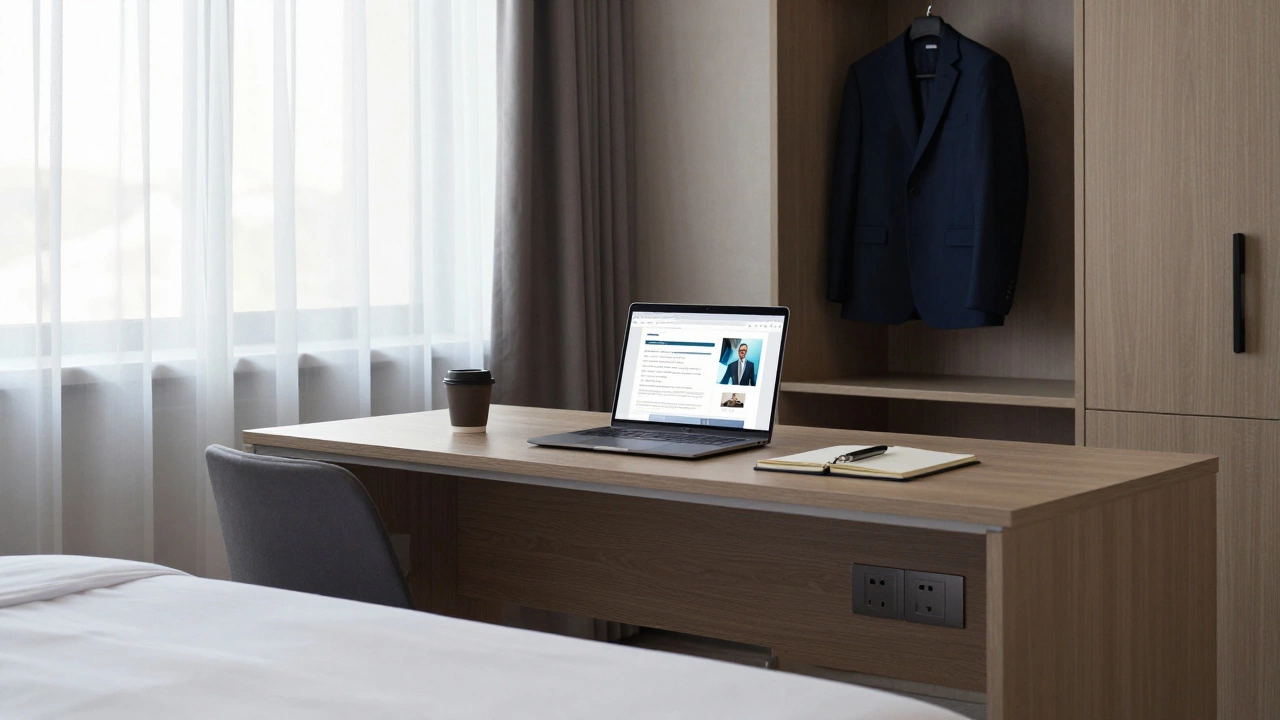
When you're on a work trip, you don't need a poolside cabana or a spa menu. You need a bed that doesn’t creak, fast Wi-Fi that actually works, and a desk where you can finish your presentation before your 8 a.m. meeting. That’s what a business hotel is built for.
What Exactly Is a Business Hotel?
A business hotel, also called a commercial hotel, is designed specifically for professionals traveling for work. Unlike resort-style properties or luxury boutique stays, these hotels focus on efficiency, functionality, and reliability. They’re not trying to impress with chandeliers or infinity pools-they’re trying to keep your schedule on track.
These hotels are common in city centers, near corporate campuses, convention centers, and major transport hubs. You’ll find them in places like downtown Chicago, London’s Canary Wharf, or Wellington’s CBD. They cater to people who check in at 10 p.m. after a flight and check out at 6 a.m. for a morning meeting.
Business hotels aren’t just about rooms. They’re about systems: automated check-in kiosks, 24/7 front desks, laundry services that return your suit in six hours, and meeting rooms you can book by the hour. Many have partnerships with local coffee shops or delivery services so you don’t have to leave the building to grab a working lunch.
How Business Hotels Are Different From Regular Hotels
It’s easy to confuse a business hotel with a standard mid-range hotel. But the differences matter.
- Room layout: Business hotels prioritize space for work. You’ll get a large desk, multiple power outlets, ergonomic chairs, and sometimes even a second monitor. In a regular hotel, the desk might be a tiny table next to the TV.
- Internet: Business hotels offer high-speed, enterprise-grade Wi-Fi-often free and secure. Regular hotels may charge extra or throttle bandwidth during peak hours.
- Check-in/out: Many business hotels have express check-in via app or kiosk. You don’t wait in line. You scan your ID, get a keycard, and head straight to your room.
- Food: Breakfast is usually included, but it’s simple: coffee, pastries, fruit, yogurt, maybe eggs. No buffet lines. No wait times. You grab what you need and go.
- Amenities: No kids’ play areas. No dance floors. No mini-golf. You won’t find a hot tub, but you will find a business center with printers, scanners, and a quiet room for phone calls.
Think of it this way: a luxury hotel is for celebrating. A business hotel is for getting things done.
Who Uses Business Hotels?
It’s not just CEOs and sales reps. Business hotels are used by:
- Freelancers traveling for client meetings
- IT consultants setting up systems at remote offices
- Trainers running workshops across cities
- Healthcare professionals attending conferences
- Journalists covering events
- Government employees on official travel
In fact, according to industry reports from 2024, over 60% of business travelers in North America and Europe stay in hotels specifically designed for work-not leisure. That number is growing in Asia-Pacific too, especially in cities like Singapore, Tokyo, and Sydney.
Even remote workers who travel for months at a time-sometimes called "digital nomads"-are choosing business hotels because they offer stability. No Airbnb host canceling last minute. No spotty Wi-Fi. No cleaning staff showing up during your Zoom call.

What to Look for in a Business Hotel
If you’re booking one, here’s what actually matters:
- Wi-Fi speed and reliability: Ask if it’s enterprise-grade. Test it before you commit. If the hotel doesn’t advertise speed, assume it’s slow.
- Work space: Is the desk big enough for a laptop, notebook, and coffee mug? Is there a lamp? Is the chair comfortable for 4+ hours?
- Quiet rooms: Ask if rooms face the street or the interior courtyard. Street-facing rooms often mean traffic noise. Interior-facing rooms are quieter.
- 24/7 access: Can you get into your room at 2 a.m.? Can you use the business center after hours?
- Meeting rooms: Do they offer hourly rentals? Are there projectors, whiteboards, and video conferencing tools?
- Location: Is it within walking distance of your meeting spot? If not, is the metro station close? Is parking available and affordable?
- Breakfast inclusion: Even if you’re not a morning person, included breakfast saves time and money. Look for grab-and-go options.
One common mistake? Choosing a hotel based on price alone. A $70-a-night hotel might save you money, but if the Wi-Fi drops during your video call, you’ll lose more than the cost of the room.
Top Brands Known for Business Travel
Several hotel chains have built their entire reputation around business travelers:
| Brand | Best For | Key Feature | Global Presence |
|---|---|---|---|
| Hyatt Place | Mid-range professionals | Free 24/7 food and drink station | Over 400 locations |
| Hampton by Hilton | Cost-conscious travelers | Free hot breakfast, reliable Wi-Fi | Over 2,700 locations |
| Marriott Courtyard | Corporate clients | On-site business center, meeting rooms | Over 1,100 locations |
| Accor Ibis Styles | European business travelers | Modern design, affordable rates | Over 1,000 locations |
| InterContinental Hotels Group (Holiday Inn Express) | Long-term stays | Apartment-style rooms with kitchenettes | Over 2,800 locations |
These brands aren’t perfect, but they’ve standardized what business travelers expect. If you’re flying into a new city and need to book last minute, choosing one of these chains reduces risk.
What Business Hotels Don’t Tell You
There are hidden trade-offs. Most business hotels are built for volume, not comfort. Rooms are smaller than you’d find in a luxury hotel. The towels are thin. The coffee is decent, but not exceptional.
Some hotels market themselves as "business-friendly" but still have noisy hallways or rooms right above the elevator. Always check recent reviews-not the 5-star ones from five years ago, but the ones from the past 90 days. Look for mentions of Wi-Fi, noise, and cleanliness.
Also, don’t assume all locations are the same. A Hampton Inn in New York might be top-tier, while the one in a smaller town might feel outdated. Check the exact address and photos before booking.

Why Business Hotels Are Becoming More Important
Remote work hasn’t killed business travel-it’s changed it. More people are traveling for shorter, more frequent trips. A week-long conference is rare now. Instead, it’s a 48-hour trip to meet a client, followed by a quick flight home.
Companies are also tightening travel budgets. They want hotels that reduce wasted time and stress. A business hotel that gets you in, sets you up, and lets you leave without hassle saves money on productivity loss.
And with rising concerns about sustainability, many business hotels now offer carbon-neutral booking options, refillable toiletries, and energy-efficient lighting. It’s not just about convenience anymore-it’s about responsibility too.
Final Thoughts
A business hotel isn’t glamorous. But it doesn’t need to be. It’s the quiet, reliable tool you use to do your job away from home. When you’re tired, stressed, or running behind, you want a place that doesn’t add to your problems.
Choose a business hotel because it understands your schedule. Because it knows you need to send that email before sunrise. Because it doesn’t ask you to enjoy the view-you’re too busy working to look out the window.
That’s the real value. Not the minibar. Not the pool. But the fact that when you walk in, everything just works.
Are business hotels more expensive than regular hotels?
Not necessarily. Business hotels often have competitive rates because they focus on volume and efficiency. While luxury hotels charge extra for amenities like spas or fine dining, business hotels keep costs low by offering only what’s essential. You’ll pay more for a room with a view or a suite, but standard rooms in business hotels are often cheaper than similar rooms in non-business hotels.
Can I use a business hotel for a vacation?
You can, but you’ll miss out on vacation-style perks. Business hotels don’t have pools, beach access, or entertainment. If you’re traveling solo and just need a clean, quiet place to sleep and work, it’s fine. But if you’re looking for relaxation, a resort or boutique hotel will give you more.
Do business hotels offer free breakfast?
Most do. It’s usually a simple continental breakfast-coffee, pastries, fruit, yogurt, maybe eggs or cereal. It’s not a buffet with pancakes and bacon, but it’s enough to keep you going until your next meeting. Always confirm with the hotel before booking, as some budget chains may charge extra.
Is Wi-Fi always free in business hotels?
In most major chains, yes. Free, high-speed Wi-Fi is a standard feature. But some smaller or older business hotels may still charge. Always check the booking details or call ahead. If Wi-Fi isn’t mentioned, assume it’s not reliable-or not free.
What’s the difference between a business hotel and an extended-stay hotel?
Extended-stay hotels are designed for stays longer than a week. They usually include kitchenettes, laundry facilities, and more space. Business hotels focus on short stays-1 to 5 nights-and prioritize quick check-in/out and work amenities. Some brands, like Holiday Inn Express, offer both types, so check the room details carefully.
Do business hotels have meeting rooms I can book?
Yes, most do. Many allow you to book meeting rooms by the hour, often with AV equipment included. Some even offer virtual meeting support, like Zoom-ready setups or tech assistants. This is especially useful if you’re hosting a small client meeting or team huddle.
Next Steps for Business Travelers
If you travel for work often, start building a shortlist of business hotels in cities you visit regularly. Save the ones with reliable Wi-Fi, quiet rooms, and easy access to transit. Use your company’s travel portal to see which hotels they’ve negotiated rates with-you could save 20% or more.
And if you’re booking for someone else-like a team member or client-don’t guess. Ask them what they need. Is it a quiet room? A printer? A late checkout? The right hotel makes a difference in how productive they are.
At the end of the day, business travel isn’t about where you sleep. It’s about how well you can work while you’re there. A good business hotel doesn’t just house you-it supports you.