What Is the Difference Between a Country Cottage and a Farmhouse?
 Jan, 26 2026
Cottage vs Farmhouse Finder
Answer these questions based on your property or the one you're considering. The tool will calculate which type it most closely matches.
Key Characteristics
Based on the article's distinction between country cottages (small, simple, lived-in) and farmhouses (larger, functional, farm-centered).
When you picture a cozy spot in the countryside, you might think of a stone cottage with ivy crawling up the walls. Or maybe a big, white farmhouse with a wraparound porch and a barn out back. Both feel rustic, both feel peaceful-but they’re not the same thing. If you’re looking to buy, rent, or just understand the charm behind these two classic rural homes, knowing the difference matters. It’s not just about looks. It’s about history, function, and how people actually lived in them.
Origins: Who Built These Homes and Why?
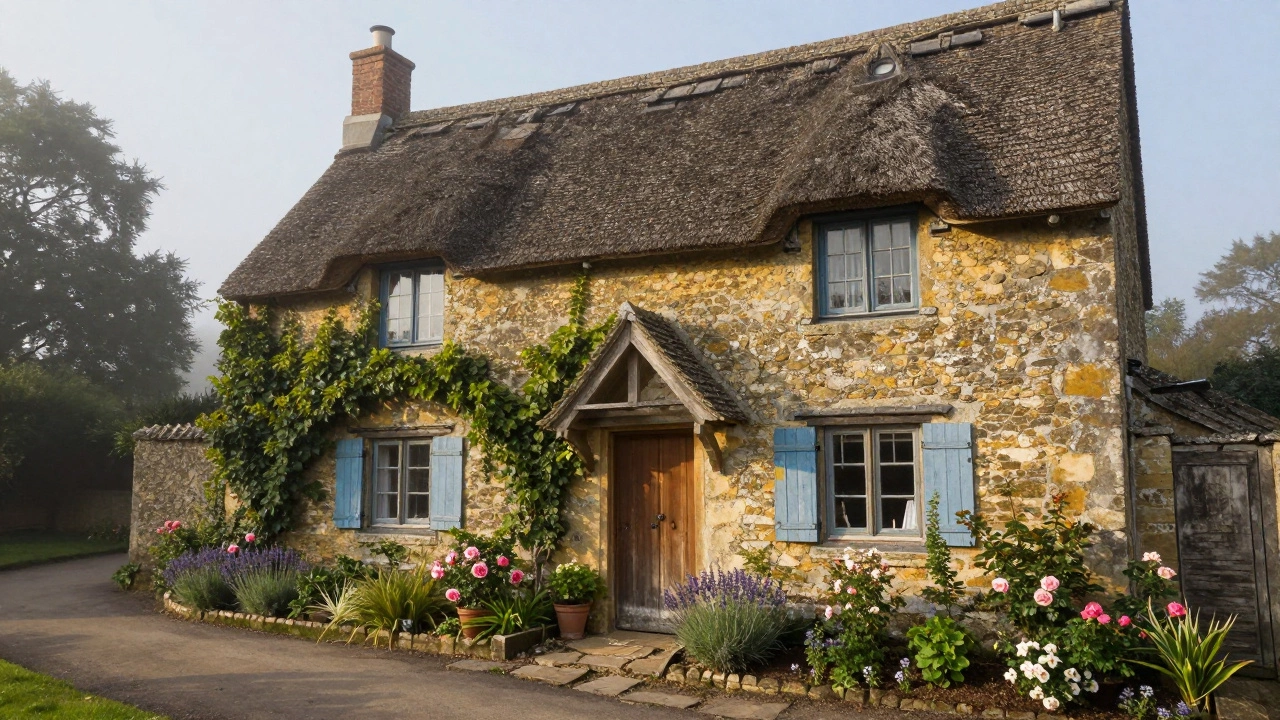
A country cottage was never meant to be a working farm. It was built for someone who lived off the land but didn’t run it. Think of a gardener, a blacksmith, or a weaver who needed a quiet place to raise a family, close to town or a village, but away from the noise and smell of livestock. These homes were small, simple, and often made from local stone, brick, or timber. Roofs were thatched or tiled. Windows were small because glass was expensive. The whole point? To be humble, cozy, and self-sufficient without needing acres of land.
A farmhouse, on the other hand, was the heart of a working farm. It had to house the farmer, their family, and sometimes hired hands. It needed space for cooking for a big crew, storing tools, and keeping livestock feed close at hand. Farmhouses were larger-often two or three stories-with wide porches for drying clothes or eating meals in the shade. Kitchens were huge, sometimes with walk-in pantries and wood-burning stoves. Many had attached barns, stables, or chicken coops. This wasn’t a retreat-it was a workplace.
Size and Layout: Square Footage Tells the Story
Country cottages are small. Really small. Most were built with two or three rooms downstairs-a kitchen, a parlor, maybe a bedroom-and one or two tiny bedrooms upstairs. A 1,000-square-foot cottage was considered spacious. Many older ones in England and Ireland are under 600 square feet. You don’t need a big house if you’re not feeding a dozen people or storing hay bales.
Farmhouses? They’re built for scale. Even modest ones start around 1,500 square feet. Larger ones can hit 3,000 or more. You’ll find multiple bedrooms, a formal dining room, a separate pantry, a butler’s pantry, and sometimes even a schoolroom for the kids. The layout is practical: the kitchen is central, the bedrooms are spread out for privacy, and the back door opens straight to the yard or barn. There’s no wasted space-but there’s a lot of it.
Architectural Details: What to Look For
Country cottages lean into charm. You’ll see uneven walls, low doorways, exposed beams, and small casement windows. The chimneys are often crooked because they were built by hand, not with a level. Flower boxes hang from windows. Shutters are painted blue or green. The garden is wild, with herbs, roses, and maybe a beehive. It’s designed to look like it grew out of the ground.
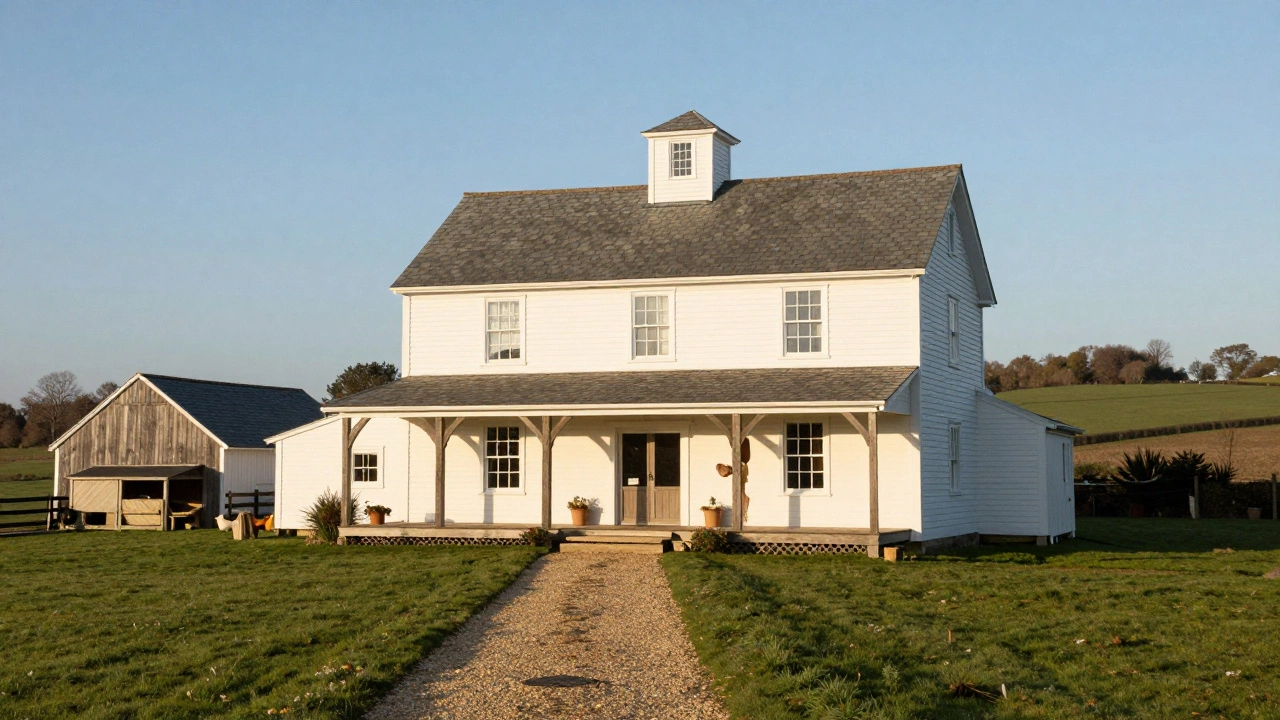
Farmhouses are more structured. You’ll notice symmetrical windows, a centered front door, and a clean, rectangular shape. The siding is usually clapboard or weatherboard, painted white or cream to reflect sunlight. Porches are wide and supported by thick wooden posts. Roofs are steep to shed snow and rain. You’ll often see a cupola on top-used for ventilation, not decoration. The yard is tidy, with a straight path to the barn and a well out back.
Functionality: How People Actually Lived
Life in a country cottage was quiet. The hearth was the center of the home-not for cooking large meals, but for warmth and small family dinners. Water came from a well or pump outside. There was no indoor plumbing until the 1900s. Electricity? Rare before the 1930s. People grew vegetables in a small plot, kept a few chickens, and maybe a goat. It was a life of simplicity, not self-sufficiency on a large scale.
Farmhouses were busy. The kitchen was a command center-meals were cooked for up to ten people, butter was churned, preserves were canned, and laundry was boiled in huge copper pots. The cellar stored root vegetables and salted meat. The attic held seed grain. The barn held cows, horses, or sheep. A farmhouse had to be functional first, beautiful second. Even the front porch had a purpose: it was where the farmer sat to count his crops or talk to neighbors.
Modern Versions: What You’ll See Today
Today, the lines have blurred. Developers love calling anything with a porch and a picket fence a “cottage.” Real estate listings will call a 3,000-square-foot home with granite counters a “farmhouse style.” But if you look closely, you can still tell the difference.
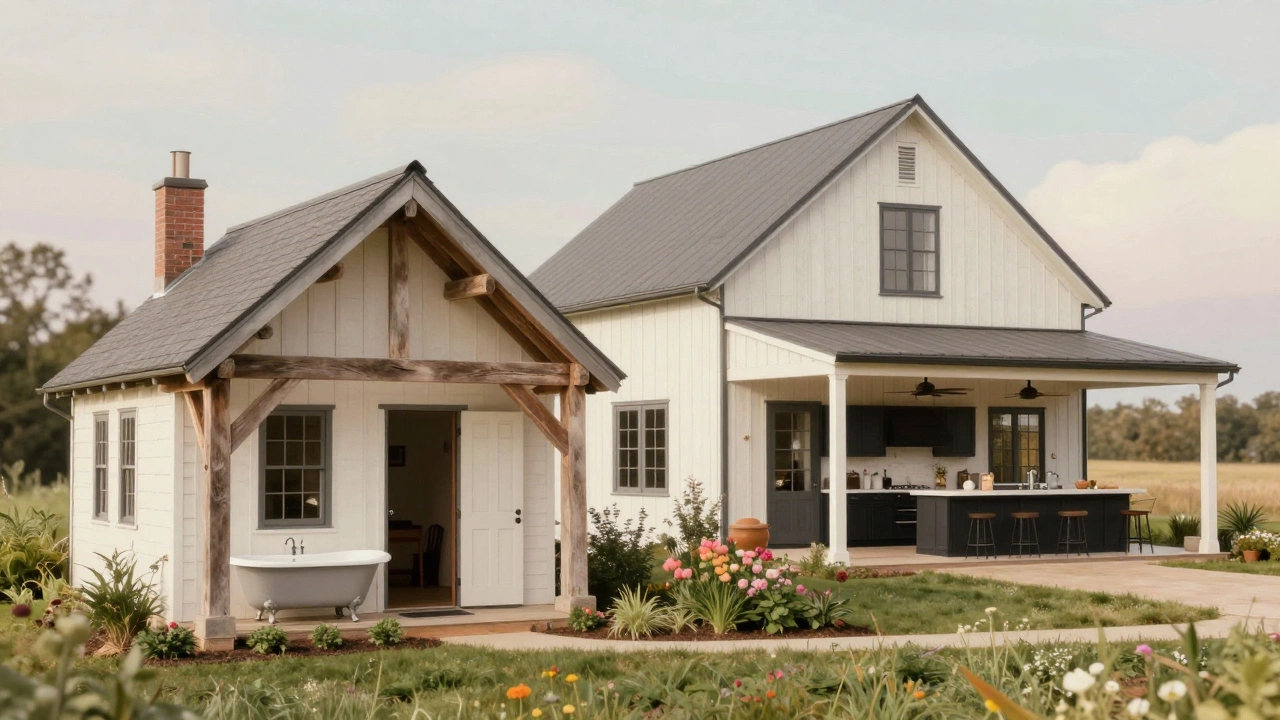
A modern country cottage is usually under 1,200 square feet, with a small garden, a front door that’s slightly crooked for charm, and windows that aren’t perfectly aligned. It might have a wood stove, exposed beams, and a clawfoot tub. It’s designed to feel like a retreat-a place to read, relax, and unplug.
A modern farmhouse is bigger, with an open-plan kitchen, a large island, and a walk-in pantry. It often has shiplap walls, black hardware, and a covered porch with ceiling fans. It might have a detached garage or a studio out back. The style is farmhouse-inspired, but it’s built for comfort, not chores. It’s not meant to house livestock-it’s meant to host Sunday dinners.
Which One Fits Your Life?
If you want a quiet escape with a tiny yard, a garden you can manage alone, and a home that feels like it’s been there for a hundred years-go for a country cottage. It’s perfect for couples, retirees, or writers who need peace.
If you love hosting big gatherings, need space for guests, want a kitchen that can handle a crowd, and don’t mind a little maintenance-you’ll feel at home in a farmhouse. It’s ideal for families, people who love to cook, or anyone who wants a home with history and space to grow.
Don’t be fooled by the labels. A “cottage” with three bedrooms and a hot tub isn’t a real cottage. A “farmhouse” with no barn, no well, and no garden isn’t a farmhouse. The real ones were built for living-not for Instagram.
Can a country cottage have a barn?
A traditional country cottage doesn’t come with a barn. If it does, it’s likely been expanded or repurposed from a small farmstead. True cottages were for people who worked the land but didn’t own it. A barn suggests ownership of livestock or crops, which pushes it into farmhouse territory.
Are farmhouses always white?
No. While white is common in the U.S. and parts of Europe for practical reasons-reflecting heat and looking clean-many traditional farmhouses in England, Ireland, or Scandinavia are built from local stone and kept in their natural color. Some are painted red, gray, or even dark green. The color depends on what materials were available locally.
Is a cottage cheaper to maintain than a farmhouse?
Generally, yes. A cottage is smaller, so heating, cleaning, and repairs cost less. A farmhouse has more square footage, more windows, a larger roof, and often more outbuildings. Even if you don’t use them, maintaining a barn or a large porch adds to the expense. A cottage is easier to manage if you’re not looking for a project.
Can you turn a farmhouse into a cottage?
You can make it feel like one, but you can’t change its bones. Knocking down walls, removing a second story, or adding a thatched roof might give it cottage charm, but the foundation, layout, and scale will still reflect its original purpose. It’s like trying to make a truck look like a bicycle-it might have the same wheels, but it’s still built for a different job.
Do country cottages have gardens?
Yes, but not large ones. A cottage garden is usually small, informal, and packed with flowers, herbs, and vegetables. It’s meant to be tended by one or two people. It’s not a field or a market garden. Think roses climbing a trellis, lavender along the path, and tomatoes in wooden crates-not rows of corn or potatoes.