What is the most eco-friendly material to build with for cottages?
 Mar, 1 2026
Eco-Cottage Material Comparison Tool
Find Your Perfect Material
Select which factors matter most to you when choosing eco-friendly building materials for your cottage.
Material Comparison Results
Select at least one criteria to see your personalized comparison
When you’re building a cottage that lives in harmony with the land, the material you choose isn’t just about looks or cost-it’s about impact. Every board, brick, and beam leaves a footprint. So what’s the most eco-friendly material out there? The answer isn’t one-size-fits-all, but there are clear winners when you look at real-world performance, availability, and long-term environmental cost.
Reclaimed Wood: The Original Recycle
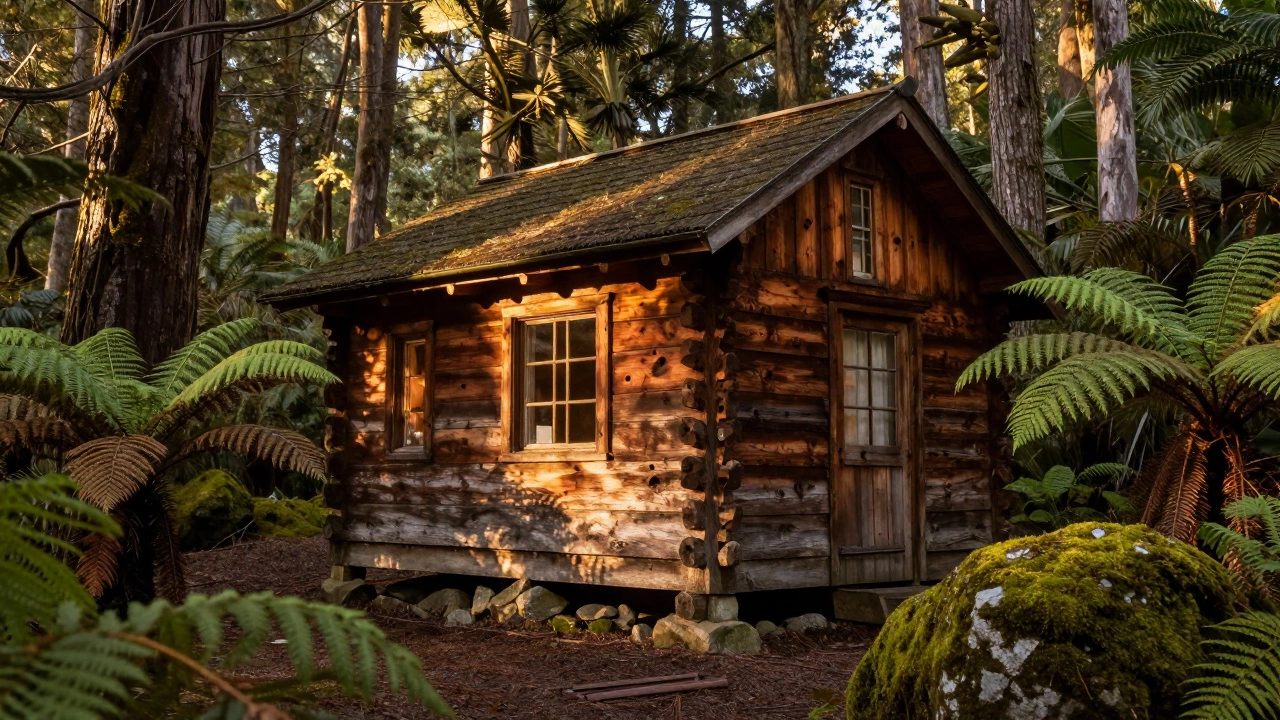
Reclaimed wood isn’t just rustic charm-it’s a climate win. Every cubic meter of salvaged timber saves about 1.5 tons of CO2 compared to new lumber. That’s because you’re skipping the logging, milling, drying, and long-haul trucking. Old barns, factories, and even bridges are being dismantled across North America and Europe, and their timber is finding new life in cottage walls and floors.
Why it works: Reclaimed wood is denser than new timber. Trees that grew slowly 100 years ago have tighter grain, making them stronger and more durable. You’re not just building a cottage-you’re giving history a second act. In New Zealand, companies like Reclaimed Timber Co. is a Wellington-based supplier that sources old kauri and totara from demolished buildings. Their wood often comes with nail holes, weathering, and patina that can’t be replicated.
Bamboo: The Fast-Growing Wonder
Bamboo grows faster than any other plant on Earth. Some species shoot up 30 centimeters in a single day. That means it regenerates in 3-5 years, while hardwoods like oak take 60+. It doesn’t need pesticides, replanting, or irrigation. And it’s surprisingly strong-some bamboo composites have a higher strength-to-weight ratio than steel.
It’s being used in structural beams, flooring, and even wall panels in eco-cottages from Costa Rica to Japan. In New Zealand, builders are testing locally grown bamboo hybrids that can handle cooler climates. The catch? Transport matters. Bamboo shipped from Asia adds carbon miles. That’s why sourcing regional bamboo, like the emerging plantations in Northland, is becoming a game-changer.
Rammed Earth: Built From the Ground Up
Rammed earth isn’t new-it’s ancient. The Great Wall of China used it. So did the Romans. Today, it’s making a comeback because it’s made of… dirt. Literally. Soil, sand, clay, and a little cement (or none at all) are compacted in layers to form thick, thermal-mass walls.
These walls keep cottages cool in summer and warm in winter without AC or heating. A 40-centimeter rammed earth wall can store heat for 12+ hours. That slashes energy bills by up to 60%. And when the cottage’s life ends? The walls can be crushed and returned to the earth-zero landfill.
It’s not for every site. You need the right soil mix and skilled labor. But in places like Central Otago, where the ground is rich in clay and gravel, rammed earth cottages are thriving. One project near Cromwell used 98% local materials and cut embodied carbon by 80% compared to concrete.
Hempcrete: The Breathable Insulator
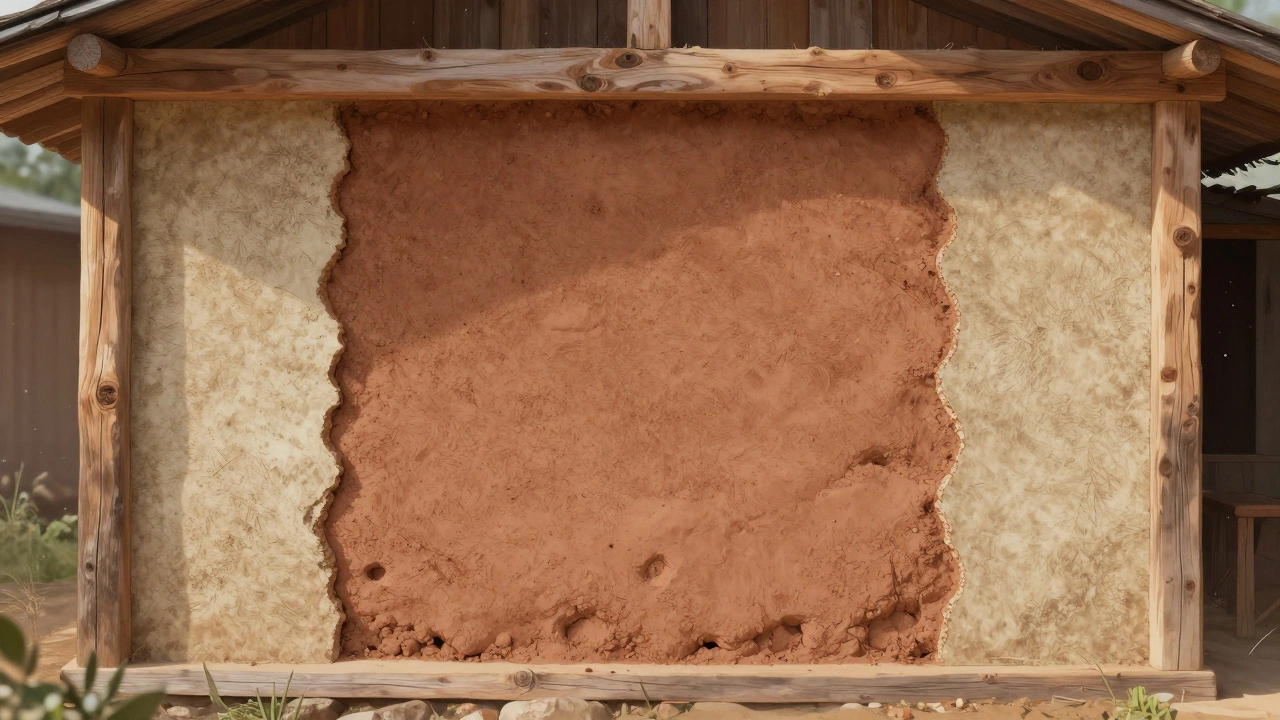
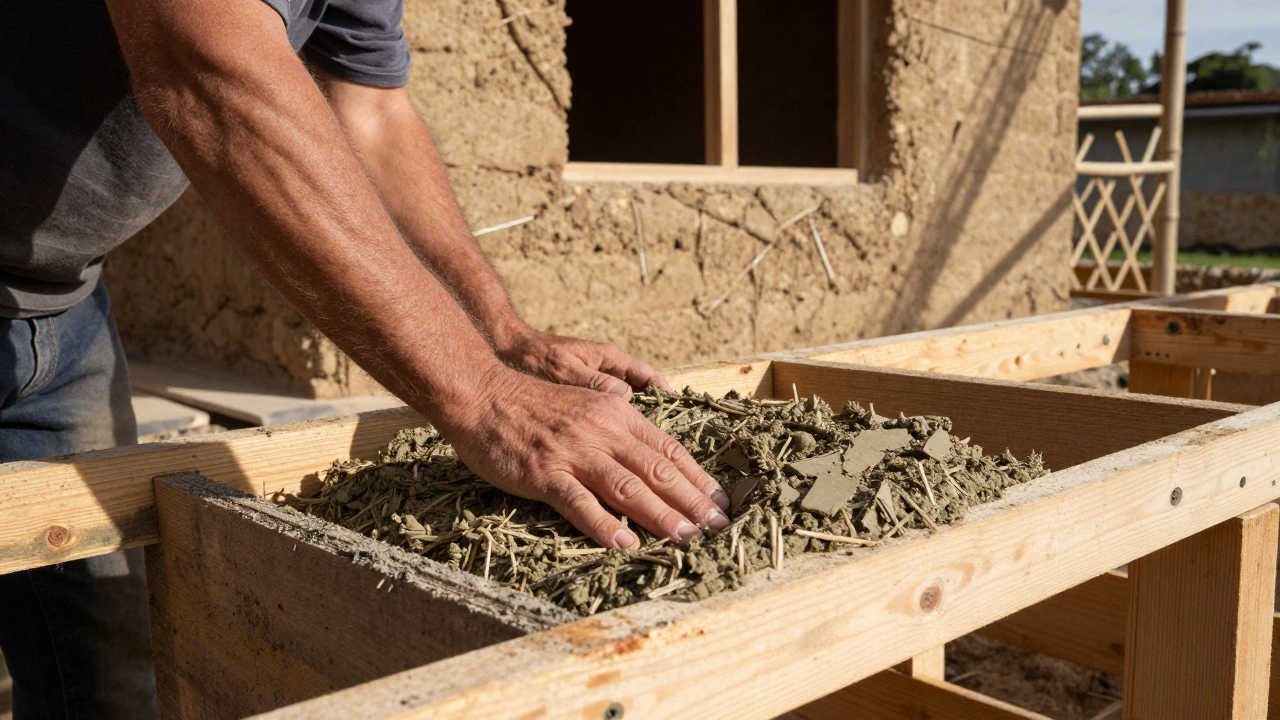
Hempcrete is a mix of hemp fibers, lime, and water. It’s not structural, but it’s perfect for walls, insulation, and ceilings. It’s lightweight, fire-resistant, and naturally repels mold and pests. Best of all, hemp absorbs CO2 as it grows-about 8-15 tons per hectare. That means a hempcrete wall is a carbon sink, not a source.
It’s not as strong as concrete, so it’s used as infill between timber frames. But it breathes. That means moisture doesn’t get trapped, reducing rot and improving indoor air quality. In the UK and France, over 2,000 homes have been built with hempcrete since 2015. In New Zealand, small builders are experimenting with it, especially in damp climates like the West Coast. One cottage near Greymouth used hempcrete insulation and cut its heating needs by 70%.
Recycled Steel: The Silent Hero
Steel gets a bad rap for being energy-intensive. But recycled steel? It’s one of the greenest structural options. Steel can be recycled endlessly without losing strength. Using recycled steel cuts energy use by 75% and reduces mining waste by 90%.
It’s ideal for framing, especially in windy or seismic zones like New Zealand. A steel frame can be prefabricated off-site, reducing waste and construction time. One eco-cottage in Nelson used 90% recycled steel and lasted 40% longer than a timber frame under heavy coastal winds. The downside? It’s not DIY-friendly. You need a crane and skilled welders.
Comparing the Top Five
| Material | Embodied Carbon (kg CO₂e/m³) | Renewability | Thermal Performance | Local Availability in NZ | End-of-Life Impact |
|---|---|---|---|---|---|
| Reclaimed Wood | 50-150 | High (reuse) | Moderate | High (urban salvage) | Zero waste |
| Bamboo | 80-200 | Very High | Low-Moderate | Low (imported) | Compostable |
| Rammed Earth | 30-100 | Very High | Very High | High (regional soil) | Biodegradable |
| Hempcrete | 20-80 | Very High | Very High | Low (emerging) | Compostable |
| Recycled Steel | 120-250 | Very High | Low | High (recycling hubs) | Infinitely recyclable |
What’s the Winner?
If you had to pick one, hempcrete and rammed earth tie for lowest embodied carbon. But they’re not always practical. Reclaimed wood is the most accessible, beautiful, and widely used. It’s the sweet spot: low impact, high durability, and easy to work with-even for DIY builders.
For the most eco-friendly cottage overall? Combine them. Use reclaimed wood for framing, rammed earth for walls, and hempcrete for insulation. That’s the real secret: no single material is perfect. But together, they create a home that doesn’t just sit on the land-it belongs to it.
What About Concrete and Brick?
Concrete is the most common building material on Earth. But it’s also responsible for 8% of global CO2 emissions. Brick isn’t much better-it takes high heat to fire, and it’s heavy to transport. Neither is renewable. Both end up in landfills when demolished.
That’s why eco-cottages are moving away from them. Even ‘low-carbon’ concrete still has a footprint. If you must use concrete, go for geopolymer or fly ash blends. But even then, it’s a last resort.
Final Tips for Choosing
- Always ask: Where did this come from? Local materials beat imported ones every time.
- Check the embodied energy-not just the upfront cost. A cheaper material might cost the planet more.
- Think long-term. A material that lasts 100 years with no maintenance beats one that needs replacing every 15.
- Combine materials. No single solution wins. Synergy does.
- Ask your builder for material certifications. Look for FSC for wood, Cradle to Cradle for composites, and EPDs (Environmental Product Declarations) for everything else.
Is bamboo really strong enough for a cottage frame?
Yes, when properly treated and engineered. Bamboo has a tensile strength of 28,000 psi-higher than steel. In Japan and Costa Rica, entire homes use bamboo as load-bearing structure. In New Zealand, builders are testing laminated bamboo beams for cottage frames. The key is using certified, kiln-dried bamboo with a borate treatment to prevent rot and insects.
Can I use reclaimed wood in a coastal cottage?
Absolutely. Many reclaimed timbers-like kauri and totara-naturally resist salt and moisture. They’ve already survived decades of weather. Just seal them with a non-toxic, breathable finish like linseed oil or beeswax. Avoid plastic-based sealants that trap moisture and cause rot.
Is hempcrete expensive?
It can be 10-20% more than standard insulation, but it pays for itself. Hempcrete reduces heating and cooling costs by up to 70%. Plus, it lasts the life of the building-no replacement needed. In New Zealand, suppliers like HempBuild NZ is a provider of locally processed hemp hurd and lime binders. are cutting prices as demand grows.
Why not use recycled plastic for building?
Recycled plastic lumber is great for decks and fencing, but it’s not ideal for walls or structure. It doesn’t breathe, which can trap moisture. It also degrades under UV light and can release microplastics over time. For long-term, healthy living spaces, natural materials are still the safer, more sustainable choice.
How do I find eco-friendly builders near me?
Look for builders certified under the Living Building Challenge or the Passive House standard. In New Zealand, check the Green Building Council’s directory. Ask if they’ve used reclaimed timber, rammed earth, or hempcrete on past projects. A builder who’s done one eco-cottage knows more than one who’s done ten conventional ones.
Next Steps
If you’re planning a cottage, start with a site analysis. What soil do you have? What’s the climate? What materials are already being used nearby? Talk to local salvage yards. Visit a rammed earth workshop. Ask for samples of hempcrete panels. Don’t just pick a material because it’s trendy-pick one that fits your land, your climate, and your values.
The most eco-friendly material isn’t the one with the lowest carbon number. It’s the one that’s right for your place-and that’s different for every cottage.