What Is the Most Economical House Shape for Eco-Friendly Cottages?
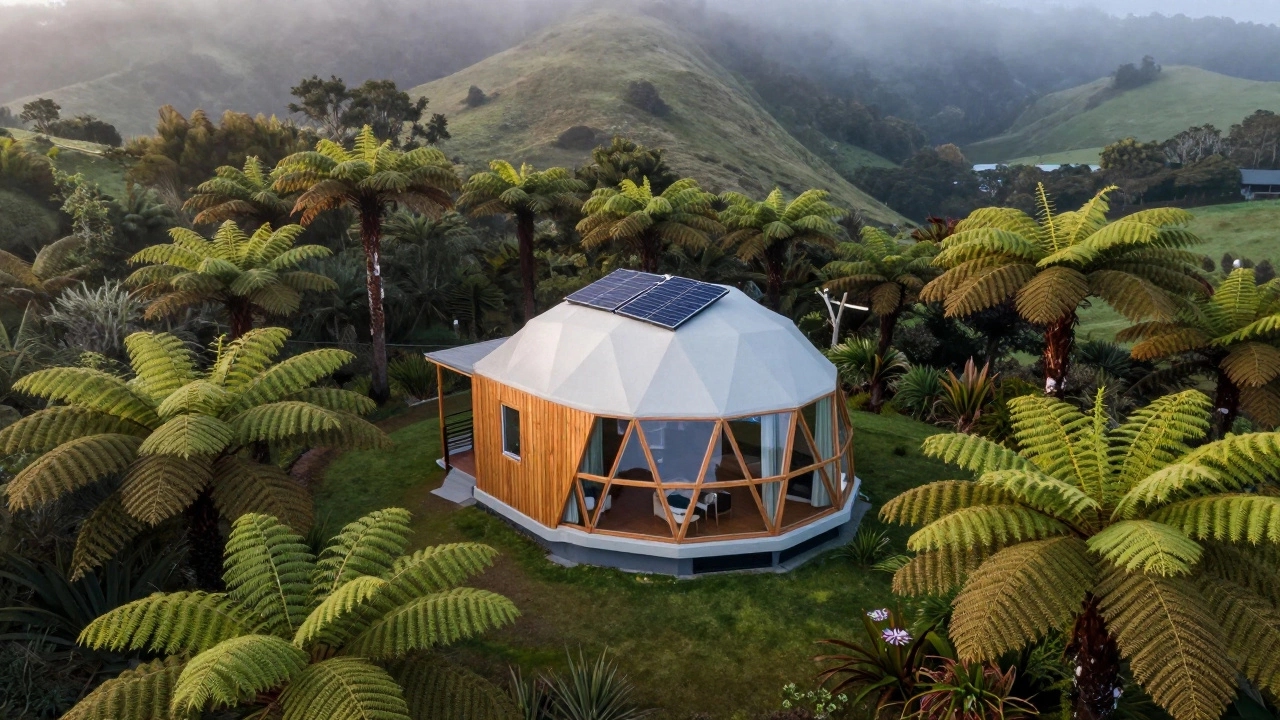 Dec, 4 2025
Cottage Shape Efficiency Calculator
Calculate Your Savings
Your Results
Based on New Zealand research: Round homes use 15-20% less material and 20-30% less energy than comparable rectangles.
Why Round Works Better
Physics Advantage: Circles have the smallest surface area for any given volume. For the same floor space, round homes need less wall, roof, and insulation.
Real NZ Examples: A 100m² round cottage uses 15% less cladding and roofing material than a square one. Heating costs drop by up to 30% in cold climates.
Long-Term Value: Less maintenance, fewer repairs, and higher resale value for energy-efficient homes.
When you’re building an eco-friendly cottage, the shape of your house isn’t just about looks-it directly affects your heating bills, material costs, and how well your home holds onto warmth in winter and stays cool in summer. The most economical house shape isn’t the one that looks trendy on Instagram. It’s the one that uses the least material to enclose the most space while minimizing heat loss. And for that, the answer is simple: round.
Why Round Wins on Cost and Efficiency
A circle has the smallest surface area for any given volume. That means, for the same floor space, a round house needs less wall, less roof, and less insulation than a square or rectangular one. Less material = lower upfront cost. Less surface exposed to the outside = less heat escapes in winter and less heat enters in summer.
Builders in New Zealand’s South Island have been using this principle for decades. A 100-square-meter round cottage uses about 15% less cladding and roofing material than a square one of the same size. That’s not just savings on lumber and bricks-it’s less energy used to manufacture and transport those materials. In places like Nelson or Wanaka, where winters are damp and cold, that reduction in surface area cuts heating costs by up to 30%.
There’s also less waste. Building a circle means fewer offcuts. A rectangular house leaves behind awkward scraps from cutting walls and roof trusses. A round structure, especially one built with prefabricated panels or timber ribs, fits together like a puzzle with almost no leftover material. One builder in Kaikōura told me he saved over $2,000 in waste disposal fees on a single project just by switching from a rectangle to a dome.
Geodesic Domes: The Engineering Sweet Spot
While a perfect circle works well, a geodesic dome takes efficiency even further. Made of triangular panels arranged in a spherical shape, domes distribute stress evenly across their structure. That means they need far fewer support beams than a traditional house. You can build a 12-meter diameter dome with just 30% of the timber needed for a comparable rectangular cabin.
These domes are also incredibly strong. They’ve been used in Antarctica and Arctic research stations because they handle heavy snow loads and high winds without collapsing. In New Zealand, where storms can roll in fast off the Tasman Sea, that strength matters. A dome doesn’t catch wind like a flat wall-it deflects it. That’s why many off-grid eco-cottages in Fiordland and the West Coast use them.
And yes, they’re surprisingly easy to insulate. The curved surface allows for continuous insulation without thermal bridges-the spots where heat sneaks out through gaps in walls or corners. A well-insulated dome can maintain a steady temperature with just a small wood stove or a single heat pump.
Why Other Shapes Fall Short
Let’s be clear: rectangles aren’t evil. They’re practical for furniture layout and easy to build with standard materials. But they’re inefficient by physics.
A rectangular house has four corners. Each corner is a thermal bridge. Heat escapes through those angles. Even with double glazing and good insulation, those corners lose more heat than the straight walls. Studies from the University of Auckland’s Sustainable Housing Lab show that corner rooms in rectangular homes use 22% more energy for heating than central rooms in round homes of the same size.
Two-story homes might seem like a way to save land, but they add complexity. Stairs take up space. Roofs get steeper and harder to insulate. Gutters become trickier. And in a storm-prone area like Wellington, tall, narrow homes catch more wind, increasing structural stress and the risk of damage.
Even L-shaped or T-shaped homes, often marketed as "modern" or "open plan," have more exterior walls and corners than a simple circle. More walls mean more material. More corners mean more heat loss. They might look cool in a magazine, but they cost more to heat, cool, and maintain.
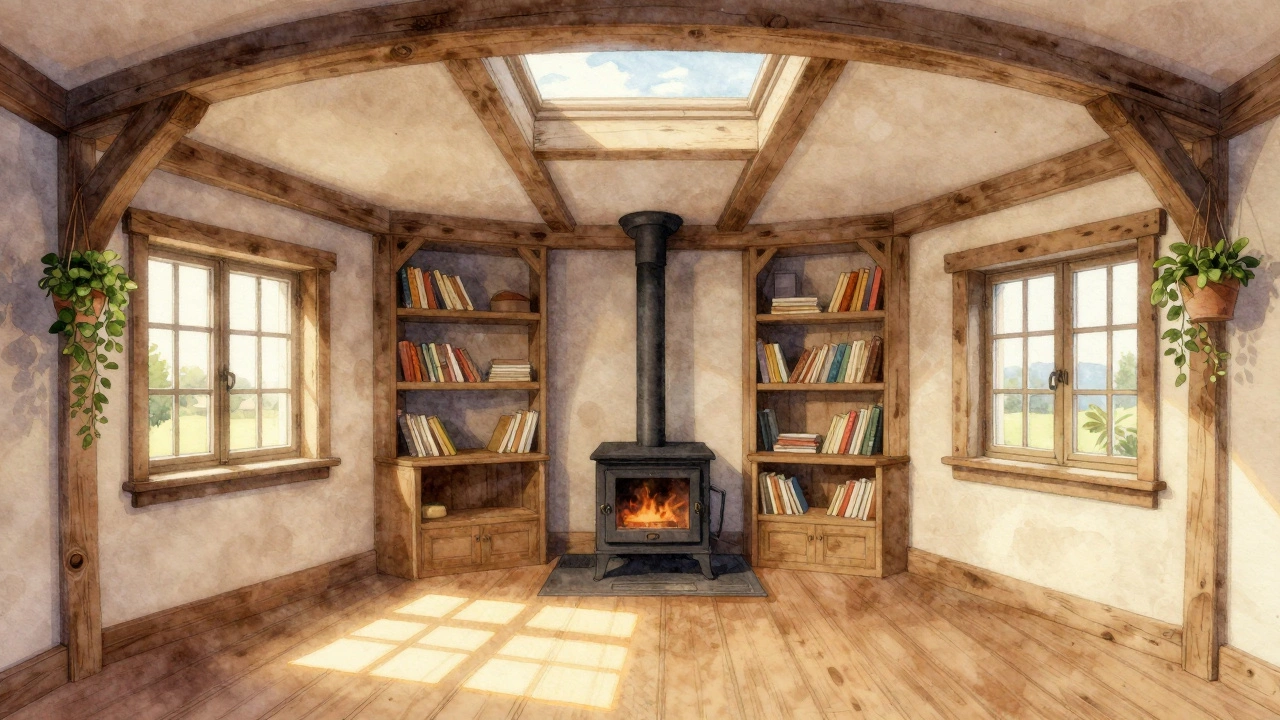
Real-World Examples from New Zealand
You don’t have to take my word for it. Look at the eco-cottages popping up across the country.
- The Whare Tūpuna in Hawke’s Bay is a timber-framed dome built with locally sourced kauri and hempcrete insulation. It runs on solar panels and needs no backup heating-even in July.
- In the Coromandel, a couple replaced their old 1970s rectangular bach with a 70-square-meter geodesic dome. Their winter power bill dropped from $320 to $85.
- On Stewart Island, a small eco-lodge uses three interconnected domes for guest rooms. The design cuts construction costs by 20% compared to a traditional lodge layout.
These aren’t experiments. They’re working, lived-in homes that have been monitored for energy use over five years. The data is consistent: round shapes use less energy, cost less to build, and last longer.
What About Windows and Layout?
Some people worry that round houses won’t fit standard furniture or have enough windows. That’s a myth.
Modern round homes use curved walls with flat interior panels for shelving, beds, and cabinetry. You can still have a kitchen counter, a sofa, and a dining table. The key is designing with the curve in mind-not fighting it.
Windows? Place them on the south-facing side (in the Southern Hemisphere) to capture maximum winter sun. Use double-glazed, low-e glass. A dome can have a central skylight that acts like a solar chimney, pulling warm air up and out in summer. No fans needed.
One builder in Nelson told me his clients love how the curved walls create natural acoustic zones-no echo, no dead spots. It’s quieter, calmer. And the view? From a dome, you see 360 degrees. No corner blocks your sightline to the forest or the sea.
Long-Term Value: Less Maintenance, More Resilience
Round homes don’t just save money on energy. They save money on repairs.
No sharp corners mean less damage from wind-driven rain. No flat roofs mean no pooling water or ice dams. No attic spaces mean no rodent nests or mold buildup. One homeowner in Taranaki said her dome hasn’t needed a single roof repair in 14 years-even after two major storms.
And resale value? Eco-cottages with proven energy efficiency are in demand. Buyers in New Zealand are starting to ask for energy ratings before they even walk in the door. A round house with a 9-star energy rating doesn’t just look different-it sells faster.
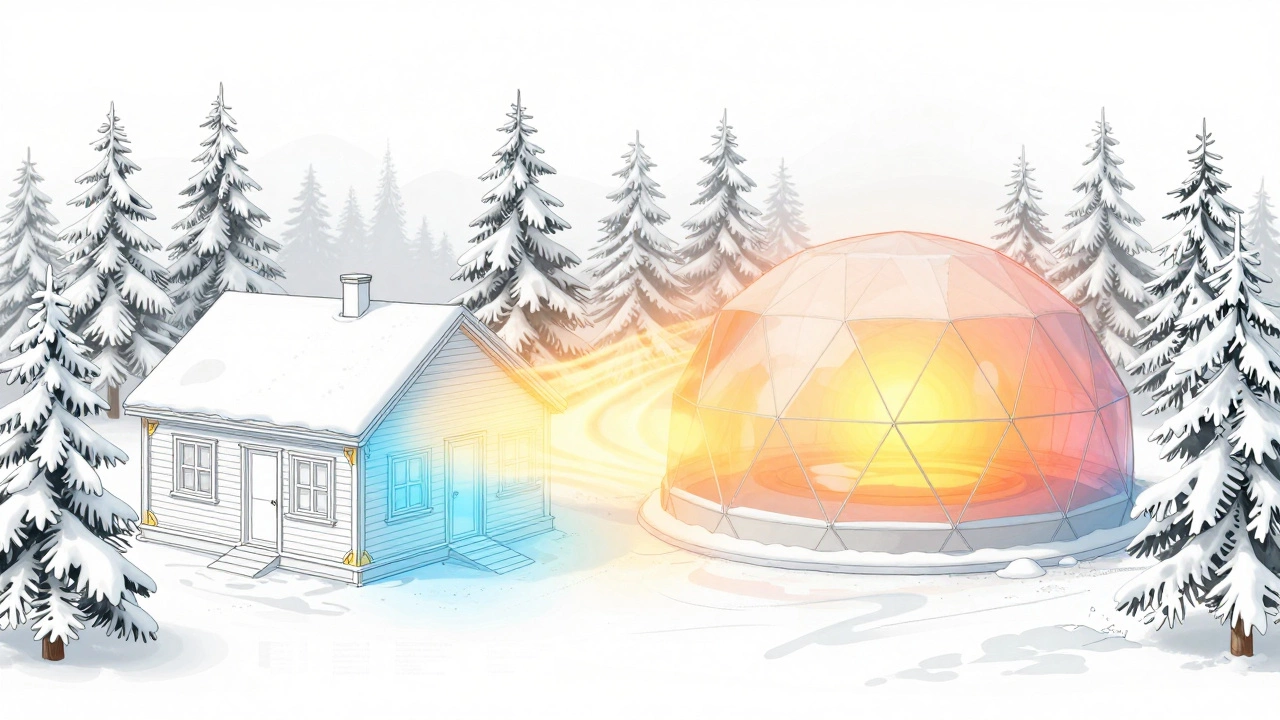
Is a Round House Right for You?
It’s not for everyone. If you need a big, open-plan kitchen with a long island, or if you’re planning to rent out multiple rooms, a rectangle might still make sense. But if your goal is to build a low-cost, low-maintenance, energy-efficient cottage that lasts decades with minimal environmental impact, the round shape is the smartest choice.
It’s not about following trends. It’s about following physics. And physics doesn’t care what’s popular on Pinterest.
Quick Summary / Key Takeaways
- The round shape uses the least material and energy to enclose space, making it the most economical for eco-cottages.
- Geodesic domes are even more efficient, requiring less framing, better insulation, and handling extreme weather better than rectangular homes.
- Rectangular homes lose more heat through corners and require more materials, increasing both cost and energy use.
- Real New Zealand examples show 20-30% lower heating bills and fewer repairs over time.
- Modern round homes can be designed with full functionality-furniture, windows, and storage-without sacrificing comfort or style.
Are round houses more expensive to build than rectangular ones?
No, not when you consider the full cost. While custom round designs may cost slightly more upfront for specialized labor, they use 15-20% less building material overall. That saves money on lumber, insulation, roofing, and cladding. Plus, lower energy bills and fewer repairs mean you break even within 3-5 years.
Can you build a round house with standard materials?
Yes. Many builders use prefabricated timber frames, insulated concrete forms (ICFs), or modular panels designed for domes. Even standard double-glazed windows can be fitted into curved walls with custom frames. The key is working with a builder experienced in non-traditional shapes-not trying to force a rectangle into a circle.
Do round houses have enough storage space?
Absolutely. Built-in shelving, under-floor storage, and wall niches follow the curve. Many round homes use loft spaces under the dome’s peak for bedrooms or storage. A 6-meter diameter dome can easily hold a full kitchen, bathroom, living area, and two sleeping nooks with ample storage.
Is a dome better than a circle for an eco-cottage?
A geodesic dome is more structurally efficient than a simple cylinder. It handles snow, wind, and seismic stress better, and uses even less material. For a cottage in a harsh climate like the Southern Alps or West Coast, a dome is the top choice. For a milder coastal spot, a circular timber cabin works just as well.
Do banks and insurers accept round homes?
Yes, increasingly so. Many New Zealand lenders now recognize energy-efficient homes as lower-risk assets. Insurers often give discounts because domes are more storm-resistant. Just make sure your builder provides detailed engineering specs and energy performance ratings-those help with approvals.
Next Steps / Troubleshooting
If you’re thinking about building an eco-cottage, start here:
- Measure your land. Round homes need open space. Avoid steep slopes or tight corners.
- Find a builder with dome or round-house experience. Ask to see past projects and energy bills from their clients.
- Run a simple energy model. Use the New Zealand Ministry for the Environment’s free online calculator to compare a round vs. rectangular design.
- Visit real examples. The Eco-Cottage Trail in Nelson and Marlborough has open houses every October.
- Don’t rush the design. A poorly planned round home can feel cramped. Work with an architect who understands passive solar principles.
There’s no perfect house shape for everyone. But if your goal is to build something that lasts, costs less to run, and leaves a lighter footprint on the land, the answer isn’t complicated. It’s circular.