What Qualifies as a Cottage? Defining the Classic Rural Escape
 Apr, 19 2026
Cottage Qualification Checker
Answer the following questions about the property to see if it fits the technical definition of a cottage.
Your Result:
Key Takeaways for Identifying a Cottage
- Setting: Usually rural, coastal, or tucked away in a village.
- Scale: Small to medium footprints with a focus on cozy, multi-functional spaces.
- Materials: Heavily reliant on local, natural resources like stone, wood, or brick.
- Atmosphere: Informal, rustic, and designed for relaxation rather than prestige.
The Architecture of Coziness
What actually makes a building a cottage? If you look at the bones of the structure, you will find a few recurring themes. First, there is the scale. A cottage isn't a mansion, but it is also not necessarily a "tiny house." While a tiny home might be 200 square feet on wheels, a traditional cottage usually has a permanent foundation and enough room for a few bedrooms, though the ceilings might be low and the hallways narrow.
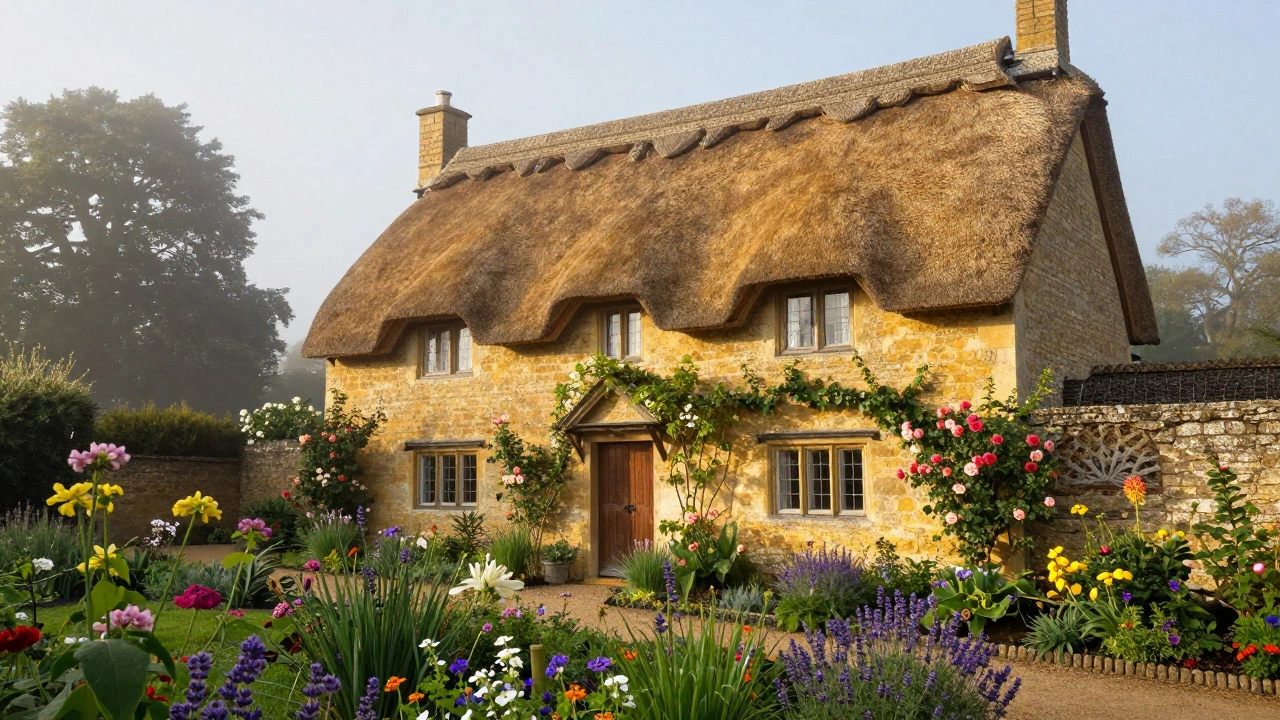
Then there are the materials. Think about the Thatched Roof. This is a classic marker of old English cottages, where dried vegetation like straw or water reed is used to create a waterproof layer. In other regions, you might see heavy fieldstone or cedar shingles. The goal has always been to use what is available in the backyard. When a house looks like it grew out of the ground, it is likely a cottage.
The layout usually favors the "heart of the home." In many older rural dwellings, the kitchen and living area are merged into one warm space, often centered around a fireplace. This isn't just for aesthetics; it was a practical necessity for heating a small home during harsh winters. These architectural quirks-the uneven floors, the exposed beams, and the deep window sills-are what give cottages their character.
Cottages vs. Bungalows and Cabins
People often confuse cottages with other small home types. While they overlap, the intent and style are different. A Bungalow, for example, is defined by its single-story layout and often features a wide porch. Bungalows are common in suburban areas and are designed for accessibility. A cottage, by contrast, often has a steep roof and might include a small loft or a second floor tucked under the eaves.
Then there is the Cabin. If a cottage is a permanent home in a village or countryside, a cabin is usually a rugged shelter in the wilderness. Cabins are typically made almost entirely of logs and are designed for temporary stays-hunting, fishing, or hiking. While you can have a "luxury cabin," the core identity of a cabin is about survival and proximity to nature, whereas a cottage is about domesticity and charm.
| Feature | Cottage | Bungalow | Cabin |
|---|---|---|---|
| Primary Material | Stone, Brick, Thatch | Various (Modern) | Logs, Timber |
| Typical Location | Rural Village/Coast | Suburban/Urban | Forest/Mountains |
| Vibe | Cozy & Traditional | Practical & Open | Rugged & Remote |
| Permanence | Permanent Residence | Permanent Residence | Often Seasonal |
The Evolution of the Modern Cottage
We are seeing a shift in how we define these homes. In the 21st century, the "cottage-core" trend has turned a functional architectural style into an aesthetic. This means you can now find "cottage-style" homes in the middle of a city. These might have the white picket fences and floral wallpaper, but they lack the rural context that defines a true cottage. To qualify as a genuine cottage, the relationship between the house and the land is key.
Modern versions often lean into Sustainable Architecture. Instead of just using old stones, new rural cottages use hempcrete, recycled timber, and solar arrays. The goal remains the same: to create a low-impact dwelling that doesn't overwhelm the landscape. When you see a small home that uses geothermal heating and is surrounded by a wild wildflower garden, it is essentially a modern evolution of the traditional laborer's cottage.
Regional Variations: From England to Canada
The definition of a cottage changes depending on where you are standing. In the UK, a cottage is often an ancient, stone-walled building in a village. It feels historic and permanent. In Canada or the US Midwest, a "cottage" often refers to a summer home by a lake. These are frequently wooden structures with large decks and screen porches, designed specifically for seasonal escape rather than year-round living.
In France, you might call them "gîtes," which are similar rural holiday homes. Regardless of the name, the common thread is the escape from the urban grind. The physical structure is a tool to facilitate a slower pace of life. Whether it is a Coastal Cottage in Cornwall or a lakeside retreat in Ontario, the qualification comes down to the feeling of seclusion and the modesty of the footprint.
Common Pitfalls When Buying a "Cottage"
If you are hunting for a rural escape, be careful with the terminology in real estate listings. Agents love the word "cottage" because it evokes romance. However, you might find that a listed "cottage" is actually just a poorly maintained small house with outdated plumbing. True cottages, especially historic ones, come with a set of challenges that you won't find in a standard suburban home.
Dampness is a huge issue in old stone cottages. Because they were built without modern membranes, moisture can seep through the walls. Then there is the matter of Zoning Laws. Some rural cottages are protected as historical landmarks, meaning you cannot change the windows or paint the exterior without government permission. Always check if the "charm" comes with a list of restrictions that will make your life difficult.
How to Give a Home a Cottage Feel
You don't have to live in the middle of nowhere to embrace the cottage philosophy. It is more about the internal environment than the external GPS coordinates. Start by embracing natural textures. Swap out synthetic fabrics for linen, wool, and cotton. Use reclaimed wood for shelving or coffee tables to bring in that earthy, weathered look.
Lighting is also a huge part of the qualification. Avoid harsh overhead LED panels. Instead, use warm lamps, fairy lights, and, if you have a fireplace, actual fire. The goal is to create "zones" of warmth. Finally, integrate the outdoors. A cottage is defined by its garden. Even if you only have a small balcony, filling it with herbs and flowering plants bridges the gap between the interior and the natural world, mimicking the essence of rural living.
Does a house have to be old to be a cottage?
No, it doesn't have to be old. While the traditional image is a centuries-old stone hut, a new build can be a cottage if it follows the principles of small scale, rural placement, and use of natural materials. It's more about the style and location than the date on the deed.
Can a city house be a cottage?
Technically, no. A cottage is defined by its relationship to a rural or semi-rural environment. A house in the city with cottage-style decor is "cottage-style," but it lacks the essential geographical component that defines a true cottage.
What is the difference between a cottage and a villa?
Villas are generally larger, more luxurious, and often have a more formal architectural style. While a cottage is about modesty and coziness, a villa is about space, elegance, and often a touch of opulence. You go to a cottage to hide away; you go to a villa to vacation in style.
Are all rural houses cottages?
Not necessarily. A farmhouse is a different entity-it's usually larger, designed for work and livestock management, and has a more utilitarian layout. A cottage is a dwelling that is small and cozy, often separate from the main working farm operations.
What are the most common materials used in cottages?
The most common are local stones (like limestone or granite), timber/logs, brick, and organic roofing materials like thatch or slate. The key is that the materials typically reflect the local geology and flora of the region.
Next Steps for Future Cottage Owners
If you've decided that a cottage is the right move for you, start by defining your needs. Are you looking for a permanent residence or a seasonal escape? This will dictate whether you need a fully winterized home with modern insulation or a simpler structure that you only visit in July. Visit a few different rural regions to see how the style changes-you might find that a coastal cottage suits your soul better than a forest retreat.
Before signing any papers, hire a surveyor who specializes in old buildings. They can tell you if those charming stone walls are actually bowing or if the thatch roof is nearing the end of its life. Finally, think about the lifestyle shift. Living in a cottage means slower internet, more trips to the nearest town for groceries, and a lot more time spent tending to a garden. If that sounds like a dream rather than a chore, you're ready for cottage life.