Are All-Inclusive Resorts Really All You Can Eat?
 Dec, 1 2025
When you book an all-inclusive resort, the promise sounds too good to be true: unlimited food, drinks, snacks, and maybe even late-night pizza. But here’s the truth most brochures won’t tell you - all-inclusive doesn’t always mean all you can eat in the way you imagine.
What ‘All-Inclusive’ Actually Covers
All-inclusive resorts bundle lodging, meals, drinks, and sometimes activities into one upfront price. But the dining part? It’s not a free-for-all buffet that runs 24/7 with no limits. Most resorts offer set meal times with seated restaurants, buffet-style options, and a few à la carte spots included in your rate. You won’t find unlimited caviar at 3 a.m. or unlimited lobster dinners every night.
Typical meal coverage includes breakfast, lunch, dinner, and snacks between meals. Beverages usually cover soft drinks, local beer, house wine, and basic spirits. Premium brands, imported liquors, and specialty coffees often cost extra. Some resorts limit you to one or two free à la carte meals per week - the rest require a surcharge.
Buffets Aren’t Unlimited - Even When They Look Like It
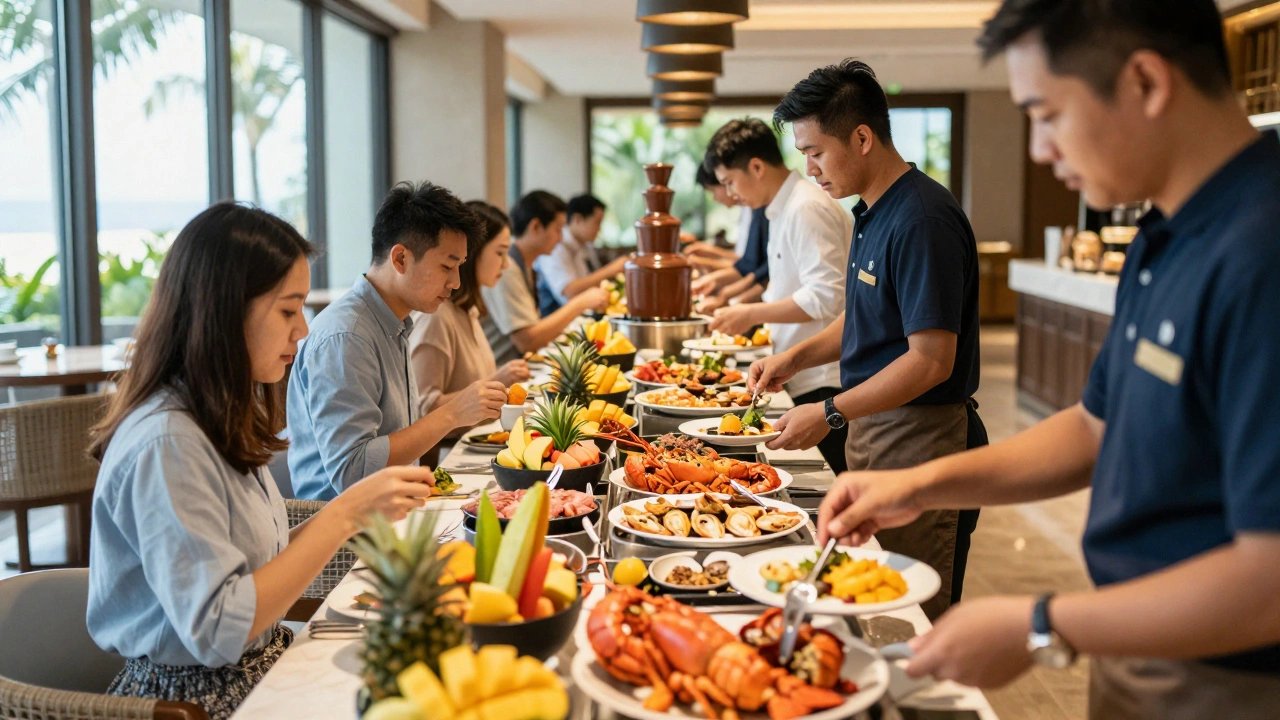
You’ve seen those massive buffet spreads: seafood towers, carving stations, dessert bars with chocolate fountains. It looks like you can go back for seconds, thirds, and fourths. And technically, you can. But resorts watch for abuse. If you’re taking 10 plates of food to your table, sitting there for an hour, or trying to pack leftovers into your suitcase, staff will notice. Some resorts have started enforcing portion limits during peak hours or asking guests to order one plate at a time.
At a resort in Cancún last year, guests were asked to sign a waiver after being caught repeatedly taking home full trays of sushi. That’s not common - but it’s happening more than you think. Resorts aren’t trying to be mean. They’re trying to keep costs down so they can keep prices competitive for everyone else.
What’s Really Free? The Fine Print
Here’s what’s usually included without extra charge:
- Three main meals daily (breakfast, lunch, dinner)
- Basic snacks (fruit, chips, cookies) at lounges or pool bars
- Non-premium alcoholic drinks (local beer, house wine, standard cocktails)
- Non-alcoholic beverages (soda, juice, coffee, tea)
- Some activities like snorkeling, kayaking, or fitness classes
And here’s what usually costs extra:
- Premium brands (Grey Goose, Macallan, imported wines)
- Specialty coffee (espresso, lattes from baristas)
- À la carte dining beyond your allotted number of free meals
- Room service (in some cases)
- Alcohol delivered to your room after midnight
- Specialty desserts (truffles, gourmet cakes)
One guest at a resort in Jamaica told me she ordered a $12 chocolate lava cake for dessert - only to find out it wasn’t included. She didn’t read the menu fine print. She wasn’t upset about the price. She was upset that she thought it was covered.

Resorts That Actually Do Offer Unlimited Eating
Some places try harder than others. Beaches Resorts in the Caribbean are known for having more generous policies. They include unlimited à la carte dining - meaning you can book a different fancy restaurant every night, no extra fee. Their kids’ clubs even have 24-hour snack stations.
Also, Sandals and Secrets resorts in Jamaica and Mexico offer unlimited premium drinks and multiple dining options without per-meal limits. But even they cap certain items: lobster is limited to once per stay at some locations. You can’t have grilled lobster every night unless you pay extra.
These are exceptions. Most all-inclusives operate under a ‘reasonable consumption’ rule. It’s not about how much you eat - it’s about how often you try to exploit the system.
How to Maximize Your All-Inclusive Dining
If you want to get the most out of your meals, here’s how:
- Book your à la carte dinners early - popular spots fill up fast.
- Ask at check-in: ‘How many free specialty meals are included?’
- Stick to the buffet for breakfast and lunch - it’s the best value.
- Use snack bars between meals - they’re often overlooked but packed with free fruit, yogurt, and sandwiches.
- Don’t assume everything with a price tag is extra - some resorts include wine with dinner even if it’s listed on the menu.
One trick I’ve seen work: ask for a ‘grazing menu’ at the poolside bar. Some resorts offer a rotating selection of small plates - sliders, spring rolls, stuffed peppers - that count as snacks and are included. You can eat your way through five different items without ever sitting down for a full meal.

Why Resorts Don’t Offer True Unlimited Eating
Think about it: if every guest ate like they were in a food competition, the resort would go bankrupt. One person eating three lobster tails, a whole rack of ribs, and a dessert platter every night? Multiply that by 500 guests. That’s not hospitality - that’s a food emergency.
Resorts price their packages based on average consumption. They assume most people will eat three meals a day, have a couple of drinks, and maybe splurge on one nice dinner. They don’t budget for the 10% who treat it like a food haul.
Also, waste is a huge issue. Resorts are under pressure to reduce food waste - especially since many are located in fragile coastal ecosystems. Some now donate excess food or compost it. Unlimited eating would make that impossible.
Is It Worth It?
Yes - if you’re realistic. All-inclusive resorts are great if you want to relax without tracking every meal cost. You’ll save money compared to eating out daily at restaurants. You’ll get variety, convenience, and decent quality food.
But if you’re planning to eat like a professional eater - five meals a day, multiple desserts, premium alcohol with every bite - you’ll be disappointed. And you’ll probably end up paying more in the end.
The best all-inclusive experience isn’t about eating the most. It’s about enjoying the freedom to eat without stress. Have a fresh mango for breakfast. Grab a taco at lunch. Order a cocktail with your sunset view. Savor it. That’s the real value.
What to Do If You’re Not Happy With the Food
Some resorts have bland or repetitive menus. If that’s the case:
- Ask for the chef - many will customize dishes if you ask politely.
- Try different restaurants on property - each might have a different theme (Italian, Asian, Caribbean).
- Book a tour to a local market or food stall - many resorts offer free or low-cost excursions.
- Bring your own snacks if allowed - some guests pack protein bars, nuts, or instant oatmeal for variety.
Don’t complain loudly. Don’t demand refunds. Just ask. Most staff want you to have a good time - they’re not trying to trick you.
Are drinks really unlimited at all-inclusive resorts?
Most resorts include unlimited non-premium drinks - soft drinks, local beer, house wine, and basic cocktails. Premium brands like Grey Goose, Macallan, or imported wines usually cost extra. Some resorts also limit alcohol service after midnight or charge for drinks delivered to your room.
Can I take food from the buffet to my room?
Technically, yes - but it’s not encouraged. Most resorts allow you to take a piece of fruit or a sandwich, but taking full trays or multiple plates is considered misuse. Some resorts have started using RFID tags on plates or monitoring buffet lines to prevent bulk removal.
Do all-inclusive resorts have 24-hour food?
Few do. Most offer late-night snack bars with limited options - think chips, fruit, sandwiches, and coffee. Full meals are only available during set dining hours. Beaches Resorts and a few others offer 24-hour snack stations, but not full dinner service.
Are there hidden fees I should watch out for?
Yes. Common hidden costs include premium alcohol, specialty coffee, room service, gratuities (sometimes added automatically), and extra charges for à la carte restaurants beyond your free meal allowance. Always ask for a written list of inclusions before booking.
Is it cheaper to eat out instead of using the resort’s food?
Usually not. Even if you’re on a budget resort, eating off-property means paying for transportation, taxes, tips, and higher prices at local restaurants. The convenience and fixed cost of all-inclusive usually saves money - unless you’re staying for weeks and only eating one meal a day.