How Much Does It Cost to Build a Fully Sustainable House?
 Dec, 7 2025
Sustainable Home Cost Calculator
Calculate Your Sustainable Home Investment
See how much you'll save over time with a fully sustainable build
Building a fully sustainable house isn’t just about planting trees or installing solar panels. It’s about rethinking every material, system, and decision from the ground up. And yes, it costs more upfront-but not always as much as you think. The average price to build a fully sustainable home in the U.S. in 2025 ranges from $250 to $400 per square foot, compared to $150-$250 for a standard new build. That’s a 40-60% premium, but that gap is shrinking fast. Why? Because sustainable tech is no longer niche. It’s mainstream.
What Makes a House "Fully Sustainable"?
A truly sustainable house doesn’t just use solar panels and recycled wood. It’s designed to last, use zero fossil fuels, and give back to the environment. That means:- Net-zero energy use (produces as much power as it consumes)
- Zero carbon emissions from heating, cooling, or appliances
- Water self-sufficiency (rainwater harvesting, greywater recycling)
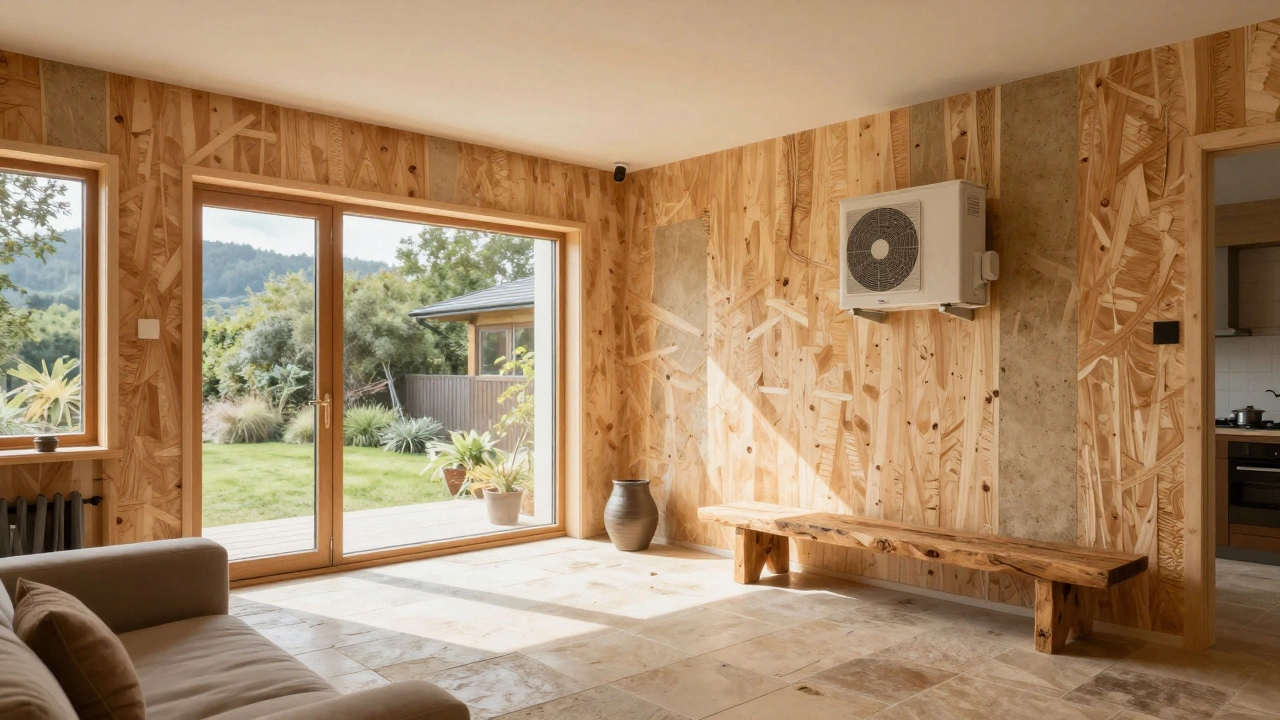
- Non-toxic, low-impact materials (no VOCs, no plastic insulation, no mined metals)
- Passive design (natural light, ventilation, thermal mass)
- Built on a site that minimizes ecological disruption
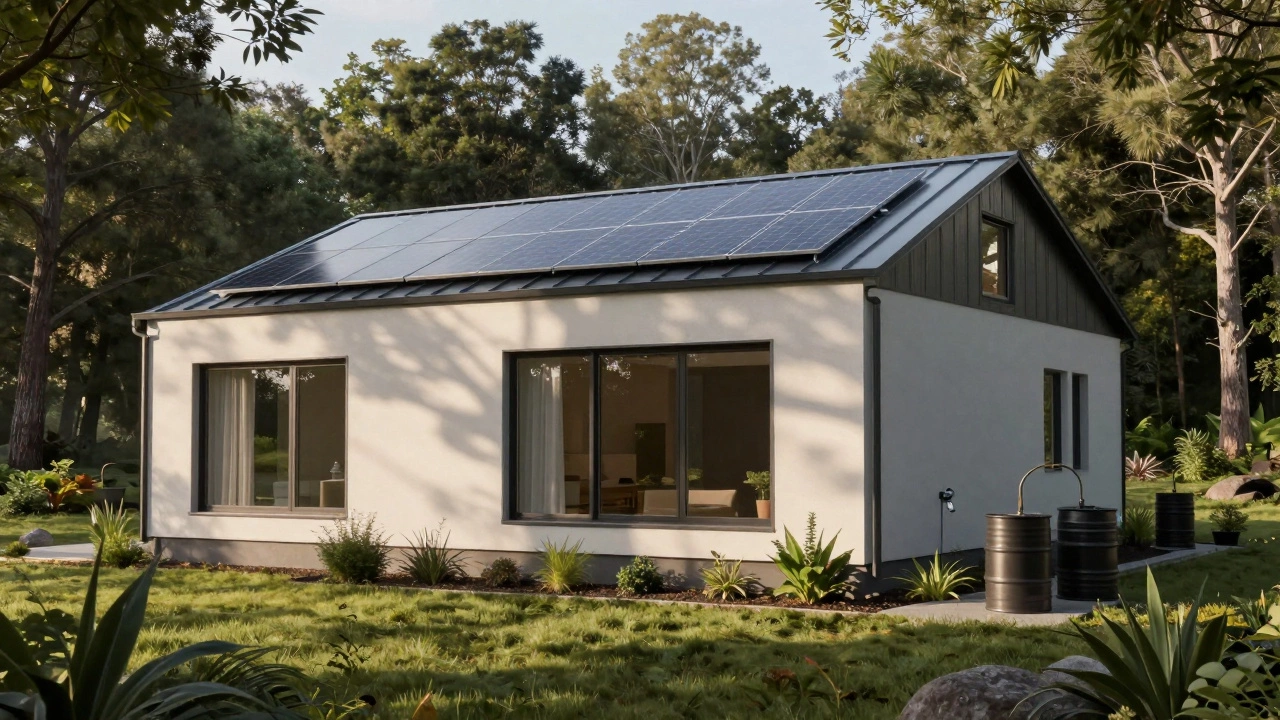
Many people think "sustainable" means rustic cabins with composting toilets. But modern sustainable homes look like any other sleek, modern house-just smarter. The difference is in the details.
Where Does the Money Go?
The biggest cost drivers aren’t what you’d expect. Solar panels? They’re cheaper than ever. A 10kW system now runs about $18,000-$25,000 installed, down from $40,000 just five years ago. The real expense comes from the hidden stuff:- Insulation and air sealing: High-performance insulation (like cellulose or hempcrete) costs 2-3x more than fiberglass. But it cuts heating and cooling needs by 70%. For a 2,000 sq ft home, this adds $15,000-$25,000.
- Windows: Triple-glazed, argon-filled, low-e windows with thermal breaks cost $1,200-$1,800 each. A full set can run $40,000. Standard windows? $10,000.
- Structural materials: Cross-laminated timber (CLT) and reclaimed steel are more expensive than standard lumber or concrete. But they store carbon instead of emitting it. CLT walls can add $20,000-$35,000.
- Energy systems: Heat pumps, energy recovery ventilators, and smart energy management systems add $15,000-$25,000. You’re not just buying equipment-you’re buying a whole new way of managing energy.
- Water systems: Rainwater catchment, filtration, and greywater recycling can cost $10,000-$20,000. Most homes don’t need this-but if you’re off-grid, you can’t live without it.
Here’s what you’re paying for: durability. A sustainable house doesn’t need new roofs every 15 years. It doesn’t need new HVAC systems every 10. It doesn’t leak air. It doesn’t get mold. That’s the real value.
Cost Comparison: Standard vs. Sustainable Home
| Component | Standard Home | Fully Sustainable Home |
|---|---|---|
| Foundation | $25,000 | $35,000 (recycled concrete or insulated slab) |
| Walls & Insulation | $30,000 | $55,000 (hempcrete, cellulose, advanced sealing) |
| Windows | $10,000 | $45,000 (triple-glazed, thermally broken) |
| Roofing | $15,000 | $25,000 (reflective metal, green roof option) |
| Heating/Cooling | $12,000 | $25,000 (air-source heat pumps + ERV) |
| Electrical (solar) | $5,000 | $22,000 (10kW system + battery storage) |
| Water System | $3,000 | $18,000 (rainwater, filtration, greywater) |
| Interior Finishes | $40,000 | $55,000 (non-toxic paints, reclaimed wood, natural stone) |
| Total | $140,000 | $275,000 |
That’s $135,000 more upfront. But here’s the catch: your monthly bills drop to near zero. The average U.S. home spends $200-$300 a month on utilities. A net-zero home spends $10-$20. That’s $2,400-$3,600 saved every year.
How Long Until You Break Even?
If you spend $135,000 extra to build green, and you save $3,000 a year on energy and water, you’ll break even in about 45 years. That sounds terrible-until you factor in inflation, rising utility rates, and maintenance savings.Utility prices have risen 3.5% annually over the last decade. In 2025, they’re projected to climb 4.8% per year. By year 15, your annual savings will be $5,500. By year 25, $8,000. And you won’t need to replace your HVAC system, roof, or windows for 40+ years. That’s $60,000-$80,000 in avoided repairs.
Plus, sustainable homes sell for 10-15% more. A 2024 study by the National Association of Realtors found that homes with Energy Star certification sold 3-7% faster and for 3-10% more. Net-zero homes? They often sell for 12-18% more. That’s $30,000-$50,000 extra in equity.
Can You Build One on a Budget?
Yes-but you have to be strategic. You don’t need every upgrade to make a home sustainable. Here’s how to cut costs without cutting corners:- Start small. Build a 1,200 sq ft home instead of 2,500. Less space = less material, less energy, less cost.
- Use reclaimed materials. Salvaged wood, bricks, and fixtures can cut material costs by 30%. Check local deconstruction yards or Habitat for Humanity ReStores.
- Go partial off-grid. Skip the full water system. Use a high-efficiency well and septic. Add solar later.
- Do some of the work yourself. Painting, landscaping, and installing fixtures are safe DIY projects. Save $20,000-$40,000.
- Choose a simple design. Complex shapes, vaulted ceilings, and custom windows add cost. Stick to rectangles and right angles.
One couple in Oregon built a 1,100 sq ft net-zero cottage for $185,000 by using reclaimed timber, doing 70% of the labor, and installing solar in phases. Their monthly bills? $8.
What You Can Skip (Without Losing Sustainability)
Not every green feature is worth the cost. Here’s what’s overhyped:- Smart home automation: It’s cool, but not essential. A programmable thermostat does 90% of the job.
- Green roofs: They’re beautiful but expensive and high-maintenance. A reflective metal roof gives you 80% of the cooling benefit.
- Hydrogen systems: Still experimental. Stick with heat pumps and batteries.
- Expensive certifications: LEED Platinum adds $10,000-$20,000 in fees and paperwork. Energy Star and Passive House are cheaper and just as credible.
Government Incentives Cut the Cost
In 2025, the U.S. federal tax credit for solar, heat pumps, and energy efficiency upgrades is 30%-and it’s still active. Many states add more:- California: $10,000 cash rebate for net-zero homes
- New York: $5,000 for high-performance insulation
- Colorado: Free energy audits and design help
- Massachusetts: $7,500 for electric heat pumps
On average, you can get $25,000-$40,000 back in rebates and tax credits. That cuts your premium by nearly a third.
Who Should Build a Sustainable House?
This isn’t for everyone. But it’s perfect for:- People who plan to stay in their home 15+ years
- Those tired of rising utility bills
- Families with health concerns (asthma, allergies-non-toxic materials help)
- Anyone who wants to reduce their carbon footprint
- Homeowners who value durability over trends
If you’re planning to move in 5 years? Stick with a standard home. But if you’re building your forever home? A sustainable house pays for itself-not just in money, but in peace of mind.
Final Thought: It’s Not a Luxury. It’s the New Standard.
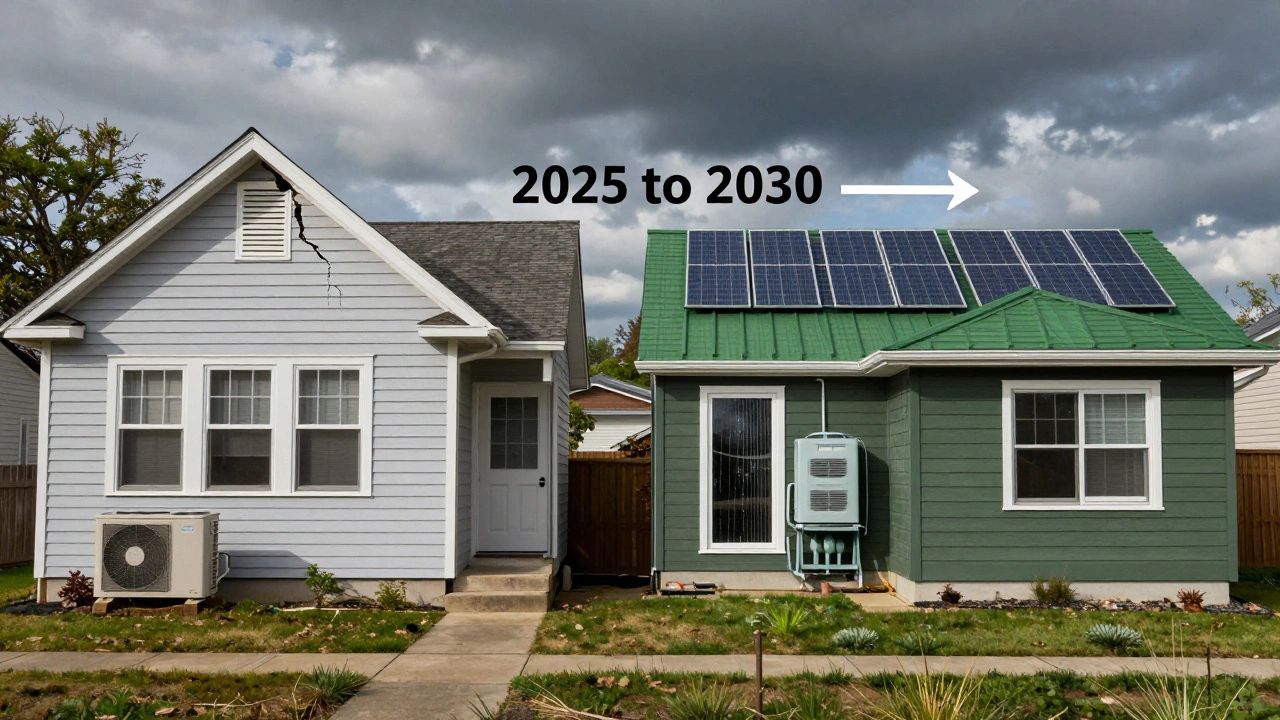
Ten years ago, solar panels were a novelty. Now, they’re common. In 2025, building without them is like building without insulation. The market is shifting. Materials are getting cheaper. Labor is getting more skilled. Regulations are tightening.By 2030, every new home will need to be net-zero. The question isn’t whether you should build sustainable. It’s whether you want to pay more now-or pay even more later.
Is it cheaper to build a sustainable house from scratch or retrofit an existing one?
Building new is almost always cheaper. Retrofitting an old home to be truly sustainable often costs more than building new because you’re fighting outdated structures-poor insulation, inefficient windows, bad layouts. You can’t easily add thick insulation to existing walls without tearing them down. A full retrofit can cost $150,000-$250,000 for a 2,000 sq ft home, and you still won’t match the efficiency of a purpose-built net-zero home.
Do sustainable homes require more maintenance?
No. In fact, they require less. High-quality insulation and air sealing prevent moisture damage. Non-toxic materials don’t degrade or off-gas. Solar panels need cleaning twice a year. Heat pumps last 20+ years. Traditional HVAC systems? 10-15 years. You’ll spend less time fixing things and more time enjoying your home.
Can I get a mortgage for a sustainable home?
Yes. Many lenders now offer green mortgages with lower interest rates for energy-efficient homes. Programs like Fannie Mae’s HomeStyle Energy and FHA’s Energy Efficient Mortgage allow you to borrow more based on projected energy savings. Some lenders will let you qualify for a higher loan amount because your monthly utility bills are so low.
Are sustainable homes harder to sell?
No. They sell faster and for more money. Buyers in 2025 are looking for lower bills, better air quality, and resilience. A 2024 survey by Zillow found that homes with solar panels sold 3.7% faster and for 4.1% more than comparable homes without them. Homes with full sustainability features-net-zero, water recycling, non-toxic materials-see even higher premiums.
What’s the most affordable way to start going sustainable?
Start with air sealing and insulation. These two upgrades alone can cut your energy use by 40%. Then add a heat pump for heating and cooling. After that, install solar panels. You can do this in phases over 5-10 years. You don’t need to go all-in on day one.