Eco-Friendly Cottage Design: Sustainable Builds That Actually Work
When you hear eco-friendly cottage design, a way of building small homes that reduce environmental harm while keeping comfort and charm. Also known as green cottage construction, it’s not about buying expensive gadgets—it’s about choosing the right materials, shaping the space to work with nature, and cutting waste before it even starts. Most people think green means solar panels and rainwater tanks, but the real magic happens before you install anything. It’s in the walls, the foundation, and even the insulation you pick.
Take natural materials, building supplies like wood, clay, straw, and lime that come from the earth and return to it without poisoning the air or soil. These aren’t new-age trends—they’ve been used for centuries in rural Europe, and now they’re making a comeback because they breathe better, regulate humidity, and don’t off-gas chemicals like synthetic insulation or pressure-treated wood. Compare that to spray foam insulation, a common but toxic material that traps harmful gases and is nearly impossible to recycle. Or PVC plumbing, a cheap plastic that breaks down into microplastics and leaches toxins over time. These aren’t just bad for the planet—they’re bad for your health, especially in a small space like a cottage where air doesn’t circulate easily.
Then there’s off-grid cottage, a home designed to run without relying on public utilities, using solar, wind, composting toilets, and passive solar heating. You don’t need to go full survivalist to do this. Many UK cottage owners simply improve insulation, add double-glazed timber windows, and orient the building to catch the sun in winter and shade in summer. That’s passive design, a method that uses the sun, wind, and thermal mass to keep a home warm in cold months and cool in hot ones, without electricity. It’s cheaper than installing a heat pump, and it lasts longer.
And it’s not just about what you build with—it’s about where you build it. A green cottage on a muddy hillside with no drainage isn’t sustainable. A cottage tucked into a forest with no thought to wildlife corridors isn’t either. Real eco-friendly design respects the land it sits on. That means working with the slope, not fighting it. Using local stone instead of shipping concrete from 200 miles away. Planting native hedgerows instead of synthetic lawns. These aren’t luxury upgrades—they’re basic common sense.
Jeff Bezos might have a $500 million eco-compound, but you don’t need billionaire money to build a home that’s kind to the earth. The cheapest, smartest green choices are often the oldest ones: timber frames, lime plaster, wool insulation, and clay floors. They’re not flashy, but they last. They repair themselves. They don’t need constant fixing. And they make your cottage feel alive, not just efficient.
What you’ll find below isn’t theory. It’s real stories from people who built or renovated cottages with these ideas in mind. You’ll see what materials to avoid, how to cut costs without cutting corners, and how even small changes—like swapping out a single window or choosing the right paint—can make a big difference. Whether you’re planning a new build or just want to make your current cottage greener, the answers are here, plain and simple.
What Is the Most Economical House Shape for Eco-Friendly Cottages?
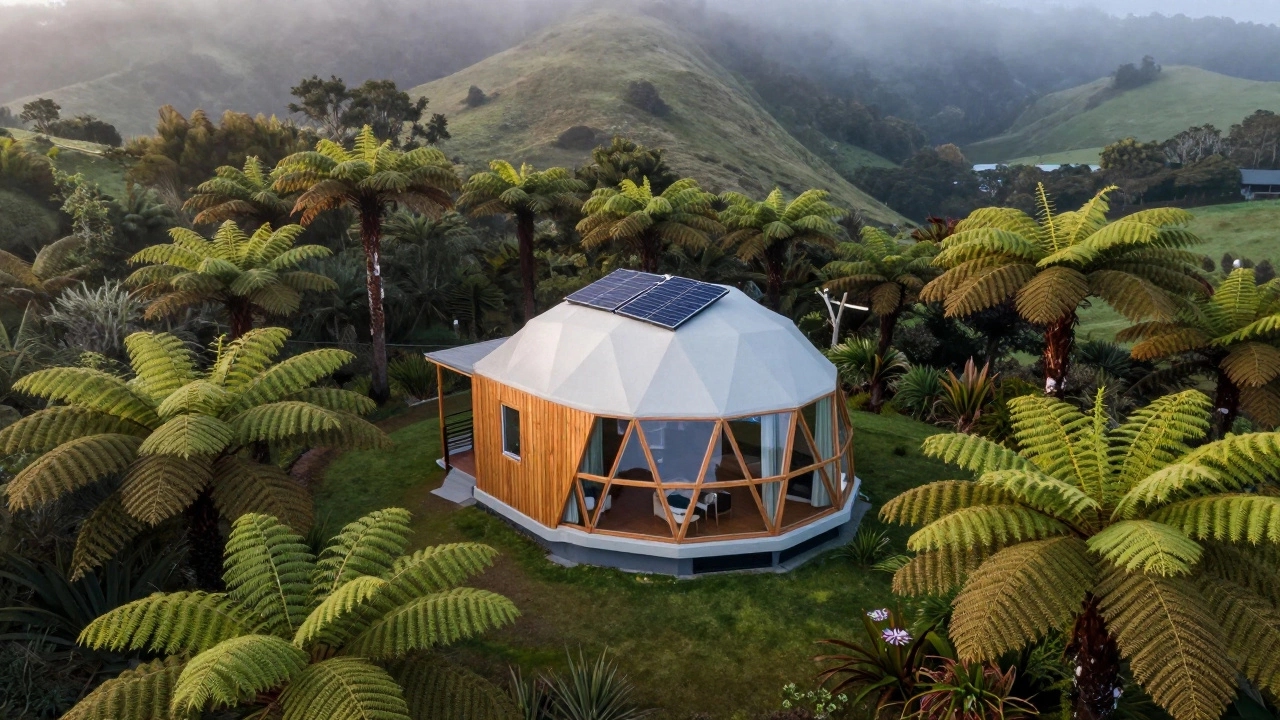
The most economical house shape for eco-friendly cottages is round or geodesic dome-using less material, reducing energy loss, and cutting long-term costs. Real New Zealand examples prove it works.
- Dec, 4 2025
- 0 Comments