Economical House Shape: Smart Designs for Affordable, Eco-Friendly Cottages
When you think about building or buying a cottage, the shape of the house might seem like just an aesthetic choice—but it’s one of the biggest factors in how much it costs to build, heat, and maintain. A simple, compact economical house shape, a design that minimizes surface area to reduce material use and energy loss. Also known as compact form, it’s the secret behind many low-cost, high-efficiency homes across the UK countryside. Think cube, rectangle, or square—nothing fancy. The more corners and angles you add, the more materials you need, the more heat escapes, and the more it costs to keep warm in winter.
That’s why the most common eco-friendly cottages you’ll find in rural England and Wales stick to basic shapes. A single-story rectangle with a pitched roof isn’t just cheap to build—it’s easier to insulate, easier to roof, and easier to heat with a small wood stove or heat pump. Compare that to a sprawling L-shape or a round house with curved walls: they look cool in magazines, but they cost 20-30% more to build and often leak air where walls meet at odd angles. You don’t need a custom design to live well. In fact, the best-performing homes—like the Passive House, a building standard focused on ultra-low energy use through tight insulation and smart shape—are often the simplest in form. And they’re not just for billionaires. Even modest UK cottages built to these principles cut heating bills by half.
It’s not just about the shape itself, but how it works with the land. A long, narrow cottage running east-west gets more sun in winter, reducing the need for artificial heat. A compact footprint means less ground to excavate, less foundation to pour, and less roof to repair. That’s why many of the cottages featured here—whether built from reclaimed timber or modern insulated panels—stick to clean lines. You’ll see it in posts about eco-friendly building materials, sustainable options like timber frame, hempcrete, and recycled insulation that work best in simple designs. You can’t hide flaws in a complex shape, but a simple box lets good materials shine.
And here’s the kicker: the most economical house shape doesn’t just save money—it makes your cottage more peaceful. Fewer nooks mean less dust, less cold draft, less maintenance. It’s why people who’ve switched from big, awkward homes to compact cottages say they feel more relaxed. No more chasing heat around corners. No more rooms that never warm up. Just a quiet, steady warmth that lasts all night.
What you’ll find below isn’t a list of fancy blueprints. It’s a collection of real stories, real cottages, and real lessons from people who built or bought smart. From how to pick a shape that fits your plot, to why a gable roof beats a hip roof for rain runoff, to how a square footprint can cut your energy bill by £500 a year—these posts cut through the noise. No fluff. No hype. Just what works.
What Is the Most Economical House Shape for Eco-Friendly Cottages?
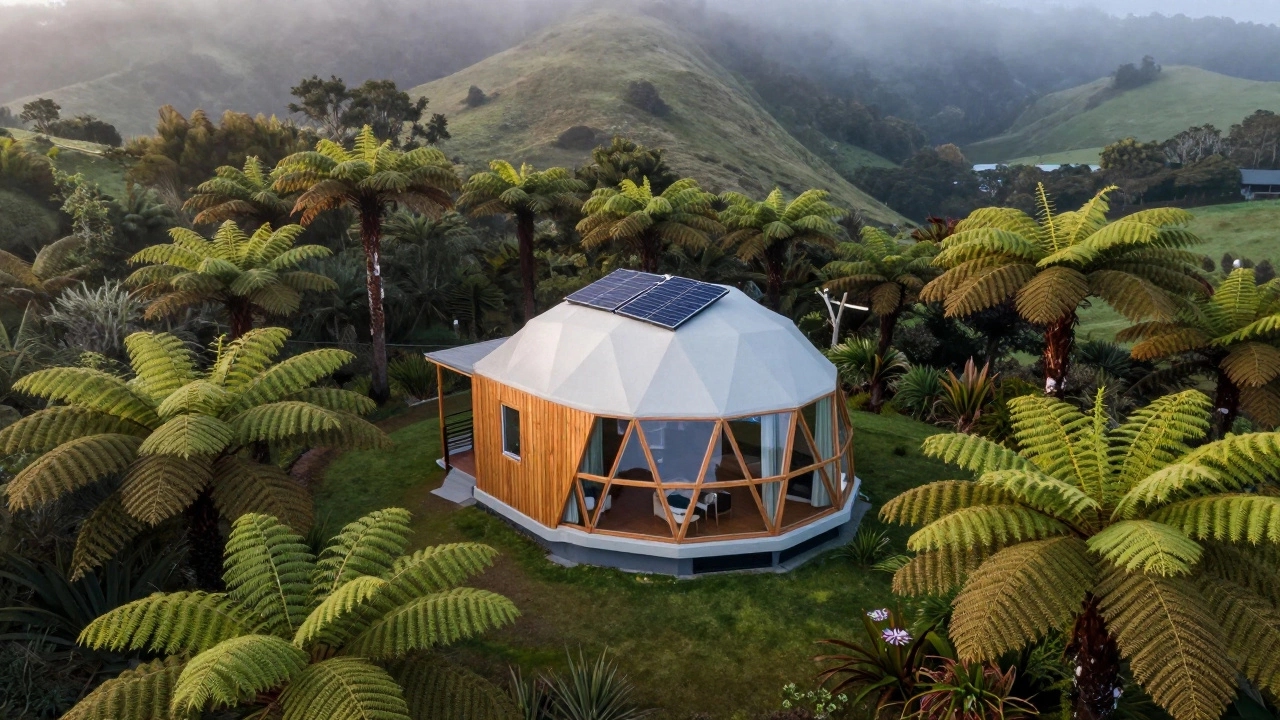
The most economical house shape for eco-friendly cottages is round or geodesic dome-using less material, reducing energy loss, and cutting long-term costs. Real New Zealand examples prove it works.
- Dec, 4 2025
- 0 Comments