Energy Efficient Home: What It Really Means and How UK Cottages Get It Right
When we talk about an energy efficient home, a residence designed to use minimal energy for heating, cooling, and lighting while maintaining comfort. Also known as a green home, it’s not about fancy gadgets—it’s about smart choices that stick around for decades. Think less electricity bills, fewer fossil fuels burned, and a house that feels just right all year without cranking up the thermostat. In the UK, where winters are damp and summers can surprise you, this isn’t a luxury—it’s a necessity.
Building an eco-friendly cottage, a small, low-impact home built with natural, non-toxic materials and passive energy strategies. Also known as a sustainable building, it’s how many older UK cottages were originally made—thick stone walls, small windows facing away from the wind, timber frames that breathe. Today, modern versions add insulation made from sheep’s wool or cellulose, triple-glazed windows, and solar panels that don’t ruin the charm. The goal? Keep the heat in when it’s cold, keep the cool in when it’s hot, and let the sun do the work instead of the boiler. This isn’t just about being green—it’s about being smart. A well-built energy efficient home saves you hundreds a year, cuts down on noisy, expensive heating systems, and lasts longer because it’s not constantly stressed by temperature swings.
What makes a home truly energy efficient isn’t just one thing—it’s the whole system working together. passive design, a method of building that uses natural elements like sunlight, wind, and thermal mass to regulate temperature without mechanical systems is at the heart of it. A cottage with a south-facing window that lets winter sun warm the floor, or a thick stone wall that holds heat from the day and releases it slowly at night—that’s passive design in action. It’s not new. It’s old wisdom, revived. And in places like the Lake District, the Cotswolds, or the Welsh countryside, you’ll find cottages that’ve been doing this for centuries.
Some people think going green means spending a fortune. But the truth? Many of the most energy efficient homes in the UK are simple, old cottages that were never meant to be torn down. They just needed a little help—better seals around doors, insulation in the loft, a wood-burning stove that burns cleanly. You don’t need solar panels on every roof to make a difference. Sometimes, it’s just about fixing what’s already there.
And if you’re looking for a place to stay that’s cozy, quiet, and kind to the planet, you’re not just picking a cottage—you’re picking a way of living that’s been tested by time. The posts below show you exactly how it’s done: from the materials to avoid, to the real cost of going green, to how billionaires are copying cottage design to build their dream homes. You’ll see what works, what doesn’t, and how even small changes can make a big difference—whether you’re renting a cottage for the weekend or building one for good.
What Is the Most Economical House Shape for Eco-Friendly Cottages?
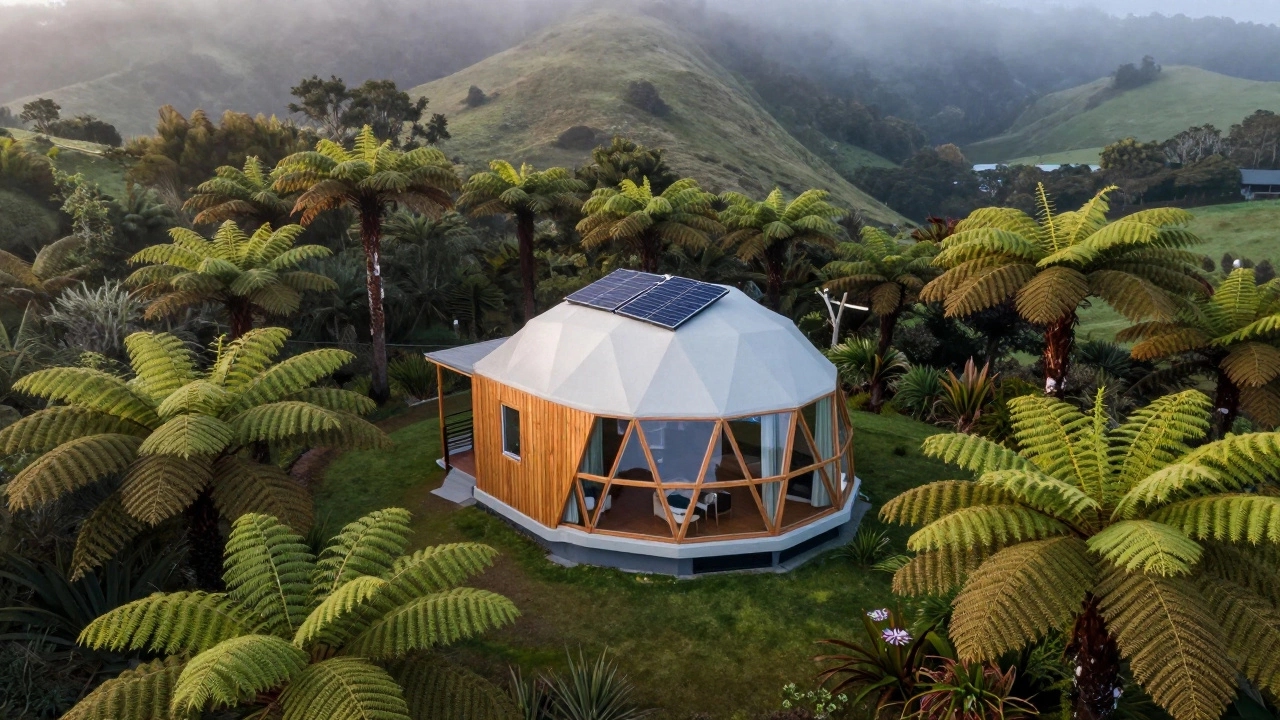
The most economical house shape for eco-friendly cottages is round or geodesic dome-using less material, reducing energy loss, and cutting long-term costs. Real New Zealand examples prove it works.
- Dec, 4 2025
- 0 Comments