Passive Solar Design: How Cottages Stay Warm Without Heating Bills
When you think of a cozy UK cottage, you probably imagine thick stone walls, a crackling fire, and windows that let the sun pour in on a winter morning. That’s not just charm—it’s passive solar design, a way of building that uses sunlight and natural materials to heat and cool a home without mechanical systems. Also known as solar gain design, it’s the quiet hero behind many of the most comfortable, low-energy cottages in the countryside. Unlike fancy solar panels or heat pumps, passive solar design doesn’t need electricity or moving parts. It works by positioning windows, choosing the right materials, and shaping the building so the sun does the work for you.
This approach isn’t new. Old stone cottages in Devon and Cornwall were built with south-facing windows long before anyone talked about carbon footprints. They let winter sun warm thick stone floors and walls, which then slowly release heat all night. In summer, overhangs or deciduous vines block the high sun, keeping things cool. Today, modern eco-friendly cottages, homes built with natural, low-impact materials and smart energy use. Also known as green homes, it takes this idea further—using high-performance glass, thermal mass like rammed earth or clay plaster, and tight insulation to lock in heat. It’s not about adding gadgets; it’s about getting the basics right from the start. The result? Cottages that stay warm in January with no furnace running, and cool in July without air conditioning.
It’s not magic, but it does require planning. The angle of the sun changes with the seasons, so window size and placement matter. A south-facing wall with large windows in the Northern Hemisphere catches the most sun. Inside, dark stone or tiled floors absorb heat during the day and release it slowly. Walls need to be thick enough to store that heat, and insulation must be tight to keep it from escaping. You can’t just slap on a big window and call it passive solar—it has to be balanced. That’s why many of the cottages you’ll find here were either built with these principles in mind, or carefully retrofitted. Some use reclaimed bricks for thermal mass. Others have roof overhangs sized to the exact latitude. A few even have internal heat chimneys that pull warm air up and circulate it naturally.
What makes passive solar design so powerful is how it connects to other sustainable choices. It pairs perfectly with passive house, a rigorous building standard focused on ultra-low energy use through airtightness, insulation, and heat recovery. Also known as passive building, it standards, which are becoming more common in new UK builds. It also fits with natural materials—like wood fiber insulation or lime plaster—that breathe and regulate humidity without chemicals. And it’s why you’ll see so many of the cottages here linked to topics like eco-friendly building materials, off-grid living, and sustainable cottages. You can’t have true sustainability without first understanding how to use the sun, the earth, and the wind to your advantage.
There’s no need to live in a glass box to benefit from passive solar design. Even small tweaks—like replacing single-pane windows with double-glazed ones on the south side, or adding a sunspace porch—can make a big difference. That’s what makes this topic so practical. Whether you’re renting a cottage for a weekend or planning to build your own, knowing how sunlight shapes comfort helps you spot the real deals. The best ones don’t just look pretty—they work with nature, not against it.
Below, you’ll find real examples of how this works in practice—from cottages built from scratch with passive solar in mind, to older ones that were cleverly upgraded. You’ll see how people cut heating bills, stayed warm during power outages, and made their stays more comfortable without spending a fortune. No theory. No fluff. Just what works in the UK climate, in real homes, for real people.
What Is the Most Economical House Shape for Eco-Friendly Cottages?
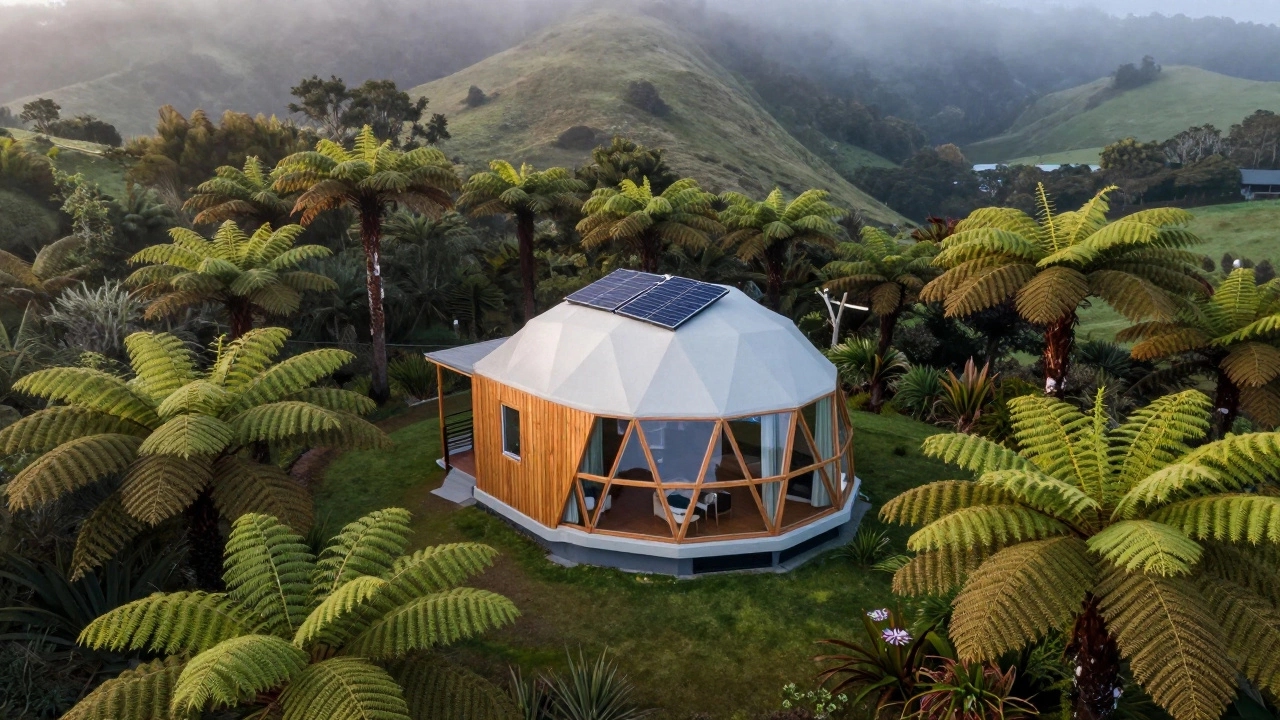
The most economical house shape for eco-friendly cottages is round or geodesic dome-using less material, reducing energy loss, and cutting long-term costs. Real New Zealand examples prove it works.
- Dec, 4 2025
- 0 Comments