The Most Eco-Friendly Places on Earth: Top Sustainable Destinations and Green Cottages
 Jun, 15 2026
Eco-Friendly Destination Score Calculator
Use this tool to evaluate if a destination or accommodation matches the eco-friendly standards discussed in the article.
You pack your bags, ready for a getaway that feels good. But does the place you choose actually match your values? We all want to travel light on the planet, yet finding truly eco-friendly places can feel like searching for a needle in a haystack. Many spots claim to be "green," but few walk the talk. So, where do you go when you want nature to thrive because of your visit, not despite it?
The answer isn’t one single coordinate on a map. It’s a mix of policy-driven nations, regenerative communities, and specific accommodations that have mastered the art of low-impact living. From the tiny nation of Bhutan to the solar-powered cottages of the Scottish Highlands, these are the places redefining what it means to be kind to the earth.
The Policy Powerhouses: Nations That Measure Happiness Over GDP
Sometimes, the most eco-friendly place is an entire country. These nations have woven sustainability into their legal and cultural DNA, making green choices the default rather than the exception.
Bhutan is often cited as the world’s first carbon-negative country. This Himalayan kingdom doesn't just protect its forests; it mandates that at least 60% of its land remains forested forever. Currently, over 70% of Bhutan is covered in trees. The concept here is Gross National Happiness (GNH), which prioritizes ecological balance alongside economic growth. When you visit, you pay a daily sustainable development fee, which directly funds free healthcare and education while preserving the pristine environment.
Then there is Costa Rica. For decades, this Central American nation has been a global leader in renewable energy. In recent years, Costa Rica has run on nearly 100% renewable energy-hydroelectric, geothermal, wind, and solar-for months at a time. Their biodiversity strategy is aggressive too. They reversed deforestation trends from the 1980s by paying landowners to conserve forests. Today, more than 50% of the country is protected land or primary forest. If you’re looking for wildlife without the guilt, this is your spot.
In Europe, Iceland stands out. Almost all electricity comes from hydro and geothermal sources. Imagine boiling water with steam from the earth itself. While tourism pressure is high, the infrastructure supports electric vehicles extensively, and the lack of fossil fuel imports makes every trip relatively cleaner compared to oil-dependent destinations.
Regenerative Communities: Living Off the Grid Together
National policies are great, but local action is where you see the real change. Some communities have decided to step off the modern grid entirely, creating self-sustaining ecosystems that regenerate the land they occupy.
Consider Auroville in India. Founded in 1968, this experimental township aims to create a universal human community. They don’t just minimize harm; they actively restore the landscape. Auroville has planted millions of trees to bring back the canopy to the Tamil Nadu region. Residents live in mud houses cooled by natural ventilation, use composting toilets, and grow organic food. It’s a living lab for how humans can coexist with nature without depleting resources.
Across the ocean, the Gaviotas Project in Colombia proves that technology and nature can work together. Located in the dry savanna, this project introduced solar panels and wind turbines before they were trendy. But their biggest innovation was the "Tree Machine," a device that drills holes deep into the hardpan soil to plant trees. This simple tool helped transform a desert-like area into a lush forest, proving that even degraded lands can heal with the right approach.
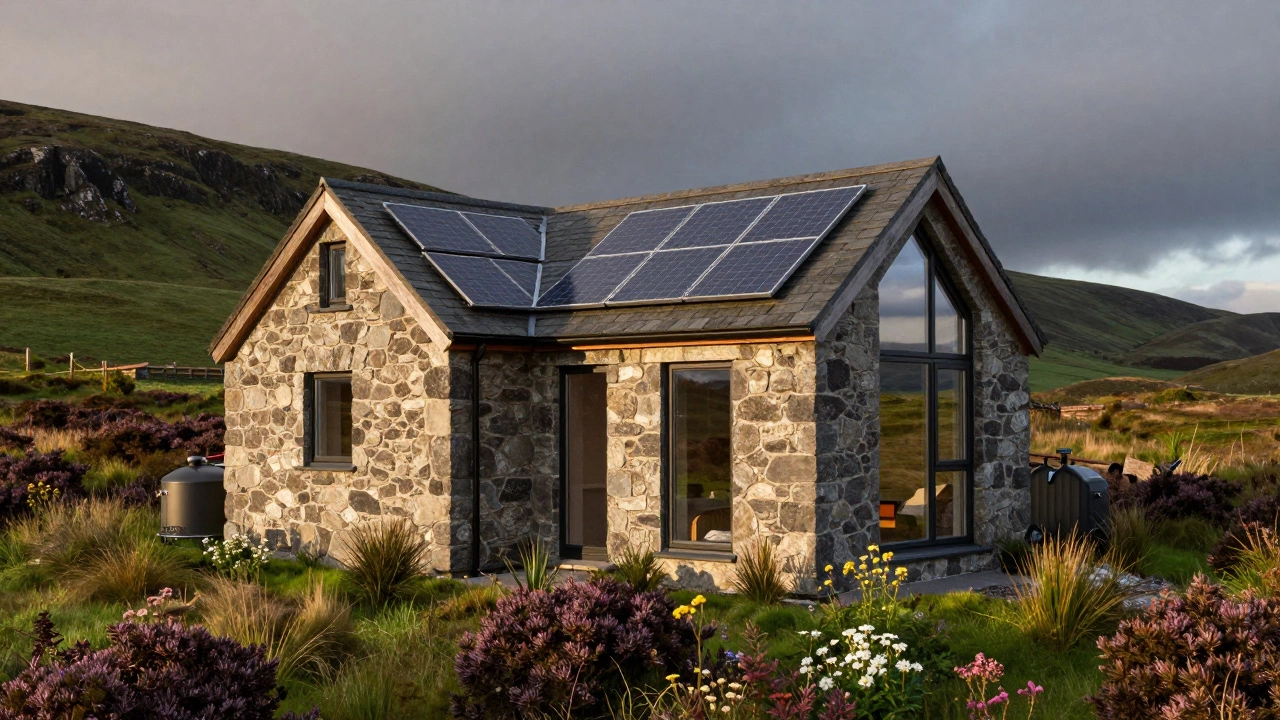
Eco-Friendly Cottages: Your Private Green Sanctuary
If you prefer privacy over communal living, eco-friendly cottages offer a perfect blend of comfort and conscience. These aren't just rustic cabins; they are engineered to reduce waste, energy use, and environmental impact.
The best Eco-friendly cottages share common traits. First, they use passive design. Think thick insulation, strategic window placement for natural light, and materials like reclaimed wood or straw bale. Second, they manage water wisely. Rainwater harvesting systems fill tanks for gardening and toilet flushing, while greywater recycling ensures shower water nourishes plants instead of polluting streams.
Take the trend of Tiny Houses. By reducing square footage, you automatically reduce the energy needed to heat and cool the space. Many tiny homes are built on wheels or small footprints, minimizing disturbance to the ground. Add solar panels and a composting toilet, and you have a dwelling that leaves almost no trace.
In places like Scotland and Ireland, traditional stone cottages are being retrofitted with modern eco-tech. Stone has high thermal mass, meaning it stays cool in summer and warm in winter naturally. Owners add underfloor heating powered by air-source heat pumps and install triple-glazed windows. The result? A historic home that uses a fraction of the energy of a standard modern house.
| Type | Energy Source | Water Management | Best For |
|---|---|---|---|
| Tiny House | Solar/Battery | Composting Toilet/Rainwater | Minimalists, Solo Travelers |
| Retrofitted Cottage | Heat Pump/Grid Mix | Greywater Recycling | Families, Heritage Lovers |
| Eco-Lodge | Hydro/Wind/Solar | On-site Treatment | Wildlife Viewing, Groups |
| Dome/Yurt | Wood Stove/Solar | Portable Systems | Camping Enthusiasts, Couples |
Urban Oases: Cities Leading the Green Charge
You don’t need to flee to the countryside to be eco-friendly. Some cities are transforming concrete jungles into green paradises, proving that density and sustainability can coexist.
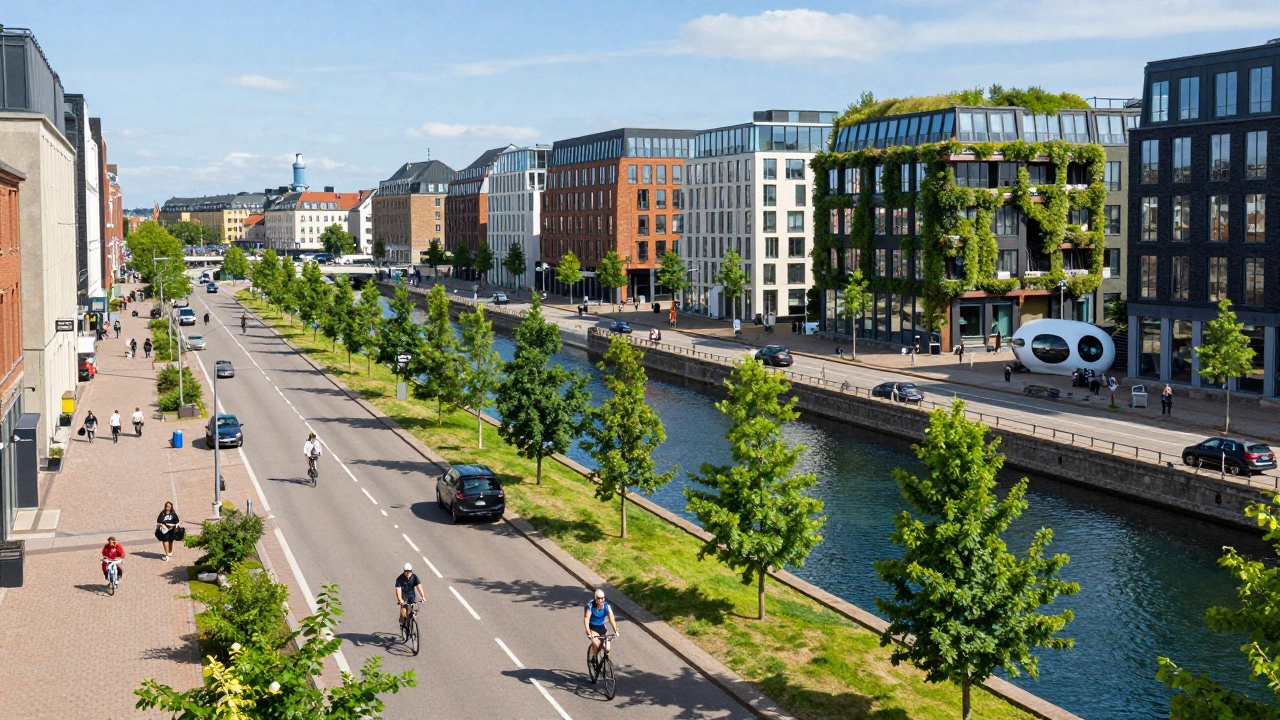
Copenhagen, Denmark, is on track to become the world’s first carbon-neutral capital by 2025. Cycling is the norm, not the exception. With extensive bike lanes and a culture that prizes pedal power, cars are optional. The city also uses waste-to-energy plants that provide district heating for thousands of homes. Even the trash bins look like futuristic sculptures.
In Asia, Singapore is known as the "City in a Garden." High-rises are draped in vertical gardens, which cool buildings and filter air. The Marina Bay Sands resort features a massive rooftop garden, and public housing blocks integrate green spaces at every level. Singapore’s strict laws against littering and pollution ensure that this urban greening effort is maintained meticulously.
Meanwhile, Freiburg in Germany is a model for sustainable urban planning. The Vauban district within Freiburg is car-free for residents, with garages replaced by bike sheds. Solar panels cover most roofs, and many homes produce more energy than they consume, feeding excess power back into the grid. It’s a blueprint for how new neighborhoods should be built.
How to Verify True Sustainability
Greenwashing is real. Just because a hotel says it’s "eco-conscious" doesn’t mean it isn’t wasting water behind the scenes. Here is how you spot the genuine articles:
- Look for Certifications: Trust third-party audits. Look for labels like LEED (Leadership in Energy and Environmental Design), B Corp certification, or Green Key. These require rigorous standards to maintain.
- Check Energy Sources: Does the place mention solar, wind, or hydro? Or do they just say "energy efficient"? Specificity matters. Ask about their carbon offset programs if they rely on fossil fuels.
- Observe Waste Practices: Are there clear recycling bins? Do they serve food locally sourced? Single-use plastics should be absent. If you see plastic water bottles everywhere, it’s a red flag.
- Community Impact: Do they hire locally? Do they support conservation projects? True eco-friendliness includes social sustainability. If the money leaves the community, the benefit is limited.
Planning Your Trip: Practical Steps
Finding these places requires a bit of extra effort, but it pays off. Start by narrowing down your region. Use filters on booking sites for "sustainable" or "eco-certified." Read reviews specifically mentioning environmental practices. Don’t hesitate to email the property and ask questions. A genuinely eco-friendly host will be proud to explain their systems.
Once you arrive, participate. Turn off lights, reuse towels, and respect local customs. Your behavior amplifies the impact of the place you’ve chosen. Remember, the most eco-friendly place is one where you leave things better than you found them.
Is Bhutan really carbon negative?
Yes, Bhutan absorbs more carbon dioxide than it emits. This is due to its vast forest cover, which acts as a carbon sink, and its reliance on hydropower for electricity generation. The government strictly enforces forest conservation laws to maintain this status.
What makes a cottage truly eco-friendly?
A truly eco-friendly cottage uses renewable energy sources like solar or wind, manages water through rainwater harvesting and greywater recycling, utilizes sustainable building materials, and minimizes waste through composting and recycling programs. Passive design elements like insulation and natural ventilation also play a key role.
Are eco-friendly accommodations more expensive?
Not necessarily. While some luxury eco-lodges can be pricey, many eco-friendly options like camping, hostels with green certifications, or homestays are affordable. Often, the cost reflects higher operational standards for sustainability, but budget-friendly green choices exist worldwide.
How can I avoid greenwashing when booking travel?
Look for recognized third-party certifications like LEED, B Corp, or Green Key. Be skeptical of vague terms like "eco-friendly" without proof. Check if the business provides specific details about their energy sources, waste management, and community involvement. Reading independent reviews can also reveal inconsistencies.
Which cities are leading in urban sustainability?
Cities like Copenhagen, Denmark, aim for carbon neutrality through cycling infrastructure and waste-to-energy plants. Singapore integrates extensive greenery into its urban fabric, while Freiburg, Germany, showcases sustainable neighborhood planning with car-free zones and solar power integration.