What Is an Eco-Friendly House Called? The Real Terms You Need to Know
 Mar, 5 2026
Home Energy Savings Calculator
Calculate Your Home's Energy Savings
Results
Ever walked through a neighborhood and seen a house that just feels different? No loud AC units, solar panels on the roof, windows that open naturally, and a garden that looks like it belongs there-not like it was planted for show. You might’ve wondered: what is an eco-friendly house called? It’s not just "green" or "sustainable." Those words are everywhere now. But if you’re serious about understanding what makes a home truly eco-friendly, you need to know the real terms professionals use-and why they matter.
It’s Not Just "Green"
"Green home" sounds nice, but it’s become a marketing buzzword. A company can slap a few solar panels on a boxy concrete house and call it "eco-friendly." But true eco-friendly houses are designed from the ground up, not patched on. They don’t just save energy-they rethink how energy is used in the first place.The most accurate names for these homes aren’t vague. They’re technical. They’re specific. And they’re backed by real standards you can measure.
Passive House: The Gold Standard
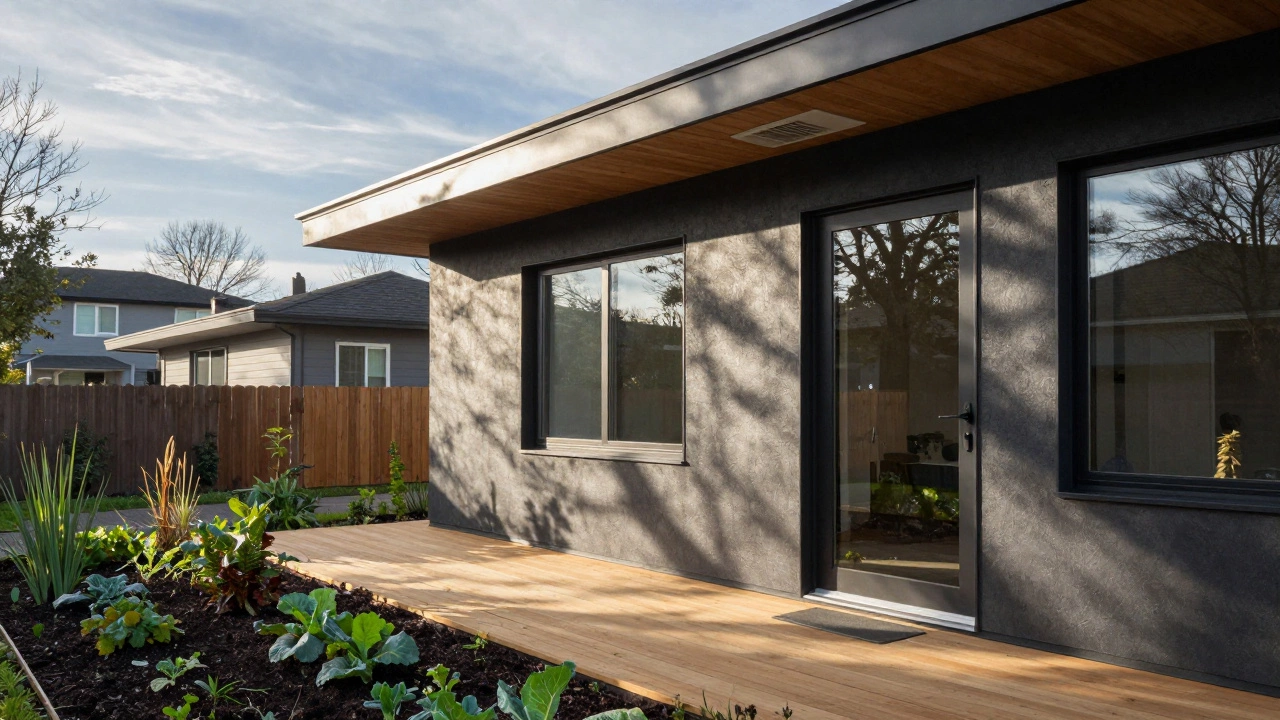
If you want to know what the most efficient eco-friendly house looks like, start with Passive House. This isn’t a style. It’s a certification. Originating in Germany in the 1990s, it’s now used worldwide-from rural New Zealand to urban Berlin.A Passive House doesn’t rely on fancy gadgets. It uses thick insulation, airtight construction, triple-glazed windows, and heat recovery systems. The result? A home that needs 90% less heating and cooling than a standard house. In Wellington, where winters are damp and cool, a Passive House can stay warm with just the body heat of its occupants and sunlight through south-facing windows.
The numbers don’t lie: a certified Passive House uses less than 15 kWh per square meter per year for heating. Compare that to a typical New Zealand home, which uses around 150 kWh/m²/year. That’s not a small improvement. That’s a revolution.
Net Zero Home: Energy Balanced
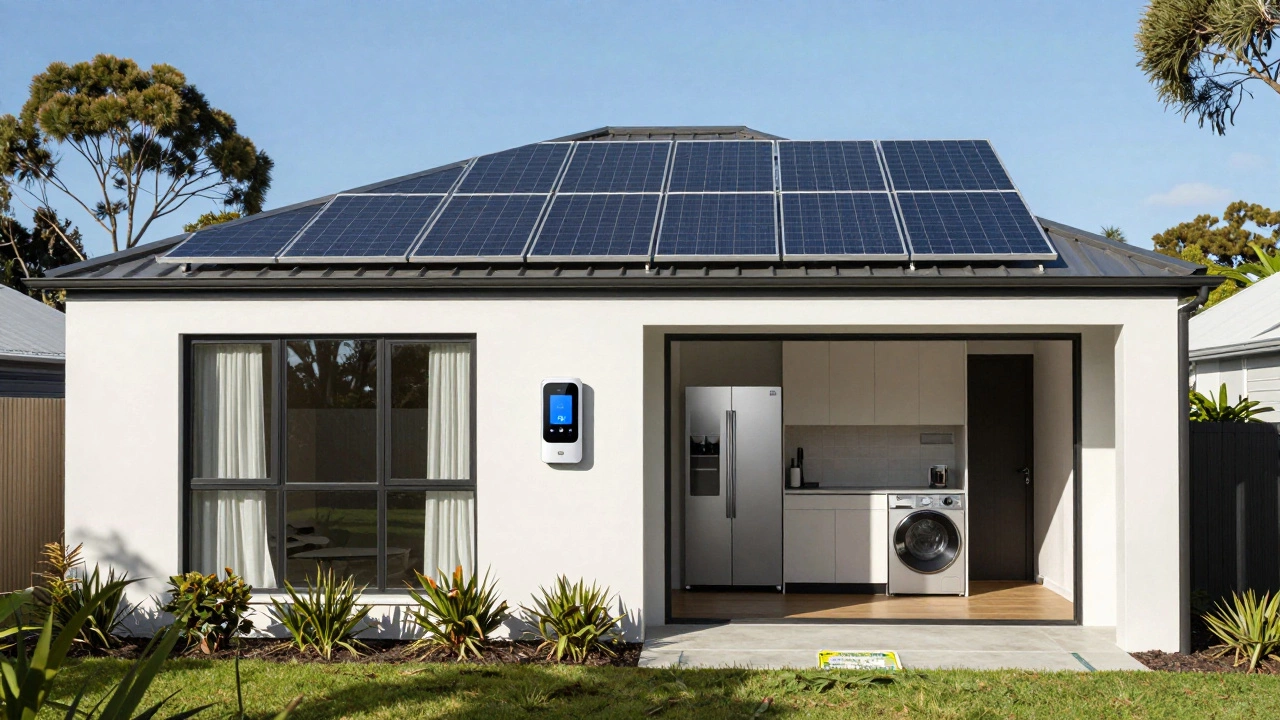
Then there’s the Net Zero Home. This one’s simpler to understand: it produces as much energy as it uses over a year. Usually, that means solar panels, smart energy storage, and ultra-efficient appliances.But here’s the catch: a Net Zero Home can still be a big, wasteful box-if it’s poorly insulated. You can have 10 solar panels on a leaky house and still be using more grid power than you generate in winter. That’s why the best Net Zero Homes combine solar with Passive House principles. They don’t just generate energy; they waste almost none.
In New Zealand, the government’s Energy Efficiency and Conservation Authority (EECA) says over 60% of new builds in Wellington now include solar panels. But only 12% meet true Net Zero standards because they skip the envelope design. The panels help-but the insulation does the heavy lifting.
Zero Energy Home vs. Net Zero Home
You’ll hear both terms. They’re often used interchangeably, but there’s a difference.A Zero Energy Home produces enough energy to cover its annual use-no grid dependence. A Net Zero Home might still pull from the grid at night, but it sends excess solar power back during the day, balancing out over 12 months. For most homeowners, Net Zero is realistic. Zero Energy? That’s for off-grid cabins and hardcore sustainability enthusiasts.
Energy Plus Home: Giving Back
Now, the next level: the Energy Plus Home. This one doesn’t just break even. It gives back. It produces more energy than it consumes and feeds surplus into the grid. Think of it as a home that’s also a mini power plant.These homes are rare, but they’re growing. In Nelson, a family built one in 2024 using rooftop solar, a heat pump, and a smart battery system. They now sell 30% more energy than they use. Their power bill? $0. And they earn $200 a year from the grid operator.
Earthship: The Wildcard
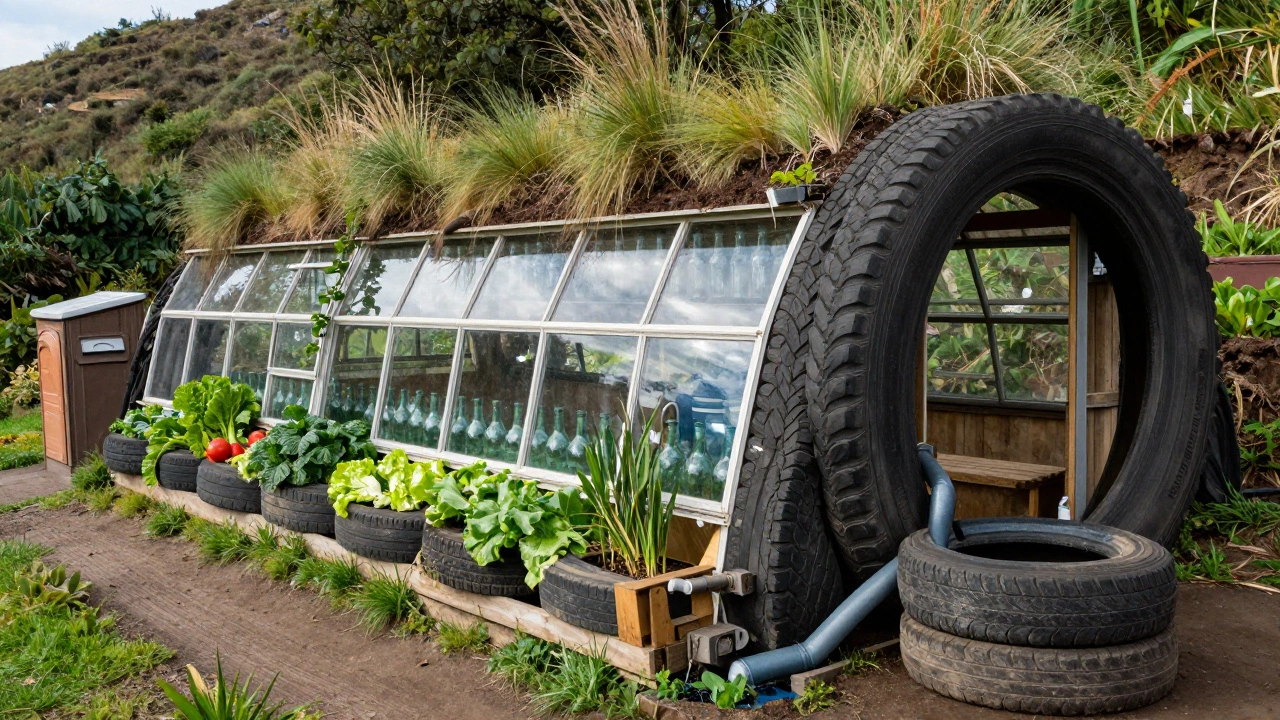
Then there’s the Earthship. This one’s different. Built from recycled tires, glass bottles, and rammed earth, it’s off-grid by design. No plumbing from the city. No grid electricity. Rainwater collected on the roof, filtered, and reused. Composting toilets. Greenhouses built into the walls for food and warmth.Earthships aren’t for everyone. They’re labor-intensive to build. They require specialized knowledge. But they prove something important: you don’t need high-tech to build a sustainable home. Sometimes, old wisdom-like using the sun’s path and natural materials-is the most advanced thing you can do.
What About "Sustainable Home"?
"Sustainable" sounds broad, and it is. It covers materials, water use, waste, and even how the home was built. A sustainable home might use reclaimed timber, low-VOC paints, rainwater tanks, and locally made windows. It’s about reducing environmental impact across its entire life cycle.That’s why the most responsible builders now use multiple labels: "Passive House certified," "Net Zero energy," "built with FSC-certified timber." They don’t rely on one term. They stack the proof.
Why This Matters
If you’re looking to buy, build, or upgrade, knowing these terms stops you from being fooled. A "green home" might just mean a new fridge. A Passive House means your heating bill drops to $20 a year. A Net Zero home means you own your energy. An Earthship means you’re part of a movement.In Wellington, council incentives now reward homes that meet Passive House or Net Zero standards. You can get up to $10,000 in grants if you hit the benchmarks. But you have to prove it-with plans, insulation ratings, and energy modeling. No buzzwords allowed.
What to Look For
If you’re evaluating a home, ask these questions:- Is there a certification? (Passive House, NZ Green Building Council, LEED)
- What’s the U-value of the walls and windows? (Lower than 0.15 W/m²K is excellent)
- Is the airtightness test passed? (Air changes per hour under 0.6 is the Passive House standard)
- Where does the energy come from? (Solar? Heat pump? Grid?)
- What materials were used? (Recycled? Locally sourced? Non-toxic?)
Don’t trust labels. Trust data.
Final Thought
There’s no single name for an eco-friendly house. But there are clear standards. The best homes don’t just look green. They perform. They’re quiet. They’re warm in winter, cool in summer, and cost almost nothing to run. They’re not futuristic. They’re practical. And they’re already here-in Wellington, in Nelson, in rural Otago.So when someone asks you what an eco-friendly house is called, you don’t say "green." You say: "It’s a Passive House. Or a Net Zero Home. Or both."
Is a passive house the same as a green home?
No. A "green home" is a general term that can mean anything from solar panels to recycled paint. A Passive House is a strict, certified standard focused on energy efficiency through design-super insulation, airtightness, and heat recovery. All Passive Houses are green, but not all green homes are Passive Houses.
Can any house be turned into a net zero home?
Technically yes, but it’s rarely cost-effective. Retrofitting an old house for Net Zero requires major upgrades: insulation, windows, air sealing, and solar panels. Often, the cost exceeds the value of the home. It’s better to start with a new build or a deep renovation. If you’re retrofitting, aim for Passive House principles first-they give the biggest energy savings for the least money.
Are eco-friendly homes more expensive to build?
Upfront, yes-by about 5% to 15%. But over time, no. A Passive House in Wellington might cost $20,000 more than a standard build, but it saves $1,500 to $2,000 a year on energy. That pays back the extra cost in 10 to 12 years. After that, it’s pure savings. Plus, many councils offer grants that cut the upfront cost.
Do eco-friendly homes need solar panels?
Not for basic efficiency. A Passive House can be super efficient without solar panels-it just uses very little energy. But if you want Net Zero or Energy Plus status, solar panels are essential. They’re how you generate the energy to offset what you do use. So solar isn’t the main tool-it’s the finishing touch.
Are eco-friendly homes only for wealthy people?
No. While high-end builds exist, there are affordable options. In New Zealand, community groups and NGOs have built low-cost Passive House homes using simple designs and volunteer labor. Some cost under $250,000. The key is focusing on insulation and airtightness, not fancy tech. Sustainability isn’t about luxury-it’s about smart design.