What Is the Most Environmentally Friendly Type of Housing?
 Feb, 2 2026
Sustainable Housing Matchmaker
Find Your Perfect Green Home
Take this quick quiz to discover which environmentally friendly housing type best matches your needs. Based on your climate, budget, and lifestyle preferences, we'll recommend the most sustainable option.
Select your options and click "Find My Match" to see which housing type is best for you.
Straw Bale Houses: Ideal for rural areas with agricultural waste. Achieves 75% less energy use than conventional homes. Perfect for cold climates.
Earthships: Best for off-grid living with zero carbon footprint. Works great in dry, sunny regions. Requires significant DIY skill.
Passive House: The energy efficiency standard. Works everywhere with 90% less heating/cooling energy. Best for cold climates.
Modular Timber Homes: Carbon storage solution. Prefab reduces waste by 40%. Best for affordable, fast construction.
When you think about reducing your carbon footprint, you probably think of driving less or cutting plastic. But the biggest hidden culprit? Where you live. The average home in the U.S. produces more than 10,000 pounds of CO2 every year-mostly from heating, cooling, and electricity. That’s more than two cars. So if you want to live lightly on the planet, your house matters more than your car.
Straw Bale Houses: Built by Nature
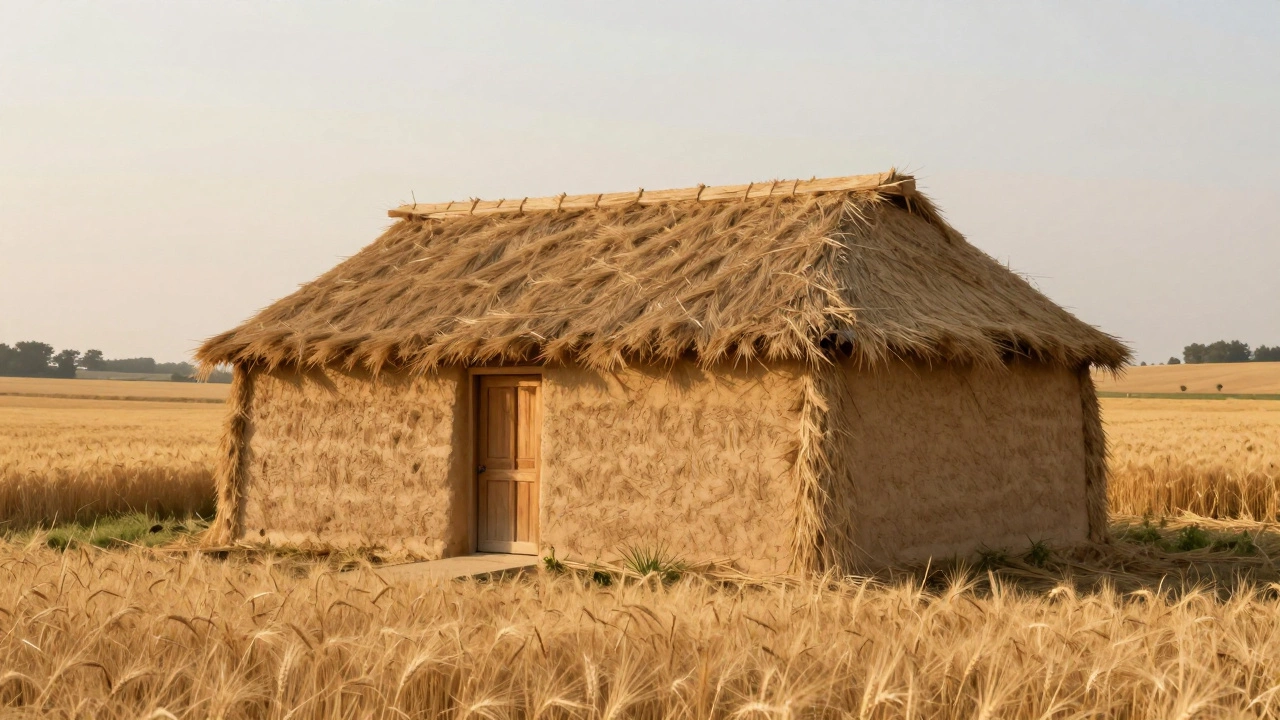
Straw bale construction isn’t new. Farmers in Nebraska used it in the 1890s when wood was scarce. Today, it’s one of the most efficient ways to build a home. Straw bales are packed tightly between wooden frames, then covered in clay or lime plaster. They’re not just insulation-they’re the wall itself.
A typical straw bale wall has an R-value of 40 to 50. That’s more than double what a standard wood-frame wall offers. In winter, you need 70% less heating. In summer, the thick walls keep heat out. One study by the University of Colorado found that straw bale homes used 75% less energy than conventional homes over 10 years.
And the materials? Straw is a byproduct of grain farming-something that would otherwise be burned or left to rot. Using it saves landfill space and avoids methane emissions. Plus, it’s renewable. A single acre of wheat produces enough straw for one small home.
Earthships: Homes That Feed Themselves
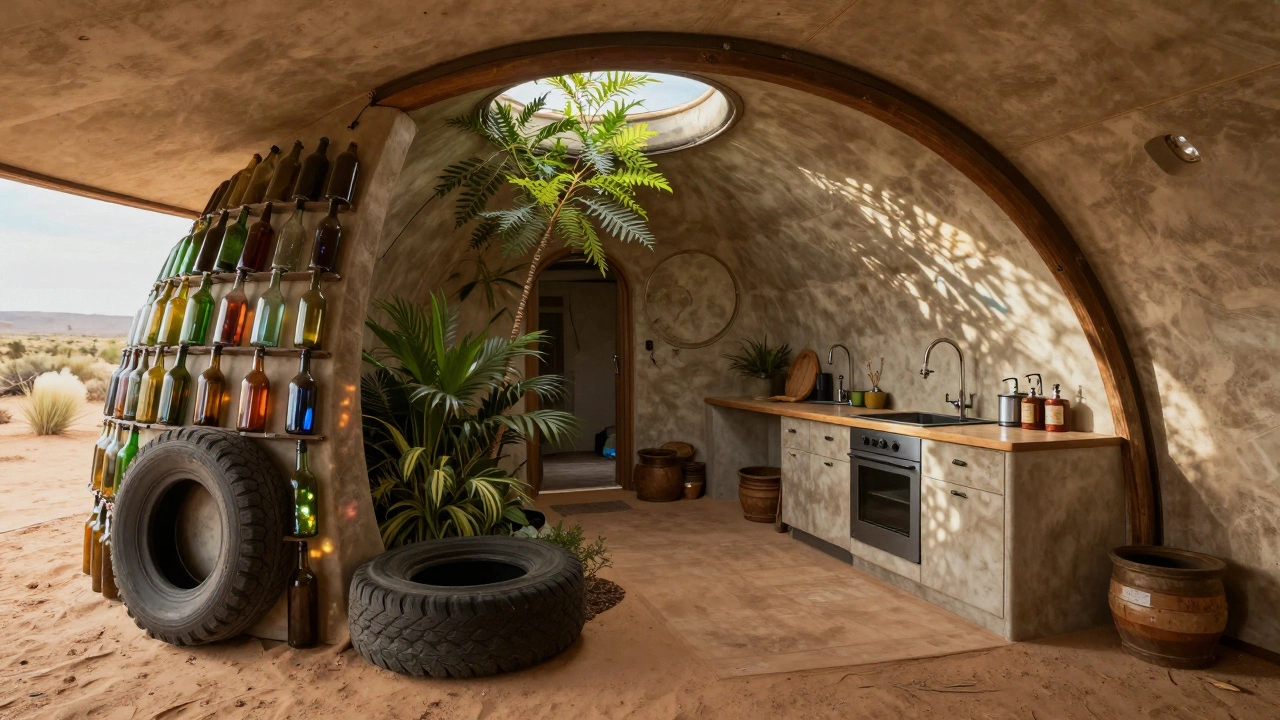
Earthships are like sci-fi homes that actually exist. Built by architect Michael Reynolds in New Mexico, they’re made from recycled tires, glass bottles, and reclaimed wood. Tires are packed with dirt to form thick walls-like concrete, but without the emissions. The roof collects rainwater. Solar panels power everything. Indoor gardens grow food using graywater from sinks and showers.
These homes don’t connect to the grid. They don’t use municipal water. They don’t need gas or oil. One Earthship in Colorado has been running off-grid for over 25 years. The residents eat vegetables from their greenhouse, heat with the sun, and treat their own wastewater. The carbon footprint? Nearly zero.
They’re not for everyone. Building one takes time, skill, and patience. But if you’re serious about total independence from fossil fuels, an Earthship is the ultimate test of sustainability.
Passive House: The Science of Comfort
Passive House isn’t a style-it’s a standard. Developed in Germany in the 1990s, it’s based on hard data, not guesswork. To meet Passive House certification, a home must use 90% less heating and cooling energy than a typical building.
How? Five rules:
- Super-insulated walls, roof, and floor
- Airtight construction (no drafts)
- High-performance triple-glazed windows
- Heat recovery ventilation (fresh air without losing heat)
- Solar gain optimized for the climate
One family in Vermont built a Passive House for $250,000. Their winter heating bill? $38 a year. In a cold climate, that’s unheard of. The house stays warm even when the power goes out-because it doesn’t rely on heaters. It relies on body heat, sunlight, and appliances.
Passive House doesn’t need solar panels or wind turbines. It just needs smart design. And it works everywhere-from Canada to Japan to Australia.
Modular Timber Homes: Carbon-Storage Homes
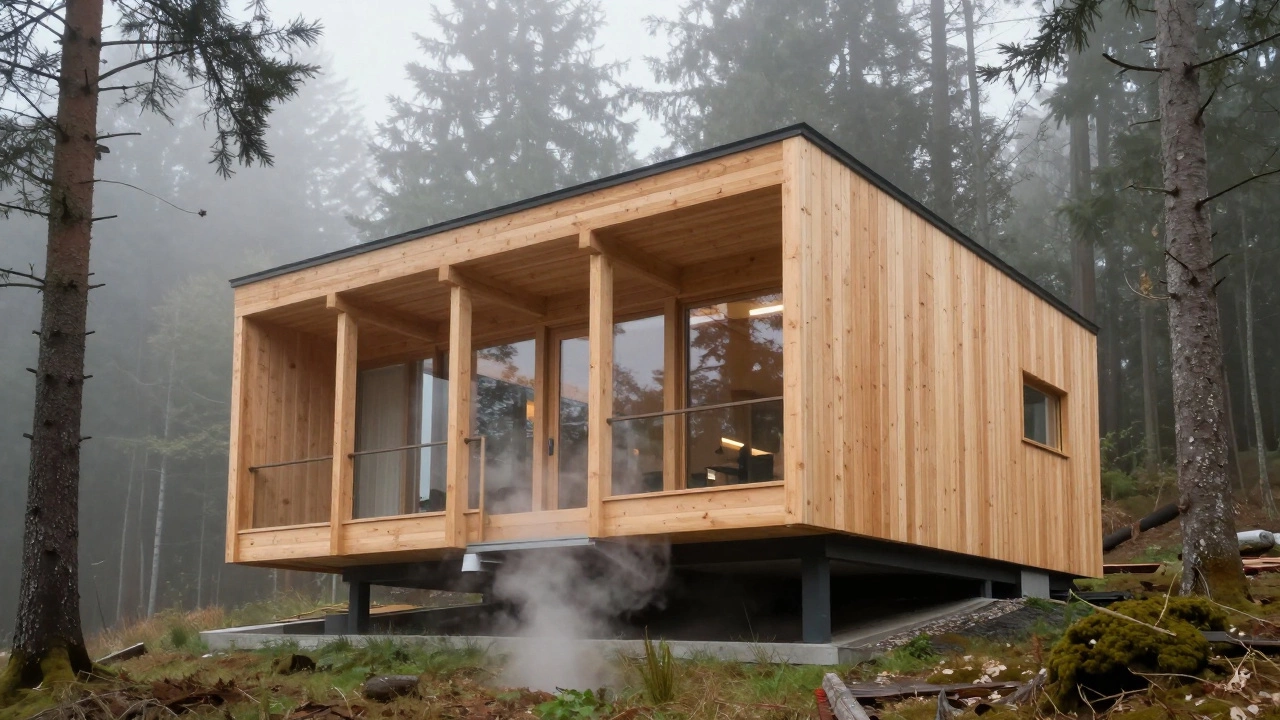
Wood isn’t just renewable-it’s a carbon sink. Trees absorb CO2 as they grow. When you turn them into lumber, that carbon stays locked in. A single cubic meter of wood stores about one ton of CO2.
Modern cross-laminated timber (CLT) is strong enough for six-story buildings. It’s used in Europe for schools, offices, and apartments. In the U.S., companies like Katerra and Marmol Radziner are building custom homes with CLT. These homes are prefabricated in factories, reducing waste by 40%. Assembly on-site takes days, not months.
Compared to concrete and steel-which together produce 8% of global CO2 emissions-timber homes are a breath of fresh air. A 2,000-square-foot CLT home can store over 30 tons of carbon. That’s like taking six cars off the road for a year.
Why Not Tiny Houses?
Tiny houses get all the attention. And yes, they use less energy. But size alone doesn’t make a home green. A tiny house built with cheap insulation, single-pane windows, and a propane heater might use more energy per square foot than a well-built 2,000-square-foot Passive House.
Also, many tiny homes sit on trailers. That means they’re built with steel frames, fiberglass insulation, and vinyl siding-all energy-intensive materials. Some even run on diesel generators. The “tiny” label can be misleading.
True sustainability isn’t about how small you live. It’s about how efficiently you live. A big, well-designed home can be greener than a poorly built tiny one.
What About Solar Panels and Wind Turbines?
Solar panels are great. Wind turbines? Even better if you’re in the right place. But they’re not the foundation of green housing. They’re the cherry on top.
Think of it this way: If your house leaks heat like a sieve, no amount of solar panels will fix that. You’ll need a huge, expensive system just to stay warm. Better to fix the house first. Then add renewables.
The most sustainable homes start with passive design-thermal mass, orientation, insulation, airtightness. Add solar panels after. That’s the order that makes sense.
The Winner? It Depends
There’s no single “best” green home. It depends on your climate, budget, and lifestyle.
In cold, snowy areas? Passive House wins. It keeps you warm with almost no energy.
In dry, sunny regions? Earthships thrive. They use the sun, rain, and wind like tools.
If you want to build fast, affordably, and with low emissions? Timber homes are the future.
And if you’re in a rural area with access to agricultural waste? Straw bale is unbeatable.
The real answer? The most environmentally friendly house is the one that uses the least energy over its lifetime-and is built with materials that don’t harm the planet.
What to Avoid
Not all “green” labels are real. Watch out for:
- “Eco-friendly” homes with vinyl windows and foam insulation (made from oil)
- Modular homes that ship from overseas (carbon cost of transport)
- Recycled materials that still need high-energy processing
- Greenwashing-marketing buzzwords without proof
Ask for energy performance data. Look for certifications: Passive House, LEED, or Living Building Challenge. These aren’t just stickers-they’re third-party verified standards.
Final Thought: Build Smart, Live Light
Green housing isn’t about sacrifice. It’s about intelligence. It’s about using nature’s design instead of fighting it. A well-built home doesn’t just save energy-it saves money, time, and stress.
People who live in these homes say the same thing: They never feel cold. They never feel stuffy. They wake up to sunlight, not alarms. Their air is clean. Their bills are low. And they know, deep down, they’re not hurting the planet.
That’s not just sustainability. That’s comfort-with conscience.